


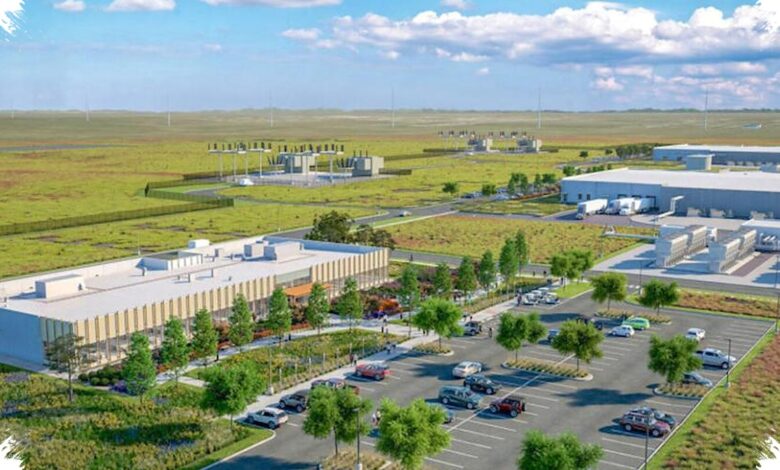
Cheyenne’s wastewater system was forced into an unusual response after a rare bacterium was traced to discharge tied to Meta’s in-progress data center campus. The Cheyenne Board of Public Utilities said Goat Systems LLC, a contractor working on the project, was the source of the water that introduced Cupriavidus gilardii into the system.
The discovery came during routine testing in February, according to Frank Strong, BOPU’s engineering and water resource division manager. Because the bacteria is rarely discussed and not part of normal monitoring, staff had to work through a longer process to identify what it was and where it came from.
What BOPU says happened
Strong said Goat Systems discharged fill-and-flush water into the city’s sanitary sewer, and that water already contained the bacteria. He said the water had been purchased from BOPU, while officials do not know where the bacteria originally came from.
| Item | What Officials Said | Impact |
|---|---|---|
| Source identified by BOPU | Goat Systems LLC | Linked to discharge from the Meta campus site |
| Material discharged | Fill-and-flush water | Contained Cupriavidus gilardii |
| Bacteria status | Rare, naturally occurring | Triggered extra caution in wastewater handling |
Betsey Hale, CEO of Cheyenne LEADS, stressed that the incident occurred during construction, not operation of the data center. She also noted that Cupriavidus gilardii is naturally occurring and said it was monitored, caught and remediated.
Why the reclaimed water system was paused
Strong said the city temporarily suspended its reclaimed water irrigation program because the system sprays treated wastewater onto parks, golf courses and other public green spaces. He said that aerosolized reuse created the main concern, especially for people with weakened immune systems.
The issue did not involve Cheyenne’s drinking water. Instead, BOPU paused reuse operations until testing could confirm that the bacteria was no longer present in the treatment system.
Officials later tested both wastewater treatment plants and said both came back negative. Reclaimed water irrigation has resumed, and BOPU said it will keep monitoring the system.
Meta, Fortis and the cleanup response
A Meta spokesperson told www.wyomingnews.com that Meta is supporting its general contractor, Fortis, as the issue is resolved with BOPU. The spokesperson said Fortis stopped discharging industrial wastewater immediately after the city found a substance in the wastewater, not in public drinking water.
The spokesperson also said Fortis began hauling the wastewater offsite and started its own testing with an independent environmental specialist, which found no trace of the substance.
A new rule for data center wastewater
In response to the incident, BOPU said it will no longer accept industrial wastewater discharges from data centers using closed-loop cooling systems or fill-and-flush operations. Strong said those systems can include glycol and other chemicals that municipal wastewater plants are not designed to process.
The new policy requires industrial users with closed-loop cooling systems to build separate collection systems so water from cooling equipment or floor drains goes into storage tanks instead of the sanitary sewer. Erin Lamb, BOPU’s administrative and public affairs coordinator, said the change mainly affects future projects.
| Cooling Approach | BOPU Position | Reason Given |
|---|---|---|
| Closed-loop cooling with fill-and-flush | No longer accepted | Possible bacteria and chemical discharge concerns |
| Separate collection systems | Now required | Keeps wastewater out of the sanitary sewer |
| Evaporative cooling | Existing use largely unaffected | BOPU said current data centers mostly use this method |
Strong said BOPU is not aware of any previous fill-and-flush discharges from existing data centers. He added that Microsoft’s newer facilities use evaporative cooling, while Meta’s campus includes different cooling technologies across phases.
The first phase under construction uses a closed-loop cooling system, and the second phase will use evaporative cooling. BOPU said follow-up testing has found no remaining Cupriavidus gilardii in either wastewater treatment plant, while the city continues routine sampling under the new restrictions.