


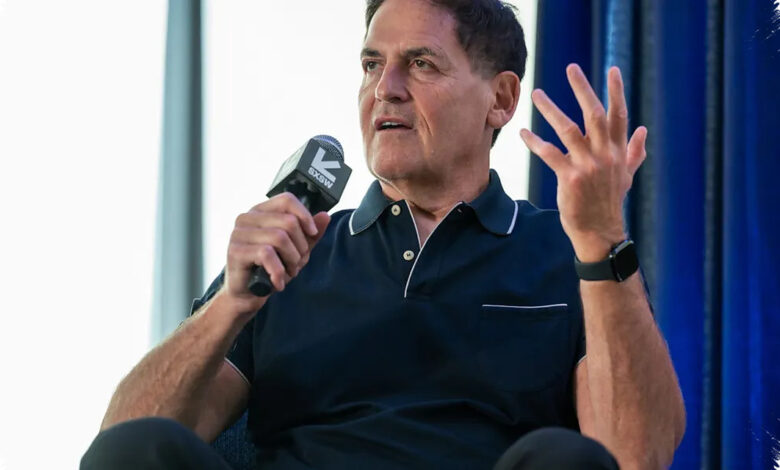
Mark Cuban is once again pushing a blunt message to companies: if workers are helping build value, they should share in it. The billionaire entrepreneur says underpaying employees is “embarrassing,” and he believes raising wages is only the starting point.
In an X post last month, Cuban said he thinks raising the federal minimum wage to $20 is “smart.” That would be far above the current federal minimum of $7.25 an hour, which works out to about $15,080 a year for a standard 40-hour week.
The gap matters at a time when millions of Americans are still struggling with basic living costs. More than 40 million people rely on food stamps to help make ends meet, while many workers in some states still earn only $5.15 an hour for jobs like bussing tables, stocking shelves, and flipping burgers.
| Pay Level | Hourly Rate | Annual Pay at 40 Hours |
|---|---|---|
| Current federal minimum wage | $7.25 | $15,080 |
| Cuban’s suggested minimum wage | $20 | $41,600 |
| Lowest state hourly wage cited | $5.15 | Not specified |
Why Cuban says better pay matters
Cuban told fortune.com that when employees are stressed about bills, that pressure follows them into the workplace. He said the less workers worry about paying their bills, the less stress they bring to the office, vendors, prospects, and customers.
He also drew a line between startups and mature businesses. Startups may need to focus on survival first, but once a company grows, Cuban says it should move toward a living wage and broader rewards for employees.
“I am a believer in trickle up,” Cuban said. “Where we do all we can get to get appreciable assets and higher wages into the hands of people who have to live paycheck to paycheck.”
How Cuban has shared wealth before
Cuban says he has already helped make at least 1,000 millionaires and plans to keep increasing that number. He said that when he heard workers at a company he invested in needed government assistance, he made sure they all got raises because it was “embarrassing” that they were not paid enough.
His record includes multiple examples of profit-sharing. At MicroSolutions, the computer consulting company he founded in 1983 and later sold to CompuServe for $6 million, Cuban paid out 20% of the profit to all workers.
At Broadcast.com, the internet streaming company he cofounded in 1995 and later sold to Yahoo for $5.7 billion, he said around 300 of the company’s 330 employees became millionaires. He also said he paid out 20% of profits at HDNet, another company he founded in 2003.
Cuban has extended that approach beyond his tech ventures. In 2024, he said he spent more than $35 million in bonuses for employees of the Dallas Mavericks, where he is a minority owner.
Workers should benefit when CEOs do
Cuban’s view is not just about wages. He also wants employees to get the same kind of upside that executives receive when a business performs well.
Responding to an Oxfam report that said billionaire wealth increased by $33 trillion over the past decade, Cuban argued that the stock market has gone “straight up” and that retail investors and 401(k) savers are helping fund those gains. He questioned why companies are not required to give shares to all employees at the same percentage of cash earnings as the CEO.
Some companies are already closer to that model. After Klarna’s stock market trading debut last year, more than 40 current and former staffers became millionaires through stock perks as the company’s market cap rose to $17 billion.
Nvidia CEO Jensen Huang has also said he has created more billionaires on his team than any other leader in the world. Canva’s chief operating officer, Cliff Obrecht, said in 2025 that eligible current and former employees could sell up to $3 million worth of shares each at a price of $1,646.14.
Cuban’s message stays consistent across all of it: once a business succeeds, workers should not be left on the sidelines while the rewards climb higher.