


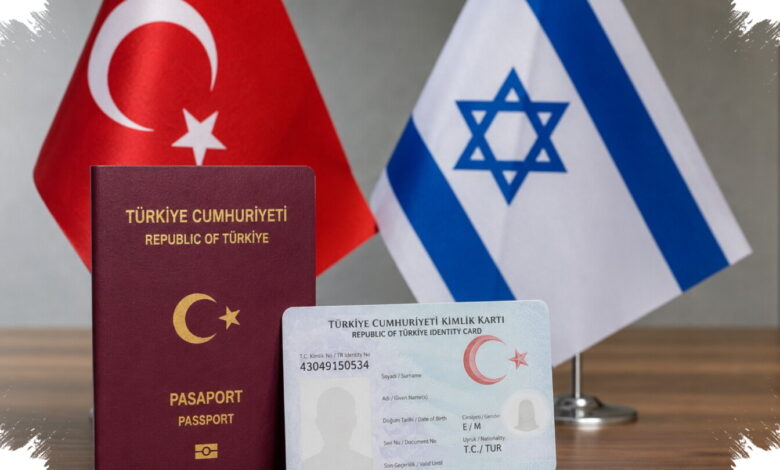
US court records suggest Turkey was more than a stopover for Israeli organized crime figure Eran Hiya. It functioned as a secure base where he held residence, traveled internationally, and reportedly kept private security around a guarded compound.
The case is striking because Hiya was already wanted in Israel on attempted murder and conspiracy charges, and an INTERPOL Red Notice had been issued at Israel’s request. Yet the records reviewed by www.meforum.org show that he was still able to establish formal ties to Turkey, including citizenship and identity documents.
How Hiya Became a High-Profile Fugitive
Hiya, 43, is the son of Eitan Hiya, a veteran mob boss once described as the “Israeli Godfather.” After his father was jailed, Eran Hiya emerged as one of the next generation of leaders in the long-running criminal network.
In 2016, the Tel Aviv District Court sentenced Eitan Hiya to 20 years in prison for conspiracy, extortion, and money laundering after finding that he led a violent criminal enterprise. That background helps explain why Israeli authorities treated Eran Hiya as a serious fugitive.
Turkey as the Center of His Movements
According to court filings, Hiya primarily lived in a secured compound in Turkey and had family ties abroad, financial resources, and access to multiple travel documents. The Second Circuit Court of Appeals later cited those factors in finding him to be a serious flight risk.
The court also noted that Hiya possessed passports and identification documents from several countries, including Turkey and Poland. U.S. judges said his ties to the United States were weak and that his international mobility made detention appropriate while extradition challenges continued.
| Key Detail | What the Records Say | Relevance |
|---|---|---|
| Turkish residence | He lived in a guarded compound in Turkey with private security. | Showed Turkey as his operational base. |
| Travel documents | He held identity papers and passports from multiple countries, including Turkey and Poland. | Supported U.S. concerns that he could move easily across borders. |
| Israeli case | Israel sought his arrest on attempted murder and conspiracy charges. | Explains the extradition fight. |
What the FBI Found About His Turkish Identity
During his transfer from Kuala Lumpur to New York, Hiya told FBI agents that he owned a Turkish passport and real estate in Turkey. That information matched the broader view in the court record that Turkey had become his main base of operations.
An FBI intelligence request sent to Indonesian police also asked whether Turkish-issued documents had been seized from Hiya and how he had traveled to Bali. The letter shows investigators were trying to reconstruct his movements after receiving intelligence about a violent altercation there.
Perhaps most revealing, the FBI identified him as using the name Eren Kaya on Turkish documents. The request listed a Turkish passport under that name with passport ID number U26966689 and a Turkish national identity number of 43049150534.
The Extradition Fight and the Allegations From Israel
Israel sought Hiya’s provisional arrest under the US-Israel extradition treaty after charging him with attempted murder and conspiracy to commit a felony. A Tel Aviv Magistrates Court judge issued the arrest warrant on May 10, 2024.
Israeli authorities allege that from December 2023 to January 2024, Hiya directed and supported an attempted assassination plot against rival gang leader Eli Musli. The warrant also lists offenses including attempting to cause death, illegal weapons offenses, conspiracy, changing a vehicle part’s identity, and destroying evidence.
He was arrested by Malaysian police in Johor on April 4, 2024, after arriving from Turkey. Malaysian authorities later handed him to the FBI on May 12, along with a Turkish passport and Turkish national identity card seized at the time of arrest.
Three days after his arrival in New York, the US Department of Justice opened separate extradition proceedings on Israel’s behalf. Federal judges later said the combination of his Turkish base, finances, and international mobility justified continued detention while the case moved forward.
Why the Turkey Connection Matters
The case raises broader questions about how wanted figures can settle in Turkey through residence and citizenship while remaining active abroad. According to the court records and intelligence material cited by www.meforum.org, Hiya’s Turkish ties were not incidental but central to his ability to move, live, and operate internationally.
It also adds to concerns that Turkey has become a permissive environment for foreign fugitives and organized crime figures. In Hiya’s case, the documents show a man wanted for serious violent offenses who was able to build a protected life in Turkey before his arrest in Malaysia.
Published originally on July 2, 2026.
Documents referenced in this article are available in the original Nordic Monitor version.