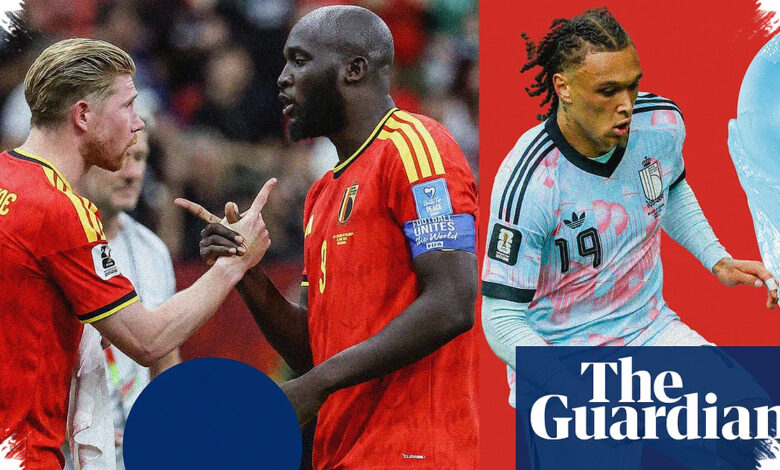
Belgium’s biggest challenge at this tournament is no longer just the result in front of them. It is the weight of everything that has come before, from the promise of the Golden Generation to the sense of fading urgency that has followed it.
That tension has shaped the discussion around the team for years, and it now hangs over a squad that is older, less settled and looking for a cleaner break. The 3-2 win against Senegal hinted at one possible route forward, with younger players adding energy and directness that had been missing.
Fresh legs changing the mood
One of the clearest examples came with Diego Moreira, who was introduced after 63 minutes for Hans Vanaken. The 21-year-old brought pace and invention on the left, and Belgium suddenly looked more dangerous in a way that Jérémy Doku had not managed to provide.
Moreira delivered five crosses, compared with Doku’s two, and his impact offered a reminder that Belgium still has room to evolve. He was born in Liège but had wanted to play for Portugal, a path shaped by his father, Almami Moreira, and a family football background that also includes his grandfather Helmut Graf.
| Player | Age | Role Against Senegal | Notable Detail |
|---|---|---|---|
| Diego Moreira | 21 | Substitute | Brought pace and invention on the left |
| Hans Vanaken | 33 | Replaced by Moreira | Part of the older core |
| Jérémy Doku | Not stated | Started, then struggled to provide width | Managed two crosses |
Moreira’s route has already taken him from Standard to Benfica, then to Strasbourg after a spell in the BlueCo Chelsea system. He has become a regular in France over the past two seasons, and Belgium now sees him as part of an emerging group that also includes Joaquin Seys, Nathan Ngoy and Matias Fernandez-Pardo.
Rudi Garcia is already leaning on change
Belgium’s response against Senegal was also shaped by Rudi Garcia’s willingness to make bold substitutions when the game needed turning. He took off Doku and Kevin De Bruyne, and brought on Nicolas Raskin and Dodi Lukébakio in a move that recalled the spirit of earlier Belgian sides willing to reset mid-tournament.
That instinct has historical echoes. In 1986, Belgium’s campaign changed after Guy Thys dropped five senior players following an early defeat to Mexico and a narrow win over Iraq, then introduced younger names such as Stéphane Demol, Patrick Vervoort and Georges Grün.
The mood shifted again after a 2-2 draw that was enough to carry Belgium into the last 16. A famous 4-3 win over the Soviet Union in extra time followed, before penalties beat Spain and Argentina ended the run in the semi-final.
For the current team, the lesson is not that history repeats itself exactly. It is that a shake-up can change the emotional temperature of a squad, especially when a side has spent too long being measured against an older and more celebrated version of itself.
Why the USA match matters most
The game against the USA is important partly because of the points at stake, but more because of what it could mean for Belgium’s longer-term mood. A victory would not solve every question, but it could help the team step away from the weariness that has followed them since the 2018 semi-final in St Petersburg.
That match, and the tournament run that led to it, remains a key part of the backdrop. Belgium beat Brazil to reach the semi-final, but lost 1-0 to France, leaving the squad with the sense that it had been good enough to win a major tournament without quite getting there.
Now the side that follows is different. It is not a simple repeat of the same team, only a little older and a little more tired, and the meeting with the US offers a chance to show that Belgium can build something less burdened and more open-ended.
For a country of just under 12 million, that matters as much as any single result. The real value of the match may be whether it gives Belgium permission to stop living in the shadow of two World Cups ago and start looking forward instead.