A New York man is at the center of a First Amendment fight after Homeland Security Investigations agents tried to track him down over a harsh email he sent to the former acting director of U.S. Immigration and Customs Enforcement. The lawsuit says the government’s response turned protected criticism into an intimidation campaign.
The nonprofit Foundation for Individual Rights and Expression filed the case in federal court in Washington, D.C., arguing that David Streever’s January message was protected speech and that DHS, ICE officials, and federal agents violated his constitutional rights. The complaint says the government’s conduct has already made Streever self-censor his views.
What Streever wrote and why it drew attention
Streever sent the email on Jan. 26 after federal immigration officers in Minneapolis fatally shot two U.S. citizen observers during an immigration enforcement surge there. The three-paragraph message compared Todd Lyons to a Nazi and said Lyons would be tormented by his own conscience.
The subject line of the email was “What’s next,” and it was sent to Lyons’ government email address. Lyons stepped down as the acting director of ICE at the end of May.
| Person | Location | Role in the case |
|---|---|---|
| David Streever | Rochester, N.Y. | Sent the email and filed the lawsuit |
| Todd Lyons | Not specified | Former acting director of ICE and recipient of the email |
| Paigelynne Gonyea | Syracuse, N.Y. | Also confronted by federal agents the same day |
Agents came to his home, then his hotel
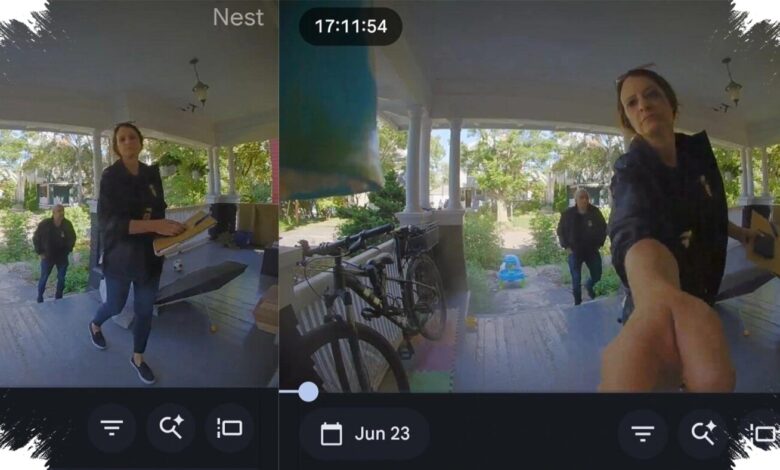
According to the complaint and NPR’s reporting, two HSI agents came to Streever’s Rochester home on June 23 and left a warning notice with his wife. The notice said he “MAY BE IN VIOLATION OF FEDERAL LAW” and referred to laws that make it a crime to threaten federal officials.
The form said ICE’s Office of Professional Responsibility had identified an email to Lyons that may violate federal law and asked Streever to “promptly remove and/or discontinue the aforementioned behavior.” The bottom of the notice said receipt of it would be taken into consideration if he continued to be involved in any criminal activities described above.
Streever was away on vacation with his 7-year-old daughter when the agents visited. After he and his daughter landed at John F. Kennedy International Airport in New York City and checked into a nearby airport hotel, he was told later that night that a federal agent from DHS had come looking for him and left a business card.
His wife had not told the agents which hotel he would be staying at, raising questions in the lawsuit about how he had been tracked to that location. Streever said in a statement that he wrote the email because he felt compelled to respond to the shootings in Minnesota.
“Like many Americans, I was deeply upset after the shootings in Minnesota and I felt compelled to do something,” he said. “Writing an email to the head of ICE seemed like the least I could do to express my sense of outrage. I never dreamed it would lead to a knock on my door by federal officers or descending on my hotel in the dark of night.”
FIRE says the government crossed a constitutional line
The lawsuit names three federal agents who tried to contact Streever, along with Homeland Security Secretary Markwayne Mullin and ICE officials. It asks the court to declare that Streever’s email was protected by the First Amendment and to bar any further actions meant to coerce, threaten, retaliate against, or imply repercussions for his speech.
It also asks the court to rule that warning notices delivered by federal agents are sufficient to chill speech protected by the First Amendment. The complaint says that ICE’s use of formal warning notices and in-person delivery can only be meant to silence critics.
“ICE’s issuance of formal ‘WARNING NOTICE’ documents to critics who engage in protected speech—and its decision to have federal agents deliver those warnings in person—can have only one purpose: to systemically chill ICE’s critics and coerce them into silence,” the suit reads.
Adam Steinbaugh, a senior attorney at FIRE, said the delay between the email and the agents’ response undercuts the idea that Streever posed a real threat. “If someone is really threatening a government official, you don’t wait five months to act on it,” he said. “The fact that authorities didn’t respond immediately shows that David presented no threat. This pursuit is designed to intimidate lawful speech, pure and simple.”
DHS replied with the same statement it gave when www.npr.org first asked about the case. “ICE investigates all credible threats towards its employees and officers, including threats to the ICE Director. As a matter of policy, we do not comment on any ongoing investigations.”
A second person was confronted the same day
The lawsuit also says that on June 23, agents confronted Paigelynne Gonyea at a polling place in Syracuse about an Instagram post. A voicemail left for her said agents had visited her former apartment and were calling “in reference to a post that we believe you made on Instagram where you doxxed an ICE agent back in January.”
Gonyea was working at Syracuse’s Central Library when the call came in. She later told NPR that agents wanted her to step outside to speak with them, but she did not trust them and asked them to come inside the polling place instead.
The complaint uses both cases to argue that the warning notices are being used to pressure people who criticized ICE or its officers. It says that federal agents’ conduct has already chilled Streever’s speech and that the government’s actions amount to retaliation for protected expression.