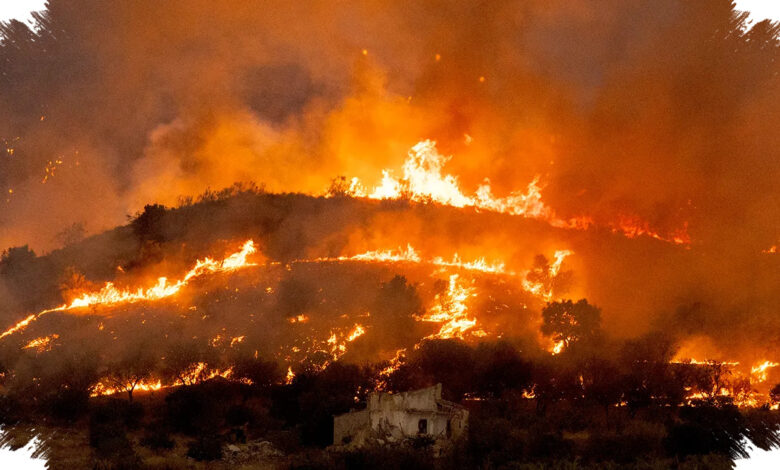
Europe’s latest wildfire emergency is being driven by more than record-breaking heat. Dry vegetation, uncleared scrubland, human negligence and suspected arson have combined to make fires faster, larger and harder to contain.
France and Spain have faced major blazes that destroyed forests, threatened communities and forced evacuations. The crisis has also unfolded during an extreme heat period that has caused thousands of deaths across Europe.
A dangerous mix of ignition and dry fuel
France’s Ministry of Agriculture says people cause nine out of 10 wildfires in the country. Campfires, discarded cigarettes and other careless actions can ignite grass and brush that have been dried out by intense heat.
Daniel Lacalle, chief economist at Madrid-based investment company Tressis, said land-management restrictions can make brush clearance more difficult in some protected areas. When vegetation accumulates and then dries out, it can become highly combustible fuel.
The pattern is similar in the United States, where the National Interagency Fire Center and U.S. Forest Service say humans cause 85% of fires. Lightning-caused fires, however, often burn more acreage because they can begin in remote areas that are difficult to reach.
Fires that displaced communities
Some of the largest reported incidents show the scale of the pressure on firefighters and residents. The figures below reflect separate fires reported in France and Spain.
| Location | Area Burned | Impact on Residents |
|---|---|---|
| Fontainebleau Forest, France | 2,000 hectares | About 1,000 people evacuated; 850 emergency firefighters deployed |
| Zaragoza, Spain | 12,000 hectares | Six villages evacuated |
The Fontainebleau Forest fire near Paris destroyed roughly 2,000 hectares of woodland. Firefighting efforts were expected to take weeks, highlighting how difficult large forest fires can be to fully suppress.
French Interior Minister Laurent Nuñez said experts identified 10 ignition points within an area slightly more than half a mile wide. According to France Insider, he said the pattern “suggests a voluntary origin.”
Dozens of people have been arrested across France for allegedly starting fires either accidentally or deliberately, France 24 reported. During a visit to Fontainebleau, President Emmanuel Macron said France had never faced so many fire outbreaks nationwide since the end of World War II.
Macron said there would be “zero tolerance” for arsonists because “our national territory” is under attack whenever a fire breaks out. The remarks underscored how officials view deliberate fire-setting as a threat extending beyond the immediate burn zone.
Spain confronts rapidly moving blazes
Spain Wildfires have included separate fires in Zaragoza, Madrid and Guadalajara, with at least 2,000 people affected by the latter two incidents. One of the fires had been stopped, while emergency services continued to respond to other outbreaks.
Lacalle said experienced firefighters had described the speed of the fires as unlike anything they had previously seen. He also pointed to Spain’s large areas of unused land, where uncleared scrub can increase the risk of a severe blaze.
In Andalusia, a wildfire killed at least 13 people, including a 93-year-old woman injured at Los Gallardos. Heat, drought and wind have added to the danger by drying vegetation and helping flames spread.
Heat raises the stakes
France Wildfires have occurred as the country experiences prolonged extreme heat, particularly in the south. The Guardian reported that about 2,000 people died at the end of June during the heat wave, which was forecast to continue through August.
Shawn Hackett, president of Hackett Financial Advisors, said the conditions reflected a “unique situation” for Europe. He attributed the extreme heat and dryness mainly to warm Mediterranean surface waters and the cold-water Atlantic.
The wildfire threat is also reaching more people as populations grow and move closer to fire-prone landscapes. A University of East Anglia study found that the number of people exposed to wildfires rose by an average of 382,700 a year from 2002 to 2021, a 40% increase.
Over the same period, the study said the total amount of land burned fell by 26%. The findings suggest that even where burned area declines, the human consequences can grow as more homes and communities lie in the path of fire.
European Wildfires are therefore not solely a weather story. The combination of extreme heat, dry unmanaged vegetation and preventable ignitions is leaving firefighters with less margin to stop a small spark from becoming a disaster.