


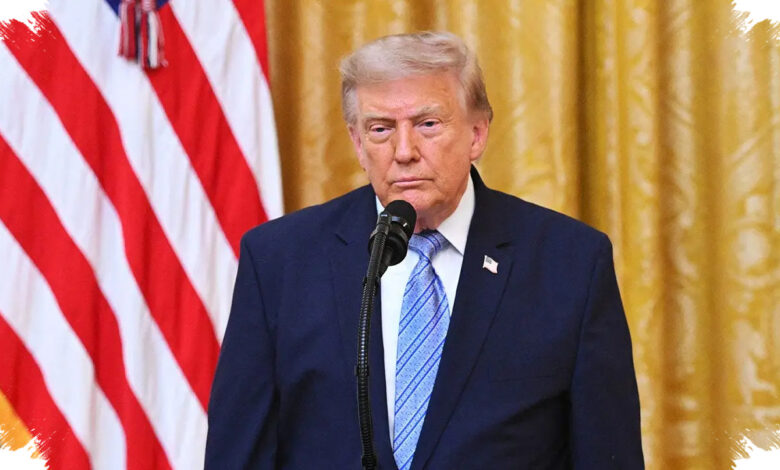
President Donald Trump’s preferred candidate for South Carolina’s open Senate seat may face a crowded Republican contest rather than a clear path to the nomination. Several GOP figures are moving ahead with campaigns even as Trump urges Darline Graham, sister of the late Sen. Lindsey Graham, to run.
The special Republican primary is scheduled for Aug. 11, 2026, creating a rare opening in a state where Senate seats seldom become available. The developing contest is testing whether Trump’s endorsement can settle a primary when ambitious Republicans see an opportunity to advance.
Trump Calls on Graham to Enter
After meeting Darline Graham in the Oval Office, Trump announced his “complete and total endorsement” for her potential Senate bid. He said he had asked her to run “for the Good of our Nation” and argued that nobody would be better positioned to honor her brother’s legacy.
Graham had not committed to entering the contest when the endorsement was announced. Her potential candidacy was widely viewed as a way to fill the remainder of Lindsey Graham’s term, but the special primary has drawn candidates seeking the nomination themselves.
| Figure | Current Role | Position in the Race |
|---|---|---|
| Darline Graham | Sister of the late Sen. Lindsey Graham | Endorsed by Trump; has not committed to run |
| Ralph Norman | Republican representative from South Carolina | Entered the contest |
| Mark Lynch | Businessman | Entered the contest |
| Russell Fry | Republican representative from South Carolina | Entered the contest |
Fry Joins the Field Despite Trump’s Choice
Rep. Russell Fry became the latest Republican to enter the race, despite having been praised by Trump just a week earlier as someone to watch. Fry had also discussed a possible campaign with White House operatives, according to www.foxnews.com.
A source in Fry’s political orbit said the congressman had “accomplished more than all the potential candidates combined,” citing three bills passed during his first four years in Congress. The source said the campaign was about giving voters a choice rather than staging “a coronation.”
Fry has not positioned himself against Trump in announcing his bid. He said standing with Trump and advancing the Republican agenda were among Lindsey Graham’s defining principles.
“There is no replacing him, but I believe the best way to honor his legacy is to fight alongside the president just as steadfastly as he did,” Fry said. His message signals that the candidates are likely to compete as allies of Trump rather than challenge the president’s influence directly.
Endorsement Faces a State-Level Test
South Carolina Republican consultant Dave Wilson said voters in the state want a choice and do not want to be told whom they should support. He described Trump’s swift backing of Darline Graham as symbolic but said it had not discouraged other Republicans from running.
Wilson pointed to Trump’s role in the recent GOP gubernatorial primary as evidence that an endorsement does not guarantee victory. Trump initially backed Lt. Gov. Pamela Evette, who led the primary vote, before later endorsing both Evette and Attorney General Alan Wilson ahead of the runoff.
Alan Wilson went on to defeat Evette decisively in that runoff. The result reinforced the view that Trump’s support remains valuable in South Carolina but may not be decisive when multiple Republican candidates compete for the same voters.
Republican strategist Ryan Williams said Trump’s endorsement remains “a major boost for any candidacy,” though it does not lock down a Senate seat. He argued that House members with statewide ambitions have little reason to sit out a rare open-seat contest.
Williams said the candidates are all likely to campaign as Trump Republicans and flatter the president on the trail. That leaves the primary centered on which contender can best persuade voters that they can carry forward Lindsey Graham’s political legacy.