


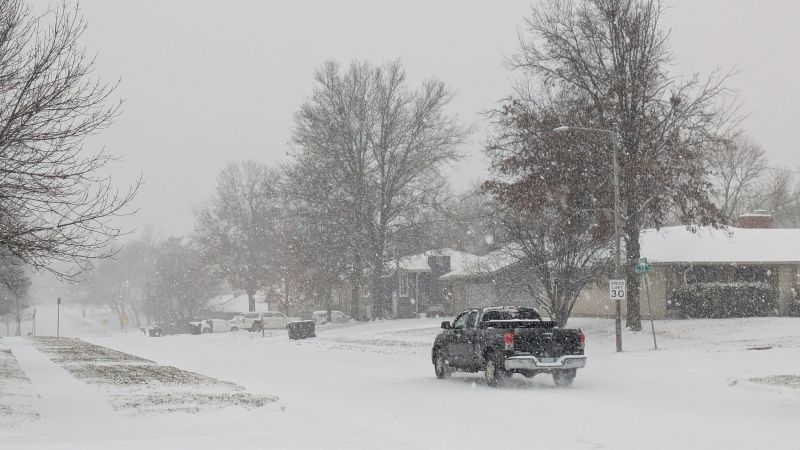
Winter Storm Impacting Midwest Brings Snow to Northeast
A significant winter storm is currently affecting the Midwest, marking the first widespread snowfall for the Northeast this season. This event is linked to the displacement of the polar vortex, which began shifting in late November, according to researchers.
The polar vortex is a strong, circular wind system over the Arctic that usually traps cold air. Recently, it weakened and moved southward, bringing Arctic air to densely populated midlatitude regions. This shift results in clashing air masses, increasing the likelihood of stormier conditions.
Andrea Lopez Lang, a meteorologist at the University of Wisconsin at Madison, explains that the cold Arctic air colliding with warmer southern air contributes to the development of storms. This winter’s weather patterns also include a wavier jet stream, which flows west to east across the Northern Hemisphere. Judah Cohen, a meteorologist at MIT, notes that such jet stream waviness causes fluctuating weather, ranging from mild spells to sudden frigid temperatures.
Residents in the Northeast can expect snow and volatile weather over the coming days as storms driven by these atmospheric changes pass through. Meteorologists emphasize that while the polar vortex displacement is a significant factor, other elements also influence temperature swings this winter.
The National Weather Service advises travelers and communities to prepare for challenging winter conditions. Increased snow accumulation in parts of the Northeast could impact transport and outdoor activities. Officials recommend monitoring updates closely as the storm progresses.
In summary, the ongoing winter storm is a direct result of complex atmospheric dynamics involving a weakened polar vortex and an oscillating jet stream. These factors combine to deliver the season’s first widespread snow to the Northeast and bring fluctuating temperatures across the region.