


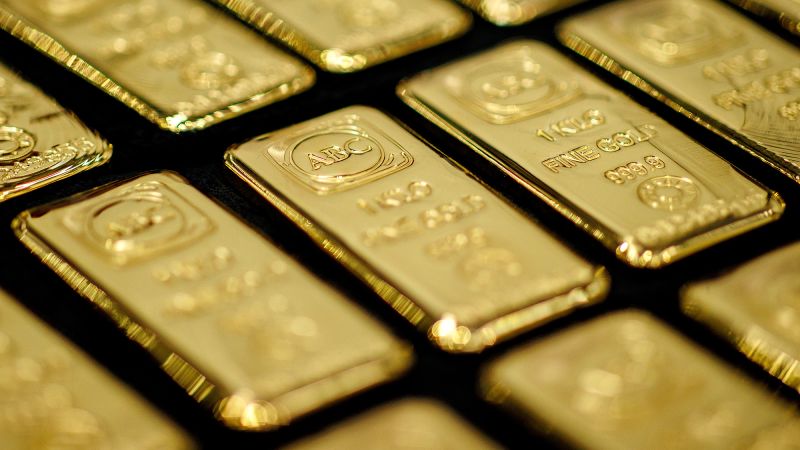
Gold is on track to deliver its strongest annual performance since the late 1970s. Futures trading in New York have surged nearly 71% this year, marking the highest yearly gain in 46 years, according to the World Gold Council.
Back then, the U.S. was facing soaring inflation, an energy crisis, and geopolitical turmoil under President Jimmy Carter. Today’s environment similarly features global tensions: tariffs disrupt trade, Russia’s war on Ukraine continues, and conflicts flare between Israel and Iran. Investors are increasingly turning to gold as a safe haven amidst this uncertainty.
Drivers Behind Gold’s Surge
Gold is valued for its ability to preserve wealth in times of crisis, inflation, and currency depreciation. Joe Cavatoni, senior market strategist at the World Gold Council, explains that “uncertainty remains a defining feature of the global economy,” which enhances gold’s appeal as a strategic diversifier and stabilizer.
Although gold does not provide income like bonds, recent Federal Reserve interest rate cuts have lowered bond yields, making gold a more attractive investment option. Gold prices started the year near $2,640 a troy ounce and recently surpassed a record $4,500 per troy ounce. Analysts at JPMorgan Chase predict prices could exceed $5,000 per troy ounce by 2026.
This year, gold’s rise outpaces major indexes, with a 71% increase compared to an 18% gain in the S&P 500. In the first half of next year, gold continued its momentum with a 27% appreciation, slightly higher than the 24% gain in the S&P 500. Expectations for further Federal Reserve rate cuts and a weakening U.S. dollar are key factors supporting gold’s upward trend.
Central Banks and Geopolitical Factors
Central banks have been significant buyers, particularly China, which is diversifying away from U.S. dollar assets to reduce dependence. Ulf Lindahl, CEO of Currency Research Associates, notes this shift accelerated after Russia’s invasion of Ukraine and subsequent Western sanctions froze Russian dollar-denominated assets.
Ole Hansen, head of commodity strategy at Saxo Bank, describes the current wave of central bank gold buying as “rooted in geopolitics” and likely to persist due to the global financial system’s fragmentation. Central banks have accumulated over 1,000 tons of gold annually in recent years, compared with 400 to 500 tons during the previous decade, a World Gold Council report highlights.
Broad Precious Metal Rally
Gold’s rally comes alongside strong gains in other metals: silver futures are up 146%, platinum futures have increased nearly 150%, and palladium futures have doubled this year. Hakan Kaya, portfolio manager at Neuberger Berman, says precious metals are increasingly seen as hedges against global uncertainty.
The trend is expected to continue as central banks keep increasing gold reserves, reducing the bullion available for the market. Coupled with sustained demand from investors, this supply constraint could drive prices higher, according to Lindahl.
Government deficits and debt concerns also fuel investor interest in precious metals. Matt Maley, chief market strategist at Miller Tabak + Co., notes that awareness of these fiscal issues has strengthened gold’s appeal as a safe haven.
Gold jewelry markets benefit from rising prices, as do individual holders and large-scale buyers worldwide. The global shift in gold demand reflects both geopolitical dynamics and changing monetary policies, suggesting that gold’s historic ascent may persist.
Read more at: edition.cnn.com