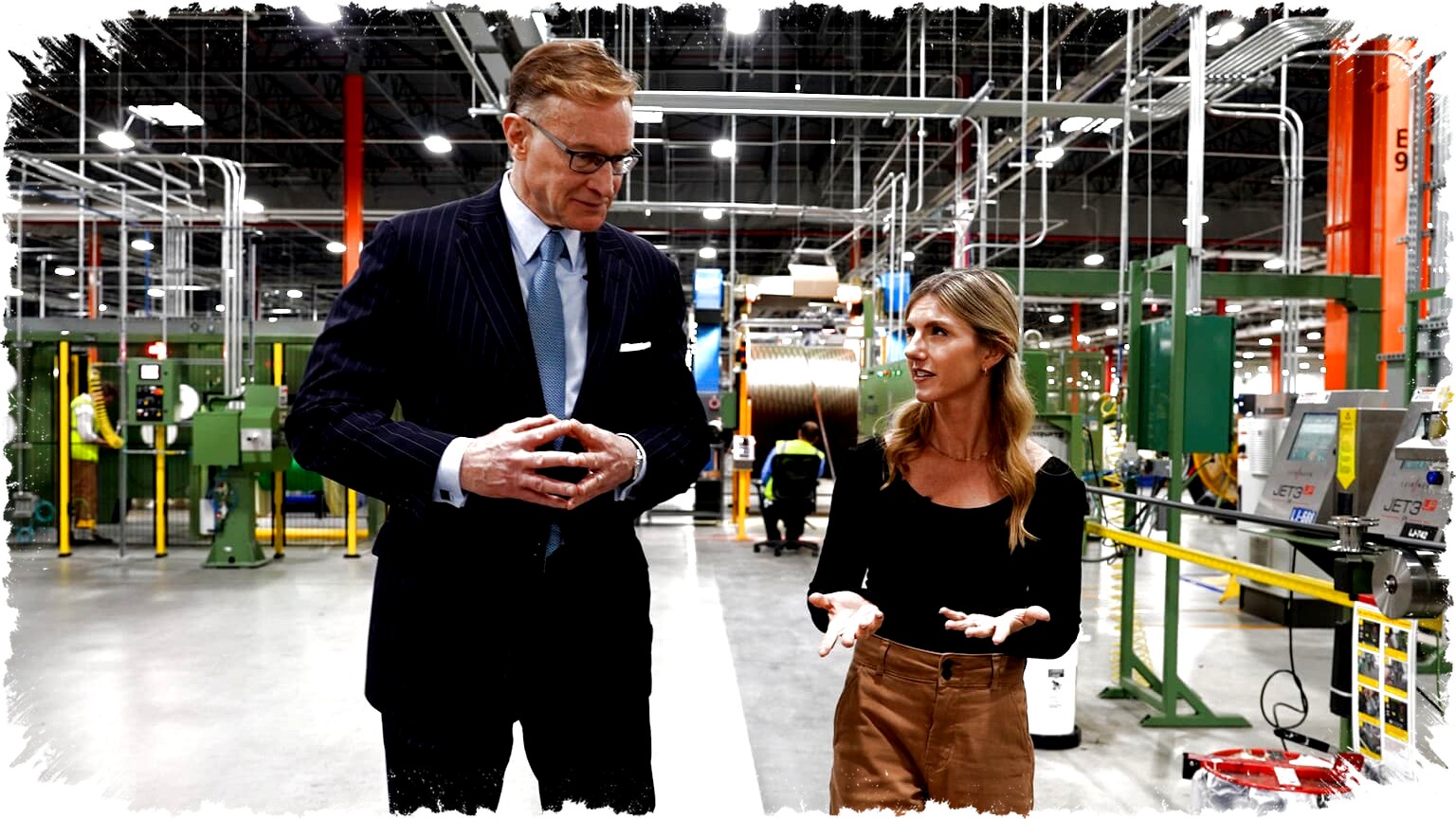
Meta has committed up to $6 billion to Corning, a long-established glass manufacturer, for supplying fiber-optic cable to its artificial intelligence (AI) data centers through 2030. This move supports Meta’s aggressive expansion of AI infrastructure, involving the construction of massive data centers across the United States.
Corning is scaling up its fiber-optic cable production facility in Hickory, North Carolina, to meet increasing demand from Meta and other major technology companies like Nvidia, OpenAI, Google, Amazon, and Microsoft. When completed, this facility is set to become the world’s largest fiber-optic cable plant, reflecting the immense scale of AI-driven infrastructure buildout.
Corning’s Role in the AI Data Center Boom
Corning CEO Wendell Weeks highlighted the surge in hyperscaler demand, stating that “almost every phone call I get from my customers is trying to see, how do we get them more?” This demand surge is fuelling optical communications as Corning’s fastest-growing business segment. The company’s fiber-optic technology plays a critical role in transporting data at nearly the speed of light, using photons rather than electrical signals, which drastically reduces power consumption.
Meta’s commitment includes the deployment of Corning fiber-optic cables in its two largest data centers currently being built: the one-gigawatt Prometheus site in Ohio and the five-gigawatt Hyperion site in Louisiana. These projects form part of Meta’s plan to construct 30 data centers, predominantly in the U.S., reinforcing its focus on domestic supply chains for critical infrastructure.
Innovation in Fiber Optic Technology for AI
To address the unprecedented fiber capacity requirements of AI workloads, Corning developed a new type of fiber-optic cable named Contour. It doubles the fiber density within a standard conduit and simplifies connection hardware by reducing multiple connectors into a single one. This innovation stems from early discussions with generative AI leaders, anticipating the explosive growth in compute needs.
Corning has produced over 1.3 billion miles of optical fiber to date, with the Meta Louisiana data center alone projected to require 8 million miles. As AI systems scale, especially with the increasing number of graphics processing units (GPUs) per server rack, Corning expects a gradual shift from copper to fiber optics inside data centers due to fiber’s superior power efficiency and cost-effectiveness.
Historical Perspective and Market Context
Corning’s experience during the dot-com era, when fiber demand led to extraordinary stock gains followed by a sharp crash, informs its cautious optimism today. CEO Weeks remarked that consistent fiber demand has grown steadily at around 7% annually. The company’s diverse portfolio, which includes products used in consumer electronics, automobiles, and pharmaceuticals, helps it withstand potential market volatility.
Analysts like Meta Marshall from Morgan Stanley acknowledge fluctuations in fiber demand but note Corning’s strong position given its broad product range. Since its founding during the gold rush, Corning has continuously innovated, from developing glass for Edison’s light bulbs to manufacturing cover glass for Apple’s iPhone and Apple Watch under a separate $2.5 billion deal.
Strategic Importance of Fiber in AI Infrastructure
Fiber-optic cables are critical to AI because they enable extremely high-speed data transfer with significantly lower energy use than copper. As power consumption becomes a major constraint in large-scale computing, fiber’s high efficiency aligns closely with the expanding needs of AI data centers. According to Weeks, moving photons uses between five and twenty times less power than migrating electrons, reinforcing fiber’s central role in future compute environments.
The scale of investments in AI infrastructure—including Meta’s announced $600 billion U.S. spending plan through 2028—signals a long-term transformation in data center architecture. Corning’s fiber technology is a foundational component of this new generation of computing facilities, enabling the connections that mimic neural networks and accommodate explosive data flows.
Industry-Wide Impact and Future Outlook
This collaboration exemplifies broader trends where hyperscalers are driving trillion-dollar investments in compute and networking infrastructure. Corning’s ability to deliver advanced fiber solutions is integral to this shift, as AI workloads demand “whole separate networks” with vastly increased capacity.
The ongoing buildout of AI data centers in the U.S. also highlights geopolitical considerations, with Meta emphasizing the importance of domestic supply chains to counter risks associated with global competition. Joel Kaplan, Meta’s chief global affairs officer, underscored the significance of policy and investments to maintain technological leadership.
Corning and Meta will both report their fourth-quarter earnings soon, with investors closely watching. The company’s innovation in fiber optics and its pivotal role in the AI infrastructure boom position it well to capitalize on sustained demand growth in this critical sector.
Read more at: www.cnbc.com-

-

-

-