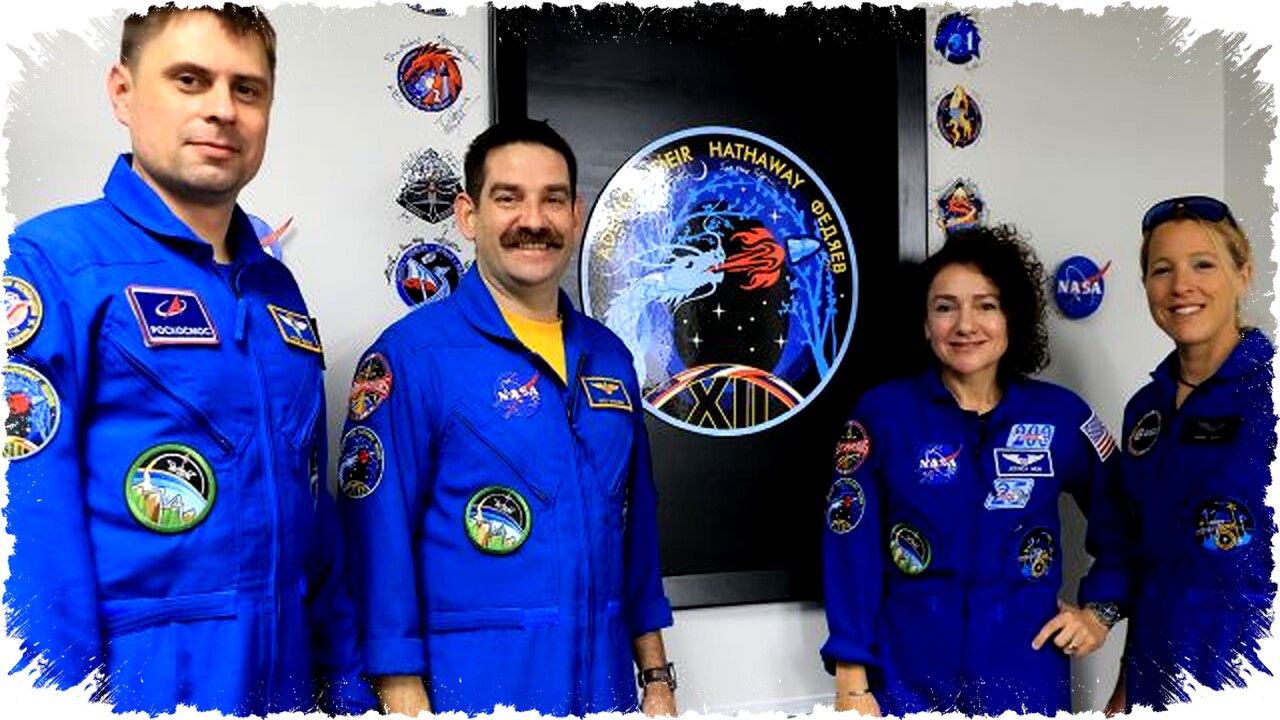
A SpaceX Dragon capsule is scheduled to launch four astronauts to the International Space Station (ISS), restoring the station’s full crew after a period of limited staffing. The Crew-12 mission is set to lift off no earlier than 5:15 a.m. ET from Cape Canaveral Space Force Station in Florida.
NASA has been working to accelerate this launch due to the ISS being staffed with only three astronauts since mid-January. The agency had to skip two earlier launch opportunities because of unfavorable weather conditions along the rocket’s flight path.
The current crew aboard the ISS consists of two Russian cosmonauts, Sergey Kud-Sverchkov and Sergei Mikayev, plus NASA astronaut Chris Williams. This is well below the usual seven-person crew complement preferred by NASA to maximize station productivity and scientific output.
Crew-11, the previous SpaceX mission, ended prematurely when one of its four astronauts returned to Earth due to an undisclosed medical issue. NASA Administrator Jared Isaacman praised the speedy and professional handling of the situation, emphasizing the importance of training for responding to unforeseen challenges.
All four Crew-11 astronauts — NASA’s Zena Cardman and Mike Fincke, Japan Aerospace Exploration Agency’s Kimiya Yui, and Russian cosmonaut Oleg Platonov — safely returned and underwent medical evaluations. Mike Fincke reflected positively on the team’s response, stating it bodes well for future exploration missions.
Crew-12 Mission Details
The upcoming Crew-12 mission will carry NASA astronauts Jessica Meir and Jack Hathaway, European Space Agency’s Sophie Adenot, and Russian cosmonaut Andrey Fedyaev. Unlike typical operations, this mission will not have an on-station handover period due to Crew-11’s early departure.
NASA normally facilitates a direct handover between incoming and outgoing crews to briefly boost staffing levels and ensure smooth transitions. However, Crew-12 astronauts exchanged necessary information with Crew-11 personnel on the ground before launch to prepare for their duties aboard the ISS.
Staffing Challenges and Operational Impact
Operating the ISS with only three crew members reduces the capacity for ongoing research and maintenance. Isaacman highlighted the significance of maintaining a robust team onboard, noting that the $3 billion annual operational cost demands maximizing scientific returns.
Jessica Meir noted that such lean staffing was common several years ago before SpaceX enabled regular crew rotations. The indirect handovers then relied heavily on ground communications rather than overlapping crew presence on the station.
Scientific Goals During the Mission
During their approximately eight-month stay, the Crew-12 astronauts are tasked with a variety of research projects. These include ultrasound examinations of blood vessels to study circulation changes and pharmaceutical experiments focusing on bacteria responsible for pneumonia.
Additionally, the crew will conduct a simulated lunar landing exercise to evaluate how sudden gravity shifts affect human physiology and cognitive function. These experiments aim to advance knowledge critical for long-duration space exploration and future missions beyond Earth orbit.
Looking Ahead for Space Stations and Exploration
NASA continues to support the development of commercial space stations in low Earth orbit to succeed the ISS. Isaacman envisions multiple private-sector stations, provided the remaining lifespan of the ISS is maximally utilized to achieve high-impact science.
Such commercial stations could shift NASA’s focus toward deep space exploration within the solar system. However, maximizing productivity aboard the ISS during this transitional period remains a priority to ensure ongoing scientific progress and operational success in orbit.
Read more at: www.cnn.com-

-

-

-