


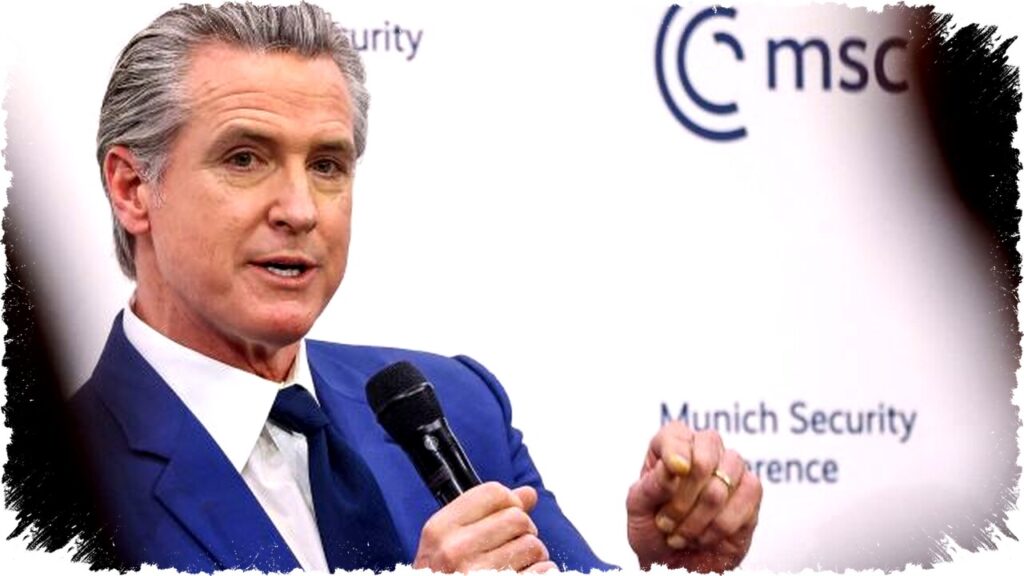
Following the Munich Security Conference, Democrats and European leaders face growing uncertainty in defining the future of global leadership and transatlantic relations. Many Democrats attending the conference in Munich are presidential hopefuls for 2028, yet they confront a reality where the United States may no longer hold the undisputed position as leader of the free world, a role American presidents have maintained since the 1940s.
California Governor Gavin Newsom emphasized his commitment to enduring leadership but conceded that European allies view the transatlantic alliance as severely damaged, with some believing its fracture might be permanent. Newsom stated, “European leaders see us as a wrecking ball… They see us as unreliable, and a lot of them think it’s irrevocable. They don’t think we’ll ever come back to our original form.” Despite this, he expressed hope for repairing relationships, acknowledging the complex and lengthy process ahead.
Democratic Presence and Challenges
Several prominent Democrats, including Rep. Alexandria Ocasio-Cortez, Senators Mark Kelly, Chris Murphy, and Governor Gretchen Whitmer, attended the conference with ambitions to bolster their foreign policy credentials. Ocasio-Cortez aimed to showcase a left-wing populist foreign policy but encountered difficulties, notably during a discussion about Taiwan’s defense. When asked if she would support sending U.S. troops if China invaded Taiwan, she offered a hesitant and unclear response, drawing criticism and highlighting her lack of preparation for complex global security questions.
Senator Mark Kelly highlighted the long-lasting impact of broken transatlantic trust, noting, “even if we are able to repair these relationships, it’s going to take generations before they feel comfortable.” The limited attendance of House Democrats—due to Republican Speaker Mike Johnson canceling the congressional delegation—further reduced the U.S. Democratic presence and signaled political fissures at home affecting foreign policy engagement.
Europe’s Shifting Perspective
Germany’s Chancellor Friedrich Merz voiced a stark message of transatlantic discord, declaring, “A divide has opened up between Europe and the United States. The United States’ claim to leadership has been challenged, and possibly lost.” Merz disclosed confidential talks with France about European nuclear deterrence, underscoring Europe’s growing bid for strategic autonomy amid doubts about American reliability.
European leaders’ skepticism is rooted in the disruptive policies during recent U.S. administrations, especially under former President Donald Trump. Sen. Lindsey Graham, a Trump ally, delivered warnings at the conference urging America to take a tougher line against Iran or risk emboldening Russia and China. He remarked, “If America doesn’t take down the Iranian regime, it will be a disaster… the Western world is full of crap… All they do is talk, and when rubber meets the road, they don’t do a damn thing.”
On the American side, Democratic officials like Rep. Jason Crow emphasized the necessity of reviving the post-World War II rules-based international order while acknowledging its failures in meeting working-class needs globally.
The Legacy of John McCain
The conference also reflected on the legacy of late Senator John McCain, once a central figure in rallying bipartisan support for global alliances. Although his presence is still honored symbolically at Munich, there was a notable absence of similarly strong Republican voices actively engaged in foreign policy discussions at this year’s gathering. Instead, the tone was marked by divisions within U.S. politics and a more sober assessment of America’s role.
Looking Ahead
With Trump’s approval ratings reportedly declining and Democrats hopeful to regain control of the House in upcoming midterm elections, there is cautious optimism about restoring American leadership. Still, the process of reestablishing trust with Europe and reasserting U.S. influence on the global stage will demand strategic clarity and sustained commitment.
Newsom highlighted a key lesson from American political history, quoting former President Bill Clinton: “Given the choice, the American people will always support strong and wrong versus weak and right.” This insight points to the challenge Democrats face in projecting strength while navigating complex geopolitical realities.
The Munich Security Conference served as a stark reminder that both Democrats and European allies are grappling with a fundamental question: What comes next in a world where traditional leadership models have been tested and fractured? The evolving dynamics require new approaches to diplomacy, alliance-building, and defense policies in a rapidly changing global order.
Read more at: www.cnn.com