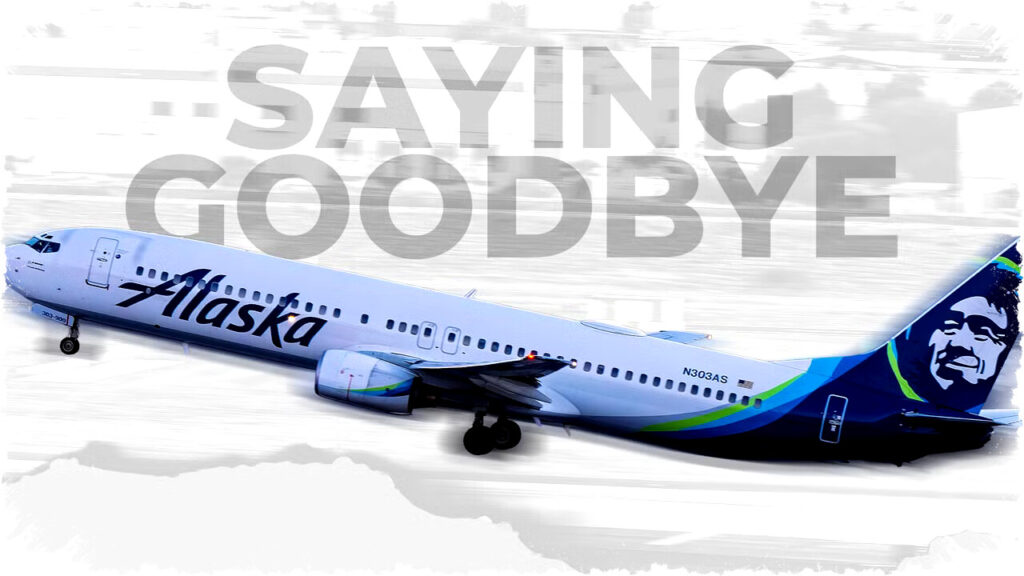
Why Alaska Airlines Phased Out the Boeing 737-900
Alaska Airlines once operated a fleet that included the Boeing 737-900, a variant that has since been retired. The airline officially ended the use of its 12 Boeing 737-900 aircraft by September 2025, marking nearly 24 years of service since they first joined the fleet in 2001. This decision reflects broader operational and strategic considerations within the carrier’s ongoing fleet evolution.
Legacy of the Boeing 737-900 at Alaska Airlines
The Boeing 737-900 was introduced to Alaska Airlines with a two-class configuration, offering seating for 178 passengers. However, this variant did not gain widespread popularity beyond a few operators, including KLM and Korean Air. Alaska Airlines operated the model extensively in its early 2000s fleet, but it was eventually overshadowed by newer variants with better capabilities.
Why the 737-900 Became Redundant
The primary reason for phasing out the 737-900 was the introduction of the Boeing 737-900ER (Extended Range) starting in 2012. This aircraft, nearly identical in appearance to the 737-900, featured structural enhancements, such as an extra set of emergency exit doors. These improvements allowed for a possible increase in passenger capacity up to 220 seats and, more importantly for Alaska Airlines, an extended range of up to 3,775 miles. The 737-900ER matched Alaska’s expanding route network needs, especially on long-haul domestic flights from hubs like Seattle and San Francisco.
Operational Efficiency and Flexibility
Alaska Airlines prioritized operational efficiency in its fleet. The older 737-900s lacked the extended range and design improvements necessary for today’s more demanding routes. Without extended range, these aircraft limited the airline’s ability to serve longer cross-country flights efficiently. Additionally, the 737-900’s lack of extra exit doors constrained seating density, making it less economical than the 737-900ER and the newer 737 MAX variants.
Transition to the Boeing 737 MAX Series
As Alaska Airlines phased out the 737-900, it increased reliance on more modern Boeing 737 variants. The 737 MAX 9, introduced to its fleet in 2021, offered similar capacity but with advanced technology and reduced operating costs. Despite challenges that the MAX series faced in previous years — including safety-related grounding after two fatal crashes and a high-profile door incident in January 2024 with Alaska’s own aircraft — the airline continues to invest heavily in this family. Currently, Alaska has orders for eight additional 737 MAX 8s and 168 737 MAX 10s, with deliveries set to begin by 2027.
Alaska’s Diverse Boeing 737 Fleet
Alaska Airlines’ fleet demonstrates a long-standing partnership with Boeing 737 aircraft across multiple variants:
- Boeing 737-200 (operated 1970–2001)
- Boeing 737-400 (1990–2017)
- Boeing 737-700 (since 1999, still active)
- Boeing 737-800 (since 2001, still active)
- Boeing 737-900 (2001–2025)
- Boeing 737-900ER (since 2012, still active)
- Boeing 737 MAX 9 (since 2021, still active)
The 737-900ER remains the second most common type in the company’s 737 fleet, second only to the 737 MAX 9.
Deployment of 737-900ERs in Alaska Airlines Routes
Alaska Airlines operates its 737-900ERs on a wide range of U.S. routes, strongly focused on connections from Seattle-Tacoma International Airport. The top routes include flights to Phoenix Sky Harbor International Airport, San Francisco International Airport, and Las Vegas Harry Reid International Airport. The extended range capability enables the carrier to deploy these aircraft on transcontinental routes such as San Francisco to New York and Seattle to Miami, increasing operational flexibility significantly.
Strategic Outlook and Fleet Modernization
Retiring the Boeing 737-900 aligns with Alaska Airlines’ broader fleet modernization plan. The carrier’s growing preference for the fuel-efficient 737 MAX series and the extended-range 737-900ER supports cost-effective, long-haul domestic operations. Moreover, Alaska Airlines is investing in widebody aircraft, introducing Boeing 787-9 jets to expand international service from Seattle, including new nonstop flights to London Heathrow and Reykjavik Keflavik.
Alaska Airlines’ CEO, Ben Minicucci, highlighted the airline’s strategic focus on growth, safety, and customer experience with these upgrades, signaling confidence in the aircraft transition. This evolution reflects the airline’s aim to remain competitive by leveraging the latest aircraft technology and extending its reach in both domestic and international markets.
This detailed overview showcases why Alaska Airlines found retiring the Boeing 737-900 a practical move. The shift towards more capable Boeing models offers enhanced range, capacity, and operating efficiency, crucial for the airline’s expanding network and future growth ambitions.