


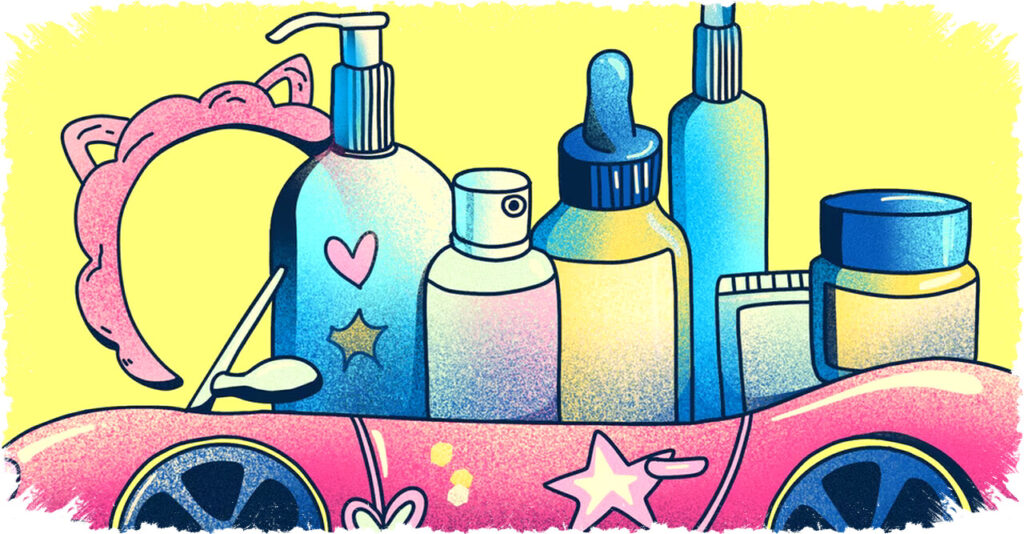
The skin-care industry is increasingly targeting very young children, even toddlers, with specialized products designed to meet the demand of children imitating adult beauty routines. This trend reflects a growing market where companies create skin-care items explicitly formulated for kids, despite dermatologists emphasizing that most children only require basic products like soap, lotion, and sunscreen.
Celebrity influence plays a significant role in popularizing child-centered skin care. Actress Shay Mitchell launched a toddler-friendly facial sheet mask through her brand Rini, catering to her young daughters’ desire to mimic her skin-care rituals. Although this product faced criticism online for encouraging skin care at an excessively young age, Rini adjusted the recommended usage age from three to four years old in response. The controversy highlights societal tension around early introduction of beauty routines for children.
Several brands dive deeper into this niche. Tubby Todd Bath Co. offers simple baby skin-care basics and markets “baby’s first skincare routine” to parents. Evereden promotes skin-care kits for toddlers, including items such as lip oil and face mists, sometimes packaged with playful elements like rhinestone stickers to appeal to children. Brands such as Pipa suggest starting skin-care habits at age eight, aligning with data that Generation Alpha children are experimenting with such products around this age. This new consumer segment has attracted entry from major retailers like Sephora, which now stocks Gen Alpha–targeted brands that provide age-appropriate products and emphasize wellness and protection over anti-aging or intense treatments.
Despite the allure, dermatologists caution that most children’s skin-care needs are minimal. Excessive or inappropriate products can sometimes irritate young skin. For example, many adult skin-care products contain ingredients such as retinol that may be too harsh for youngsters. Parents interviewed report weighing safety heavily and prefer formulations specifically designed with children’s skin sensitivities in mind. Kimberley Ho, co-founder of Evereden, explained that millennial parents’ influence on the wellness economy naturally extends to their children’s interest in self-care.
The appeal for children goes beyond health benefits; skin care functions as a form of play and self-expression. According to observations from an elementary-school teacher and feedback from children, skin-care routines often mix fun with feelings of maturity and social belonging. Products like sheet masks or “face and body crayons” serve as enjoyable activities that engage children similarly to traditional childhood crafts or games. However, experts like child psychotherapist Katie Hurley warn that early, structured skin-care use may limit children’s imaginative play and promote premature preoccupation with appearance.
Psychologists voice additional concerns about the psychological effects of normalizing beauty routines for young children. Susan Linn, an expert on marketing to kids, emphasizes that this trend may introduce children to adolescent insecurities earlier than normal. While companies emphasize skin health and sun protection rather than makeup or anti-aging, the blurring of wellness, hygiene, and beauty categories might subtly shift children’s self-image and perceptions of aging and attractiveness.
Most brands stress that their products are designed to support healthy skin with gentle cleansing and moisturization specifically suitable for children. They reject the idea of pushing adult concepts onto children and instead focus on age-appropriate care. Rini and other companies opt to market these items as tools for self-care rather than correction of flaws.
The industry faces skepticism from some parents and experts who question the necessity of skin-care products for toddlers. A child interviewed for relevance noted that a simple wipe or towel often suffices for messy toddler faces, casting doubt on the practicality of time-consuming routines or sheet masks for very young kids. Market analysts predict that as the toddler skin-care market develops, consumer resistance may intensify, reflecting ongoing debate about the commercialization of childhood and the appropriate age to begin beauty habits.
In summary, the skin-care industry’s expansion into toddler and young children’s markets mirrors broader wellness trends among millennials and Generation Alpha. While these products offer safe, gentle options intended to normalize sun protection and hydration, their growing popularity raises questions about child development, marketing ethics, and societal expectations regarding beauty and self-care from an early age.
Read more at: www.theatlantic.com