


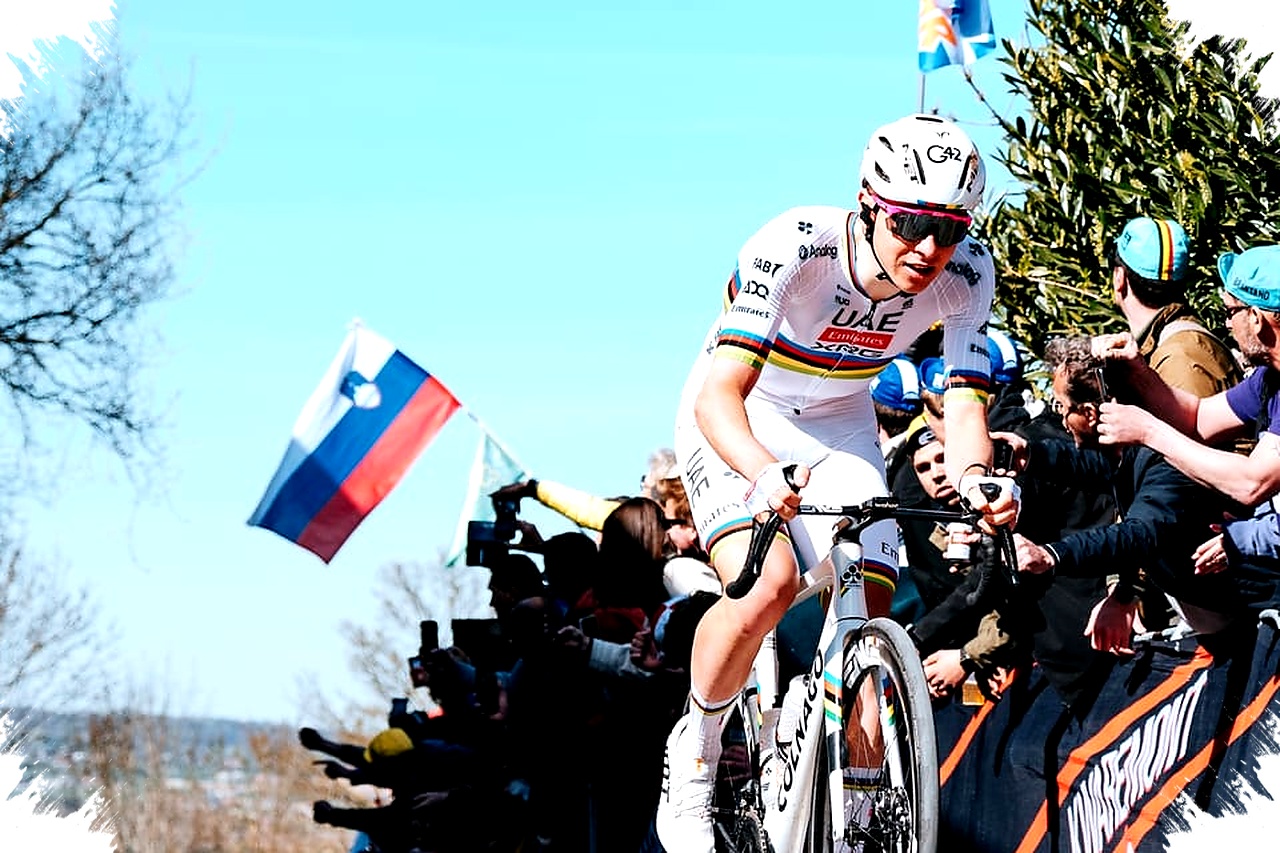
The Tour of Flanders brings one of the strongest one-day fields in recent memory, with Tadej Pogačar and Mathieu van der Poel again set as the central figures. The race also carries extra intrigue because Remco Evenepoel will make his debut in the Monument, while Wout van Aert and Mads Pedersen add more firepower to a start list built for a high-level showdown.
The race matters because Flanders is not just another Classics test. It is the second Monument of the season, and the route around the roads of Belgian cycling culture typically rewards riders who can handle short, steep climbs, rough positioning, and repeated attacks under pressure.
A rare gathering of elite contenders
This edition stands out because several of the biggest names in men’s cycling will line up together in the same one-day race. The reference article notes that this is the first time since the World Road Championships in 2023 that Pogačar, Van der Poel, Evenepoel, Van Aert, and Pedersen have all started a major one-day event together.
That matters for tactics. When multiple riders with different strengths appear in the same race, rivals cannot control the outcome with one clear strategy. Pogačar can attack from distance, Van der Poel can punish races with raw power and positioning, Van Aert can survive long attritional efforts, Evenepoel brings a new wildcard element, and Pedersen has the speed and endurance to last into the final decisions.
The main contenders
The balance of favorites is clear, even if the order behind the top two still looks open. Pogačar remains the rider hardest to dismiss, while Van der Poel continues to be the most obvious challenger on this terrain.
- Tadej Pogačar
- Mathieu van der Poel
- Wout van Aert
- Mads Pedersen
- Remco Evenepoel
Behind that group, several riders could still shape the race if tactics or weather make the day more complicated. Christophe Laporte, Florian Vermeersch, Jonas Abrahamsen, and Jasper Stuyven all offer depth, while riders such as Matthew Brennan, Paul Magnier, Romain Grégoire, Biniam Girmay, Kasper Asgreen, Alec Segaert, Matteo Trentin, António Morgado, Gianni Vermeersch, Magnus Sheffield, Per Strand Hagenes, and Tim van Dijke give their teams options for aggressive racing.
Why Pogačar remains the rider to beat
Pogačar’s status as the leading favorite is based on more than reputation. He has already shown the ability to win the hardest one-day races by attacking before rivals can organize a response, and that style fits Flanders when the final climbs start to wear down the field.
His biggest advantage is versatility. He can follow moves, launch solo efforts, and still respond if the race becomes a reduced sprint among elite puncheurs and classics specialists.
Van der Poel’s biggest threat
Van der Poel has already proven that he can dominate Flanders-level terrain and handle the pressure of being one of the riders everyone marks. His power on steep cobbled climbs and his control of positioning in fast, technical racing make him the most natural rival to Pogačar on paper.
The Dutch rider also has a major advantage in experience. He knows how Monument races at home can turn chaotic, and he has the racing instinct to react quickly if the key move goes without him.
Why Evenepoel changes the race
Evenepoel’s debut adds a new tactical layer because his results in long, demanding road races have made him one of the sport’s most difficult riders to manage. If he adapts quickly to the unique rhythm of Flanders, his ability to produce sustained power could force the leaders to react earlier than expected.
His presence also makes team tactics more complicated. Rival squads may hesitate to let a dangerous move go if Evenepoel is involved, which could create more opportunities for Pogačar or Van der Poel to control the race later.
What Van Aert and Pedersen bring
Van Aert has spent much of the season close to a major return to winning form, and Flanders offers a race where patience can still pay off. His all-round strength means he can survive the hardest parts of the route if he arrives in the final section with enough support.
Pedersen is another major threat because he combines endurance, speed, and resilience on tough terrain. If the race turns into a selective sprint from a reduced group, he has a strong chance to stay in contention until the end.
Key factors that could decide the race
The route should again favor riders who can repeatedly handle climbs and position battles, but the level of the field means small mistakes could be decisive. Team control, timing on the steep sections, and the ability to recover between efforts will matter as much as raw power.
The most likely race patterns include:
- An early breakaway that gains attention but not full control.
- Repeated attacks on the climbs from the biggest favorites.
- A decisive acceleration from one of the top names before the finish.
- A reduced finale where only the strongest can contest the win.
That combination usually leaves little room for hesitation. In a race like Flanders, the strongest rider often still needs the right tactical moment to escape.
A race built for a defining answer
The start list gives Flanders the kind of depth that can produce a memorable Monument, but it also sharpens the central question around Pogačar. Van der Poel has the pedigree to stop him, Evenepoel brings uncertainty, Van Aert is chasing a breakthrough, and Pedersen can punish any moment of weakness.
That makes the second Monument of the season one of the most compelling one-day races on the calendar, with the strongest evidence still pointing to Pogačar as the rider everyone else must beat on the roads of Flanders.