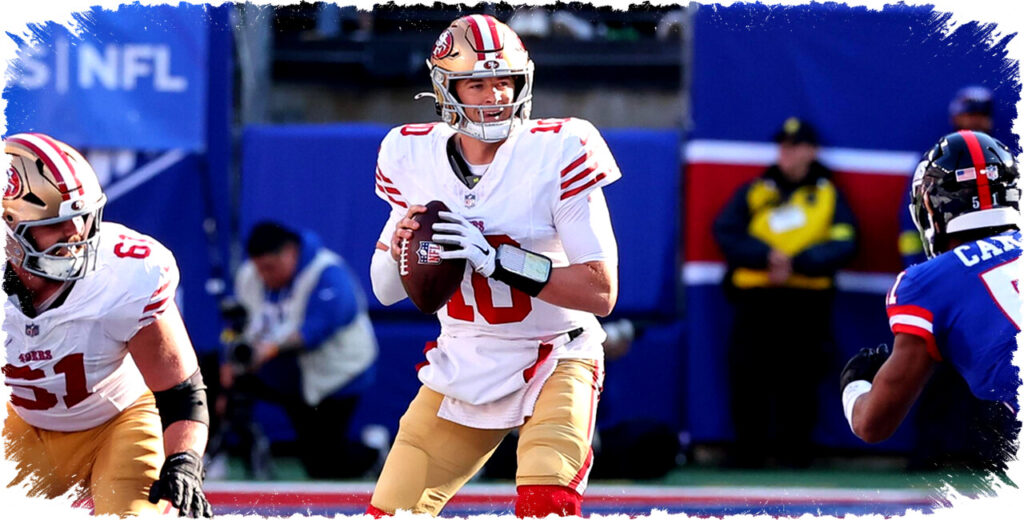
If the San Francisco 49ers intend to trade quarterback Mac Jones, a deal is likely to occur this week. With the NFL’s legal tampering period commencing on March 9, teams often finalize trades involving key quarterbacks just days before this deadline.
General manager John Lynch and head coach Kyle Shanahan have publicly stated their expectation that Jones will remain with the 49ers through 2026. However, NFL executives frequently withhold trade intentions to maintain negotiating leverage. Jones proved instrumental in the 49ers’ successful 2025 campaign as a dependable backup to starter Brock Purdy.
Despite Jones’ value, the 49ers face roster challenges. They need to address positional holes, increase their number of draft picks, and clarify their roster structure ahead of free agency. Backup quarterbacks rarely serve as the foundation for team-building strategies, prompting the franchise to explore trade options.
Timing and Precedent in Quarterback Trades
Historically, significant quarterback trades tend to close in the early March window, just before free agency opens. For instance:
- The Seattle Seahawks traded Geno Smith to the Las Vegas Raiders on March 7 last offseason.
- Derek Carr signed with the New Orleans Saints on March 6 in 2023.
- The Seahawks sent Russell Wilson to the Denver Broncos on March 8 two years ago.
- Mac Jones himself was traded from the New England Patriots to the Jacksonville Jaguars on March 10 two years prior.
Given this pattern, the 49ers are motivated to solicit final offers for Jones this week. This strategy allows them to decide whether to keep Jones or pursue a replacement, such as Zach Wilson, before free agency begins.
Strategic Implications for Trade Partners
Teams acquiring Jones benefit not only by filling a quarterback need but also by enhancing their appeal to potential free agents. For example, a team like the Minnesota Vikings might find it easier to attract receivers if Jones backs up or competes with players like J.J. McCarthy. Moreover, a trade provides a clearer financial framework, enabling negotiations for contract extensions ahead of free agency.
Potential Outcomes for the 49ers
If the 49ers do not receive quality trade offers, they are likely to retain Jones. His contract is cost-effective, and he fits well within Kyle Shanahan’s offensive scheme. Trading him for a late-round draft pick could be counterproductive given the uncertainty about the draft pick’s immediate impact.
Delaying Jones’ trade until the NFL Draft remains an option. However, waiting could complicate San Francisco’s approach to free agency. A timely trade yielding a second- or third-round draft pick could allow the 49ers to bypass signing a costly veteran lineman and instead address that need during the draft.
Waiting until late April may leave fewer interested teams, as some franchises might prefer to commit to rookie quarterbacks rather than acquiring a backup with NFL experience.
The 49ers likely gauged league interest in Jones during the NFL Combine. The team plans to collect final trade offers over the next several days and aims to make a roster decision by week’s end.
Situations in the NFL often evolve rapidly, but as of now, the 49ers appear poised to resolve Jones’ status soon. Whether he remains a backup in San Francisco or moves to another franchise, the upcoming week will clarify his role for the 2026 season.