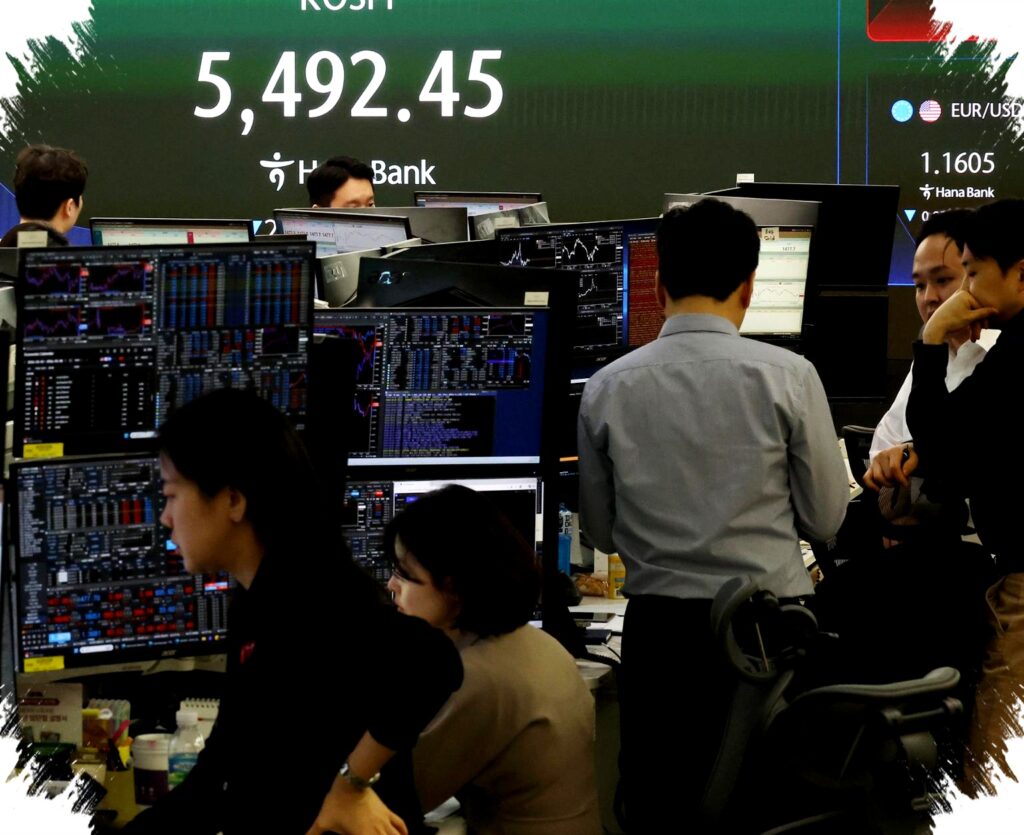
Short-selling transactions surged by more than $338 million on the first trading day after the U.S. and Israel launched air strikes against Iran. Data from the Korea Exchange reveals that short-selling activity reached 2.46 trillion won, marking an increase of 518 billion won compared to the previous session.
This sharp rise occurred amid heightened geopolitical tensions in the Middle East, which triggered a risk-averse mood among investors. The benchmark Korea Composite Stock Price Index (KOSPI) fell over 7 percent that day, reflecting widespread market anxiety.
The short-selling volume on that trading day notably exceeded the 2025 daily average of 1.9 trillion won. Short selling involves borrowing securities to sell them with the intention of repurchasing at a lower price, profiting from a decline in stock prices.
Market analysts suggest that expectations of greater volatility in the Korean stock market, combined with a rapid depreciation of the Korean won to its lowest level since 2009, fueled the surge in short-selling demand. These factors heightened investor caution and encouraged bearish trading strategies.
Lee Kyoung-min, an analyst at Daishin Securities, noted that “the KOSPI continued to rise sharply in January and February, and was at a point where it needed a temporary easing to stop overheating.” This indicates that the market correction triggered by geopolitical risks was partly a natural adjustment after months of gains.
Key factors influencing the increase in short selling include:
1. Geopolitical tensions following the U.S.-Israel air strikes on Iran.
2. Sharp decline in the KOSPI, heightening risk aversion.
3. Currency market pressure as the Korean won weakened significantly.
4. Investor anticipation of increased market volatility ahead.
The intensification of Middle East conflicts has sent ripples across global financial markets, with South Korea’s bourse displaying pronounced sensitivity. The rise in short-selling volume underscores growing uncertainty and a cautious sentiment among investors seeking to hedge against further declines.
Overall, the market moves suggest that geopolitical developments are playing a critical role in shaping investor behavior in South Korea’s equity markets. Continued monitoring of trading patterns and currency movements will be crucial in assessing the sustainability of the current market correction.
Read more at: www.koreatimes.co.kr