A rare total solar eclipse is set to draw wide attention across Europe on 12 August 2026. For observers seeking the clearest view, Spain is expected to stand out as the most favorable location on the continent.
The eclipse will follow a narrow path of totality that crosses Greenland, Iceland, Spain, and a small part of northeastern Portugal. Outside that core track, a partial eclipse will still be visible across a much broader area, extending over Europe, Africa, North America, the Atlantic Ocean, the Arctic Ocean, and the Pacific Ocean.
Spain’s position in the path of totality
European Space Agency, or ESA, says the eclipse will move from west to east across Spain before continuing toward the Balearic Islands. That route gives Spain especially strong viewing conditions for the total phase.
For eclipse watchers, this makes the country the main destination in Europe for seeing the Moon completely cover the Sun. The totality will be easier to observe there than in places that sit closer to the edge of the path.
A rare event for the continent
The 2026 eclipse is drawing attention not only because it is total, but also because full totality will return to mainland Europe for the first time since 2006. ESA has described it as a rare opportunity that is likely to attract skywatchers across borders.
That rarity gives the event broader significance than a routine eclipse. It offers a shared moment for a large number of people across multiple countries, whether they are inside the path of totality or watching the partial phase from farther away.
Historic significance for Spain
For Spain, the date carries an added historical weight. ESA says this will be the first total solar eclipse visible from mainland Spain since 1905.
The event also opens a sequence of three solar eclipses that will be visible from Spain between 2026 and 2028. As a result, 12 August 2026 is not only an isolated astronomical event, but also the start of a rare run of eclipse visibility for the country.
What observers will see
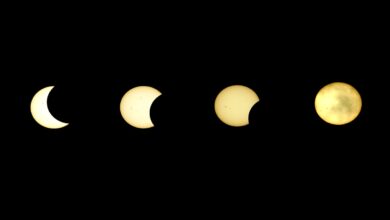
During totality, the Moon passes directly in front of the Sun and blocks most of its light. ESA notes that the Sun’s fiery atmosphere becomes visible at that moment, which is one of the reasons total eclipses are regarded as especially striking.
That visual effect is much more dramatic than a partial eclipse, where only part of the Sun’s disk is covered. It is this difference that makes the total phase the main target for observers traveling into the path.
The wider viewing zone
Although Spain is expected to offer the best conditions in Europe, it is not the only place where totality will occur. Greenland, Iceland, and a small section of northeastern Portugal also fall within the core track.
Beyond that strip, many other regions will still be able to see a partial eclipse. The event’s reach across multiple continents means 12 August 2026 will be watched by people far beyond the narrow line of totality, even if only a few locations experience the Sun completely covered.
Source: mediaindonesia.com