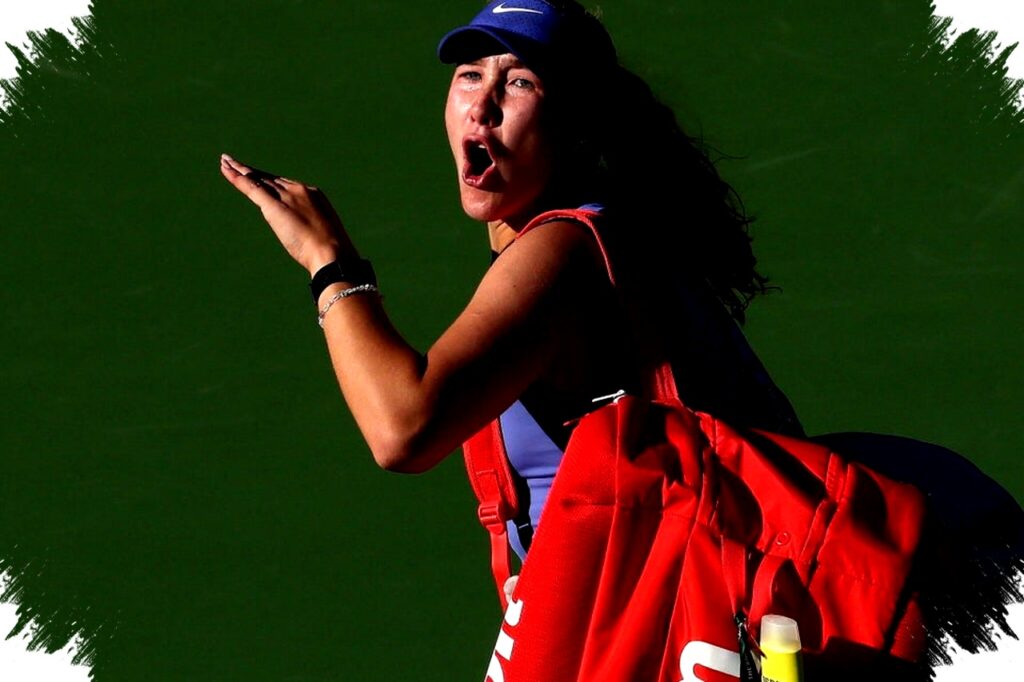
Mirra Andreeva’s attempt to defend her Indian Wells title ended amid high tension and visible frustration during her match against Kateřina Siniaková. The young Russian player lost in three sets, 4-6, 7-6(5), 6-3, and exited the court with a surprising outburst directed at the crowd.
Andreeva, only 18 years old, showed moments of resilience during the match, notably overcoming a double-break deficit to claim the first set. However, as the pressure intensified, she struggled to maintain composure, missing key shots and visibly letting nerves affect her performance.
Pressure of Title Defense
Defending a high-profile title proved to be a heavy burden for Andreeva. She openly admitted her disappointment in how she managed the stress afterward, saying, “I’m not really proud of how I handled it in the end.” The transition from rising star to consistent contender involves learning to cope with fluctuating pressure, a challenge that has led to emotional reactions in previous matches as well.
Her struggles illustrate a broader issue faced by young athletes: adapting to the mental demands of high-level competition. Andreeva has previously displayed similar difficulty managing expectations at significant tournaments, such as during last year’s French Open and the recent Dubai Tennis Championships.
Match Dynamics and Emotional Outburst
The contest against Siniaková was marked by lengthy rallies and momentum shifts. Andreeva created 26 break points but converted only seven and struggled with unforced errors. During the second set tiebreak, frustration peaked when she missed a crucial volley and responded by smashing her racket on court.
The match closed on a tense note with a rare net cord favoring Siniaková on match point. Following the handshake, Andreeva walked off while making an explicit gesture and voiced curses, directed either at her team or the crowd, some of whom booed her departure.
Siniaková’s Perspective and Experience
Kateřina Siniaková, a top doubles player ranked outside the top 40 in singles, reflected on the match by acknowledging the pressure her opponent faced. She said, “I was trying to enjoy it, because finally I was on the other side when I have nothing to lose.” Siniaková’s composed mindset contrasts with Andreeva’s struggle to channel expectations positively.
Developing Mental Resilience
Andreeva’s rise has been meteoric, with two WTA 1000 titles in the past year. Yet she has fallen short in several critical matches since then, highlighting that growth in match management is crucial going forward. The Russian’s distinctive playing style, including a potent topspin forehand paired with her defensive squash shot, has sometimes been undermined by self-doubt under pressure.
The rapid ascent into the sport’s upper tier has amplified scrutiny and expectation. Seasoned champions understand the need to maintain aggressive, confident play regardless of match swings. Andreeva’s challenge is to internalize this consistency while controlling emotional responses during adversities.
Key Points on Andreeva’s Recent Performance Challenges:
- Frequent emotional reactions after difficult losses, including racket smashing and tears.
- Struggles to sustain confidence in her preferred techniques under pressure.
- Difficulty handling the psychological burden of defending titles and high expectations.
- Mixed record in late stages of tournaments, with more losses than wins in semifinals and quarterfinals.
- Ongoing efforts to develop mental toughness while maintaining her aggressive playing style.
Mirra Andreeva’s Indian Wells exit highlights the complexity young athletes face when transitioning from breakout success to established contender status. The blend of talent, mental resilience, and emotional control will be pivotal as she continues her career on the WTA Tour. Meanwhile, her interactions with the crowd and team during tense moments underscore a need for maturity in handling the pressures of elite competition.
Read more at: www.nytimes.com