


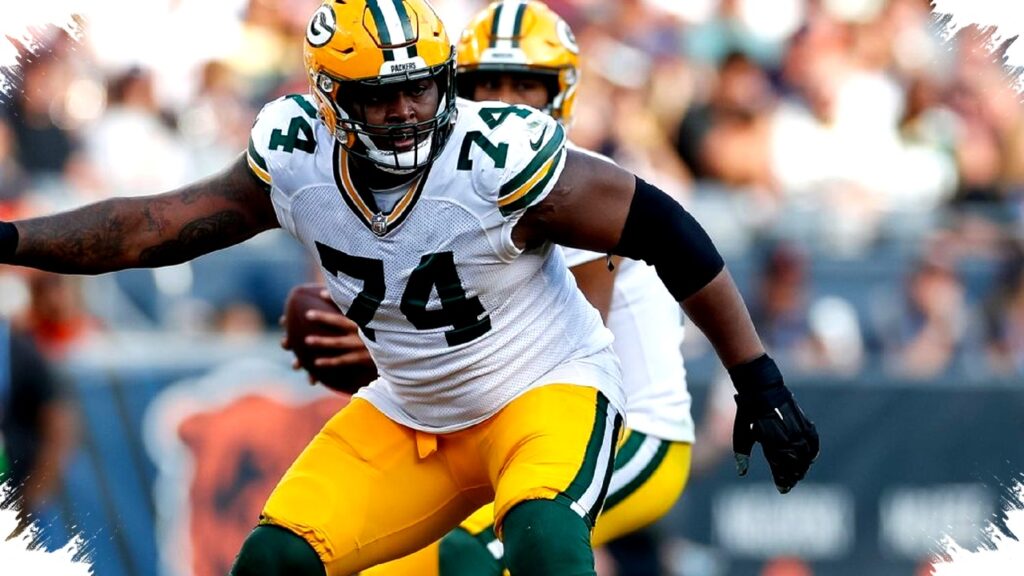
The Green Bay Packers have released offensive lineman Elgton Jenkins, creating more than $19.5 million in salary cap space this season. This decision comes just a year after the team moved Jenkins from left guard to center.
Jenkins, aged 30, was in the final year of a four-year, $68 million contract extension. At the time of signing, his deal made him one of the highest-paid guards in the NFL. He earned Pro Bowl selections twice as a left guard—in 2020 and 2022.
The Packers transitioned Jenkins to center after signing free agent guard Aaron Banks last year. Jenkins reportedly skipped much of the offseason program, seeking a contract adjustment to secure more guaranteed money. The team, however, declined to modify his deal.
In the 2025 season, Jenkins started nine games at center before suffering a fractured ankle in a Nov. 10 game versus the Philadelphia Eagles, which ended his season. His release was announced one day after the Packers signed Sean Rhyan to a three-year, $33 million contract to replace him at center.
The moves involving Jenkins and the trade of defensive end Rashan Gary to the Dallas Cowboys have altered the Packers’ roster dynamics. Quarterback Jordan Love is now the longest-tenured player on the team, having been drafted a year after both Jenkins and Gary in 2019.
Impact of Jenkins’ Release on Packers’ Salary Cap
By releasing Jenkins, the Packers have freed up $19.5 million against the salary cap. This significant financial flexibility gives the team more options in upcoming player acquisitions and negotiations. The decision underscores the team’s focus on both performance and cap management moving forward.
Packers’ Recent Roster Changes
- Elgton Jenkins Released: Opens $19.5 million in cap space.
- Sean Rhyan Signed: New starting center with a three-year, $33 million deal.
- Rashan Gary Traded: Sent to the Dallas Cowboys earlier on the same day as Jenkins’ release.
- Jordan Love: Now the longest-tenured player, drafted in 2019 after Jenkins and Gary.
Jenkins’ release marks a pivotal moment for the Packers’ offensive line strategy. The team appears to be shifting resources and vision toward younger talent and cap efficiency. This move also highlights the challenges of positional changes and contract negotiations in the NFL.
As the Packers prepare for the upcoming season, the open cap space may enable additional roster improvements. The organization will likely target reinforcements to support the line protecting quarterback Jordan Love, whose leadership role has grown following the departures.
Jenkins’ career with the Packers featured notable achievements, including multiple Pro Bowl honors. However, injuries and positional adjustments influenced the team’s decision to move on. The new era of Green Bay football will unfold with fresh personnel in key positions along the offensive front.
Read more at: www.espn.com