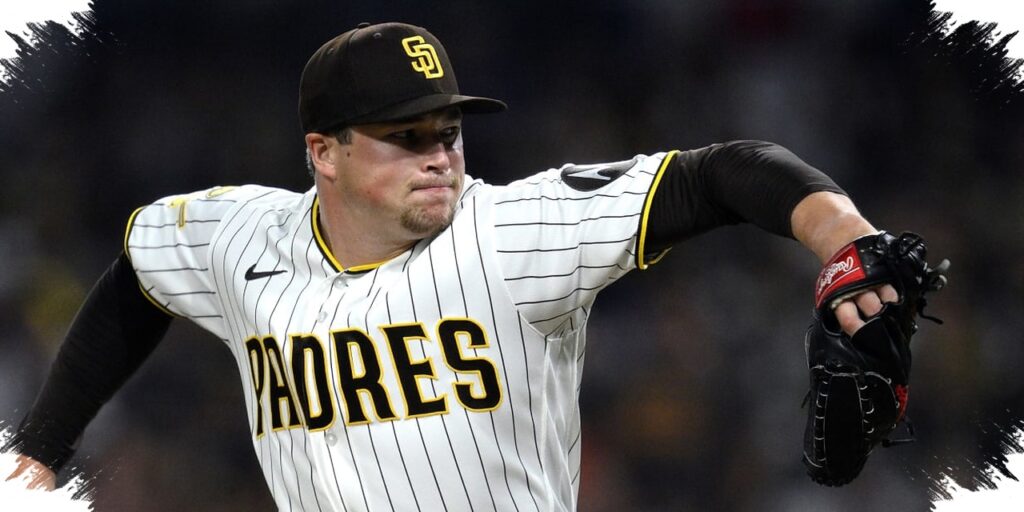
Mason Miller’s scoreless streak has quickly become one of the most striking pitching runs in the majors. The hard-throwing right-hander has not allowed a run in his past 25 2/3 innings, which stands as the longest active scoreless streak in MLB and puts him within eight innings of tying the Padres’ franchise record.
The run has also shown no sign of slowing down. Miller has overpowered hitters with elite velocity, a sharp slider, and a strikeout rate that has left opposing lineups with very few clean looks.
Why Miller’s streak stands out
Miller has not allowed a run since Aug. 5, 2025, coming in just his second appearance with San Diego after the Padres acquired him from the A’s in a trade-deadline move. According to the Elias Sports Bureau, he now owns the eighth-longest scoreless streak in Padres history, with Cla Meredith still holding the club record at 33 2/3 consecutive scoreless innings in 2006.
That gap is not impossible to close if Miller keeps missing bats at his current pace. His streak has already extended across multiple strong outings, and the quality of contact against him has been minimal throughout the stretch.
Key facts behind the streak
Here are some of the most notable numbers from Miller’s scoreless run:
- He has gone 25 2/3 innings without allowing a run in the regular season.
- He has thrown 32 1/3 straight scoreless innings if the postseason and the World Baseball Classic are included.
- He has faced 15 batters this season, and 11 have struck out.
- Nine of those strikeouts have come in a row, all on swinging strikeouts.
- Opponents have just five hits against him during the streak, and every one of them was a single.
- Those five hits came from Masataka Yoshida, Heliot Ramos, Josh Naylor, Warming Bernabel, and Luis Arraez.
The numbers show how difficult it has been for hitters to even put the ball in play against him. Nearly 60% of the batters Miller has faced during the streak have struck out, which is an elite level of domination for any reliever.
Slider damage has been a major factor
Miller is best known for a triple-digit fastball, but his slider has been just as important during the streak. Opposing hitters have produced a 76.9% whiff rate against his slider this season, a number that explains why so many plate appearances have ended quickly.
He has also recorded 33 strikeouts in 44 plate appearances that ended on sliders during the scoreless streak. That kind of swing-and-miss production gives Miller a second dominant weapon beyond pure power, and it forces hitters to protect against multiple pitches at once.
How rare the contact suppression has been
Miller has been nearly untouchable when hitters do make contact. Opponents are batting only .063 against him during the streak, with five hits in 79 at-bats, and his slugging percentage allowed is also .063 because every hit has been a single.
Among 365 pitchers who have faced at least 75 batters since Miller’s streak began, he ranks first in opponents’ batting average, slugging percentage, strikeout rate, and whiff rate. In each of those categories, the separation from the rest of the group is large enough to make the comparison even more impressive.
Miller’s Padres impact so far
The streak has also helped define Miller’s early work with San Diego. He has posted a 0.65 ERA in a Padres uniform, which ranks as the third-lowest mark through a pitcher’s first 26 appearances with the franchise.
Only Fernando Rodney, with a 0.34 ERA in , and John Urrea, with a 0.52 ERA in , were better in that span for the Padres. That places Miller in a notable group while also showing how quickly he has made an impact after joining the club.
Miller’s next scoreless outing will not only extend his current run but also move him closer to a franchise milestone that has stood for nearly two decades. With his velocity, swing-and-miss stuff, and command of two overpowering pitches, the streak remains one of the most closely watched pitching storylines in the majors.