


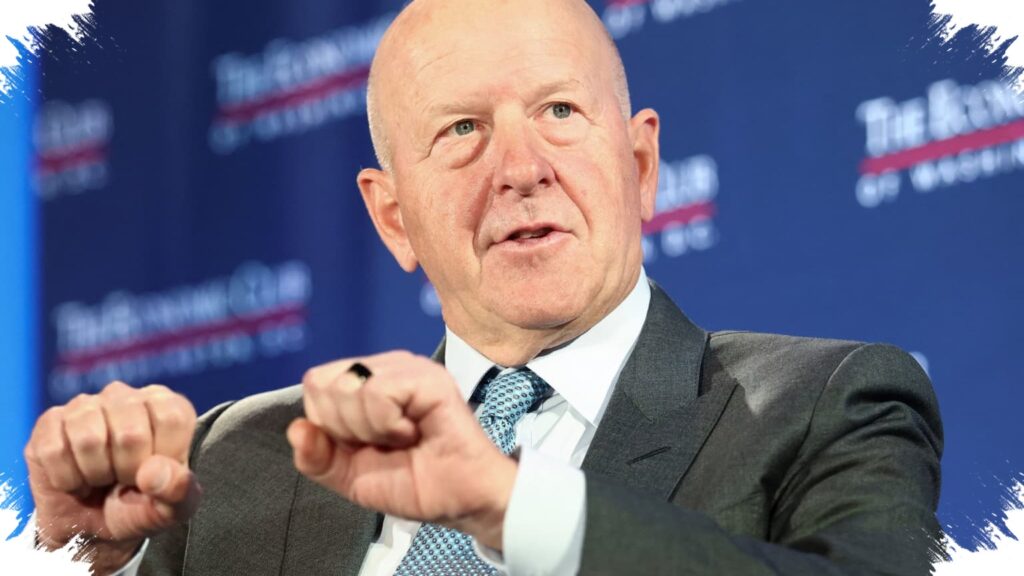
Goldman Sachs delivered stronger-than-expected first-quarter earnings as record equities trading and higher investment banking fees helped offset weakness in fixed income. The bank reported earnings of $17.55 per share on revenue of $17.23 billion, beating the LSEG consensus estimate of $16.49 per share on revenue of $16.97 billion.
Net profit rose 19% from a year earlier to $5.63 billion, while revenue increased 14% from the prior-year quarter. The results showed that Goldman’s core trading and advisory businesses benefited from active market conditions and continued client demand at the start of the year.
Trading Strength Lifted Results
Goldman said equities revenue rose 27% to $5.33 billion, marking its biggest quarter in the business and helping drive the firm’s second-highest quarterly revenue on record. The bank pointed to stronger financing activity from hedge fund clients in prime brokerage, along with active cash equities trading as buyers and sellers adjusted positions amid market volatility.
The performance reflected a busy period for Wall Street trading desks as institutional investors repositioned portfolios in response to artificial intelligence-led market disruption. That backdrop helped Goldman capture more flow across its stock-trading operations, which remain one of the firm’s most important revenue engines.
Investment Banking Fee Growth Beat Estimates
Investment banking fees increased 48% to $2.84 billion, coming in about $340 million above StreetAccount estimates. Goldman said the gain was driven by stronger advisory revenue from completed merger deals, while equity and debt underwriting also contributed to the improvement.
The upbeat banking results suggest that deal activity has remained resilient despite uneven macroeconomic conditions. For Goldman, which depends heavily on trading and investment banking, that mix provided a meaningful boost to overall profitability in the quarter.
Fixed Income Fell Short
Not every business line moved in the same direction, as fixed income revenue declined 10% to $4.01 billion and missed StreetAccount expectations by roughly $910 million. Goldman said the shortfall came from significantly lower revenue in interest rate products, mortgages, and credit.
The weaker result underscores how sensitive the bank’s fixed income franchise can be to shifts in market conditions and client activity. While equities and advisory work strengthened, the missed fixed income result kept the quarter from being even stronger.
What Analysts Are Watching Next
Analysts are now focused on how geopolitical risk may affect Goldman’s outlook, especially after the Iran war began on Feb. 28. Disruptive events that affect commodity prices can slow dealmaking if corporate clients step back, but they can also support trading revenue through higher activity in rates, bonds, and currencies.
Below is a simple breakdown of Goldman Sachs’ reported figures:
| Metric | Reported | Estimate |
|---|---|---|
| Earnings per share | $17.55 | $16.49 |
| Revenue | $17.23 billion | $16.97 billion |
| Net profit | $5.63 billion | — |
| Equities revenue | $5.33 billion | — |
| Investment banking fees | $2.84 billion | — |
| Fixed income revenue | $4.01 billion | — |
Goldman shares have risen about 3% this year, reflecting investor optimism around its trading strength and franchise resilience. The latest results point to a firm that is still benefiting from active markets, even as fixed income weakness and geopolitical uncertainty remain key variables for the next quarter.
Read more at: www.cnbc.com