


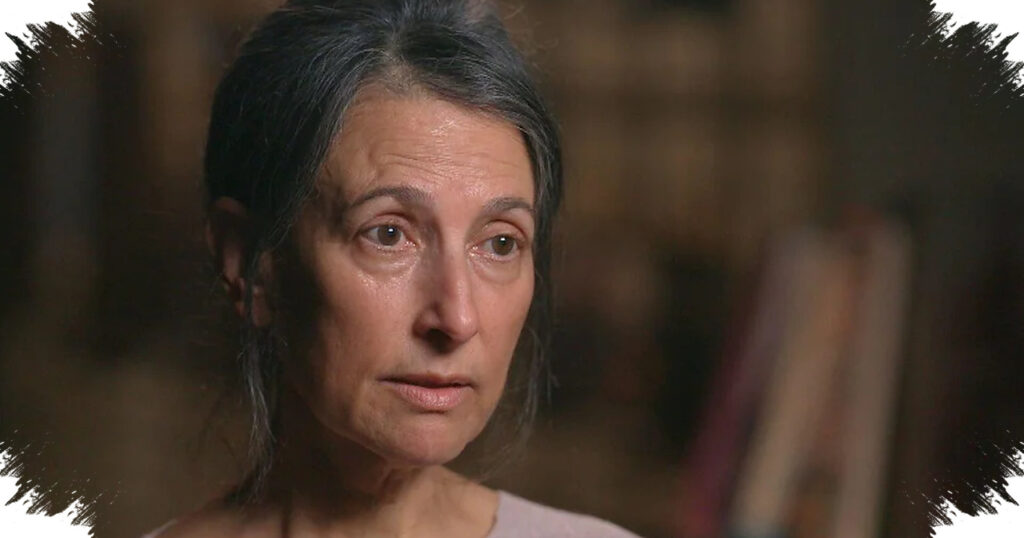
Rachel Goldberg-Polin has turned private loss into a public voice for the families caught in the Hamas hostage crisis. Her son, Hersh Goldberg-Polin, was abducted on October 7 from the Nova Music Festival and later killed by Hamas after 328 days in captivity.
She has described grief as something that does not fade cleanly, but stays close and constant. In her words, it can become a “precious badge of love” worn by parents whose children are gone, yet never absent from memory.
A mother’s life split in two
Rachel and her husband, Jon, moved to Jerusalem with their three children 18 years ago. Hersh was their only son, and Rachel has said he was “easy,” the kind of child who seemed naturally made for their family.
That sense of ordinary family life changed in a matter of moments on the morning of October 7. Rachel said the sirens began, then two messages came from Hersh at 8:11: “I love you” and “I’m sorry.”
Those texts were sent from inside a bomb shelter at the Nova festival site near the Gaza border. Witness accounts and later footage showed the chaos that followed as Hamas attackers killed hundreds of people and injured many more.
The video that confirmed his kidnapping
Rachel and Jon spent months pushing for the release of hostages and speaking to world leaders, religious figures, and the media. Rachel became one of the most visible faces of the hostage families, often wearing a piece of tape marked with the number of days since the abductions.
The family later learned that Hersh had been seriously wounded in the attack and forced into a pickup truck. Rachel said the confirmation of his kidnapping was painful, but also gave the family proof that he had been alive when taken.
She has described that moment as cruel and human at the same time, because certainty replaced fear, even if that certainty was devastating. For the family, knowing he had been taken alive became a brief source of relief in a collapsing situation.
What his fellow captive saw
More details emerged after hostages were later released. Or Levy, who spent three days with Hersh in a tunnel, said Hersh stayed calm and kept laughing despite the loss of his arm and hand.
Levy said Hersh repeated a line from Viktor Frankl’s Man’s Search for Meaning: “He who has a why can bear any how.” That phrase became a source of strength for other captives as well, and Levy later tattooed it on his arm.
For Rachel, Levy’s account brought a painful kind of comfort. She said it suggested that Hersh’s voice and spirit were still reaching beyond the tunnel where he was held.
A final message from Gaza
Rachel and Jon continued their campaign even after Hamas released videos of Hersh during captivity. One of those videos showed the stump of his arm, and Rachel said it renewed the urgency to keep fighting for all the hostages.
On the 328th day, Rachel stood with other hostage families and shouted their loved ones’ names toward Gaza. Only later did she learn that the day her voice rose in prayer and desperation was also the day Hersh was murdered.
Israeli soldiers later found his body in an underground tunnel in Rafah, along with those of five other hostages. Hersh had been shot six times at close range, according to the report.
Living with grief after the war’s headlines move on
When Hersh’s body was returned to Israel, thousands lined the streets and attended his funeral. Rachel and Jon then kept advocating for the remaining hostages while also searching for details about the last months of their son’s life.
Rachel has said the grief is not linear and does not arrive in neat stages. She said she once dreaded grief, but now sees it differently, as something that grows with love rather than replacing it.
That change in perspective shaped the book she wrote, When We See You Again. In it, and in her public remarks, she has pushed back against easy language about healing, saying pain can be “chronic, ever present, constant, gnawing, circular.”
What remains in Hersh’s room
Even after the last hostage was returned, Rachel and Jon left Hersh’s room largely untouched. It remained a place of memory, along with the pieces of tape the family had used to count the days.
Rachel said the tape eventually came down from the wall, but not because the pain had ended. She called the reminders symbols of failure, then added that the effort still mattered because hostages had come home, even if not in the way every family had hoped.
Her response is marked by both sorrow and resolve. Rachel has said that “sometimes, 100% is not enough,” a line that captures the helplessness many hostage families have felt and the exhausting work they carried through months of uncertainty.
A private loss made public
Rachel Goldberg-Polin’s story has come to stand for the unbearable cost carried by many families on both sides of the war. She has spoken not only as a mother who lost a son, but also as someone trying to understand how to live in a world where love remains after death.
For her, grief is not only damage. It is also proof of attachment, memory, and a bond that does not disappear when a life is taken.
Read more at: www.cbsnews.com