


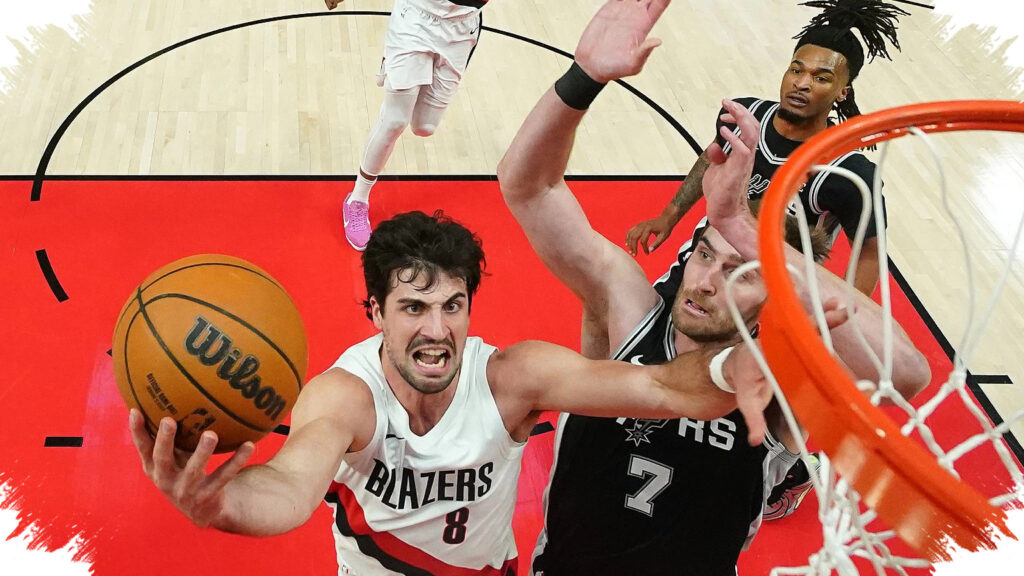
Portland has little time to reset after letting Game 3 slip away at home, and the pressure now shifts quickly to Game 4 in an early afternoon start in Portland. San Antonio leads the series 2-1 after a 120-108 win Friday night, and another Spurs victory would put Portland in a difficult 3-1 hole.
The game also carries added uncertainty because Victor Wembanyama has been cleared to play after missing Game 3 with a concussion sustained in Game 2. His availability, and especially his minutes, could change the tone of the matchup immediately.
1. Wembanyama’s return, and how much he can handle
The biggest variable in Game 4 is not only whether Wembanyama plays, but how long he stays on the floor. He was limited to 11 minutes in Game 2, and the Spurs may be cautious about pushing him too hard in his return after missing the previous game.
Wembanyama already showed how much of a series swing he can be when he scored 35 points in Game 1, a franchise record for a playoff debut. Spurs coach Mitch Johnson has said Wembanyama is progressing, while also stressing the controlled return-to-play process, which suggests San Antonio will keep a close eye on his workload.
2. Portland’s need for a steadier response late in the game
Game 3 turned sharply in San Antonio’s favor when Portland could not hold a 15-point second-half lead. The Blazers were up 82-67 with 5:09 left in the third quarter, but the Spurs later moved ahead 108-96 with 5:48 remaining in the fourth.
That stretch exposed Portland’s offensive issues, as the team went 6-for-23 from the field and missed all six of its 3-point attempts. Deni Avdija went 0-for-4 in that span, while Jrue Holiday, despite a strong all-around night with 29 points, six rebounds, five assists and four steals, managed only 1-for-4, and Jerami Grant went 0-for-3.
3. Avdija has to create more clean offense
Portland needs more than free throws from Deni Avdija if it wants to even the series. He scored 30 points in Game 1, then dropped to 14 in Game 2 and 19 in Game 3, with 12 of those points coming at the line rather than from live action.
San Antonio has made life difficult for him near the rim, where Luke Kornet has been in position to challenge his shots. Avdija finished just 2-for-10 on attempts in the paint in Game 3, and the Spurs also used multiple defenders and physical pressure to make his scoring chances harder to convert.
The Spurs, meanwhile, found another surge from their young backcourt in Game 3, with 20-year-old rookie Dylan Harper scoring 27 points, including 22 in the second half, and second-year guard Stephon Castle adding 33. Harper also grabbed 10 rebounds, becoming the youngest guard to post a playoff double-double, and his production, along with Castle’s, helped San Antonio erase the deficit and take control when Portland needed a finishing run.