


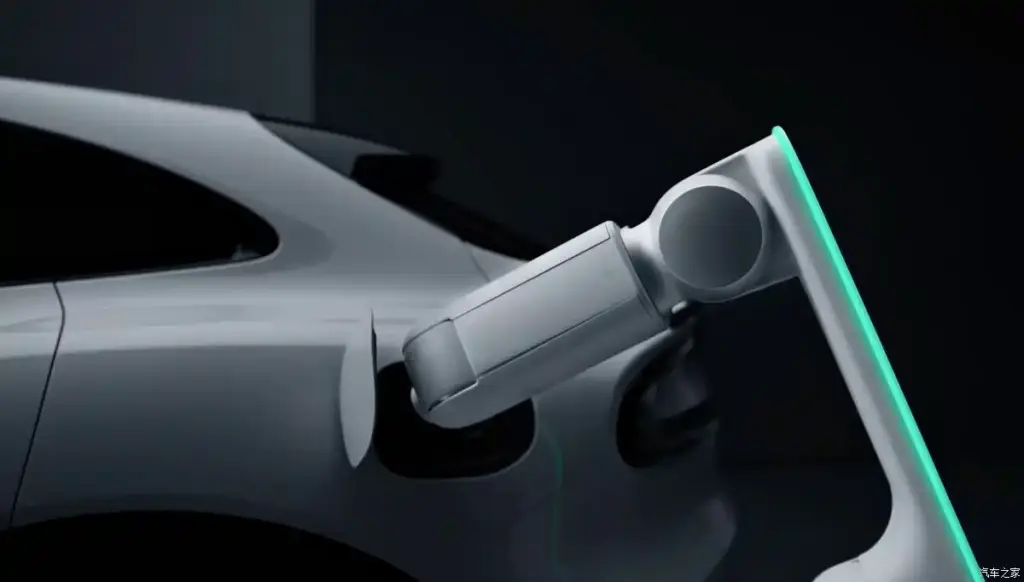
Xiaomi has shown a robot charging arm designed to handle electric-vehicle charging without direct user intervention. The system is intended for home use and can connect and disconnect the charging gun on its own.
For EV owners, the biggest appeal is simple convenience. The process no longer requires bending down or manually arranging cables every time the vehicle needs to charge.
Built for tighter garages
Xiaomi says the robot arm is only 152 mm wide, a dimension that makes it easier to place in compact parking spaces. The company also says the device can be operated remotely through a smartphone, giving users another layer of control without standing beside the car or charger.
The demonstration shared by Xiaomi showed the arm working automatically once a car was parked in the charging area. That presentation highlights the company’s effort to make daily EV ownership feel more practical at home.
Part of a broader home charging lineup
The new robot arm expands Xiaomi’s home EV charging products, which already include 7 kW and 11 kW home charging piles. Both models have the same physical size, measuring 400 mm x 180 mm x 120 mm.
| Model | Main Details |
|---|---|
| 7 kW home charging pile | 220V single-phase power, 640 g charging gun |
| 11 kW home charging pile | 380V three-phase power, 770 g charging gun |
The 7 kW version runs on 220V single-phase electricity and uses a charging gun weighing 640 grams. The 11 kW version keeps the same body size but switches to 380V three-phase input and a slightly heavier 770-gram charging gun.
For users who want something more flexible, Xiaomi also offers the Mijia Car Portable Charger and Discharge Gun. That device works as both a charger and a discharge tool, with 2.8 kW output for charging and 3.5 kW output for discharge on standard 220V household power.
Not a new direction for Xiaomi
The robot arm is not an isolated concept. When Xiaomi first introduced Xiaomi Pilot Technology for autonomous driving, automatic charging with a robot arm was already listed among its development plans.
At that time, the feature appeared alongside autonomous valet parking. The home device now shown can therefore be seen as a physical step toward a direction Xiaomi had already outlined before.
Xiaomi Auto Technology has also received patent approval for an EV charging system from the Chinese Intellectual Property Organization, or CNIPO. In a separate development track, Xiaomi filed a patent for a wireless EV charging system that uses an autonomous cargo vehicle to approach the EV and connect automatically.
Those moves suggest Xiaomi is building more than just cars. The company is also shaping the charging ecosystem around them, especially for home use where convenience matters most.
That focus is significant because home charging often defines the day-to-day EV ownership experience. A robot arm that takes over the plug-in process could reduce one of the most repetitive tasks associated with charging a vehicle.
Xiaomi has not announced pricing or availability for the robot charging arm. For now, it remains a demonstration product that shows the company’s direction rather than a confirmed retail launch.
Even so, interest is likely to be strong because Xiaomi has been aggressive in building EV-related accessories with a competitive approach. If it reaches the market, the robot arm could become one of the most attention-grabbing devices in Xiaomi’s home charging lineup.