


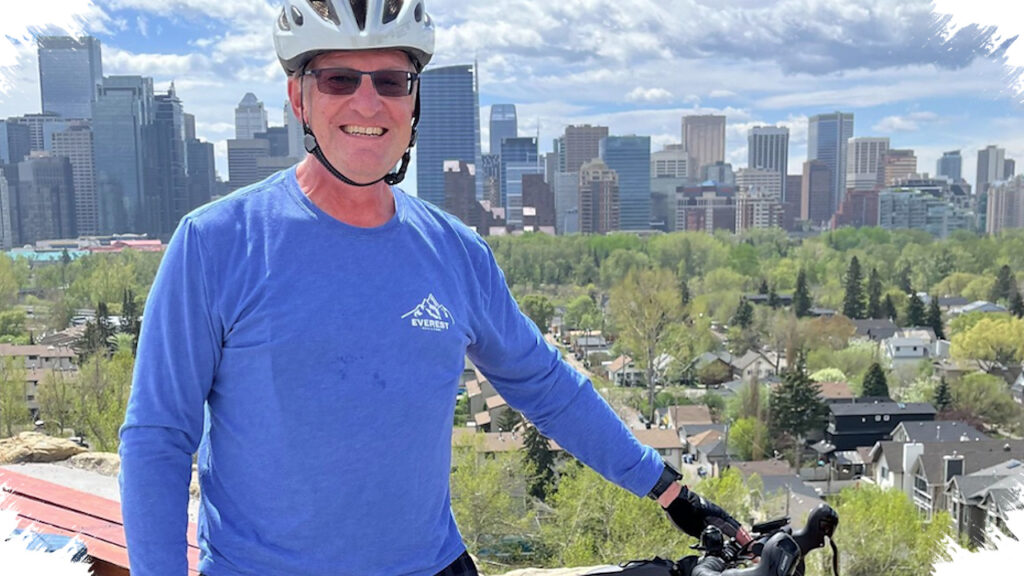
A former Ironman triathlete says a change in vision was the first warning sign of stage 4 lung cancer, a diagnosis that initially came with a prognosis of only 12 to 24 months. Dave Nitsche, 57, later said a newer treatment helped him live far beyond that estimate, turning a frightening eye problem into a long-running fight against advanced cancer.
Nitsche said the trouble began in 2019, when he noticed he was struggling to see with his left eye. He first went to an optometrist and was told it might be a detached retina, but scans later showed fluid buildup and increasing pressure that had already caused vision loss in the eye.
How the diagnosis unfolded
Doctors eventually removed the eye, and a biopsy of the fluid found cancer. Nitsche then saw additional specialists, who drew fluid from his lungs for more testing, and an oncologist told him the next day that he had stage 4 lung cancer.
Nitsche said the result shocked his doctors because he had never smoked. He also had no major warning signs besides the eye problem, aside from occasional back pain that never suggested cancer was the cause.
Azam J. Farooqui, M.D., a hematology and oncology physician at Ironwood Cancer & Research Centers in Chandler, Arizona, said the case was unusual. “Cancer can find its way to some very odd locations, but the eye is a very, very rare one,” he told Fox News Digital, adding that cancer typically reaches the eye through a nerve channel or blood vessel.
Treatment changed the outlook
Nitsche’s first treatment was a targeted therapy called afatinib, which worked for about three months. When doctors later found that the cancer had spread to his brain, he moved to Tagrisso, or osimertinib, a drug that can cross the blood-brain barrier.
After six years, those medications stopped working, and he started Rybrevant, or amivantamab, a chemo-free drug delivered through IV infusion every three weeks in a supervised medical setting. Nitsche said scans after a year on the drug looked “very, very good,” and he described the treatment as “very tolerable” overall.
He said the side effects have mainly included skin irritation and fingernail infections. Farooqui said Rybrevant is generally “very manageable” compared with full-dose chemotherapy and other lung cancer treatments, though the FDA notes that side effects can also include infusion reactions, muscle and joint pain, mouth sores, swelling, fatigue, nausea, bowel changes, vomiting, cough, shortness of breath and low appetite.
Living with advanced cancer
Nitsche, who has completed multiple Ironman races, said he stayed physically active when the diagnosis came and was running quite a bit at the time. He now credits his endurance training and high fitness level with helping extend his survival.
“Doctors gave me a year to two years – they told me to get my affairs in order. And it’s been seven years now,” he said. “I’ll take it.”
He also pointed to the emotional side of living with cancer, saying, “There are days that you feel strong and there are days that you’re a little weaker, but you just adjust accordingly.” Despite the diagnosis, he said he still sees room for hope in modern treatment, adding that “for almost any type of cancer, a diagnosis is not a death sentence.”
Using his experience to raise awareness
Rybrevant is now approved in the U.S. and Canada for certain types of non-small cell lung cancer, and Nitsche said some of his friends are also taking it. He is now preparing for a 600-mile biking expedition in June to raise awareness about lung cancer and continues to speak publicly about what he has learned from his own case.
Farooqui said patients should keep pushing for the most current treatment options and advocate for themselves when side effects become difficult. Nitsche’s story now stands as a reminder that lung cancer can appear in unexpected ways, even in people without a smoking history, and that new therapies can give some patients far more time than they were first told to expect.