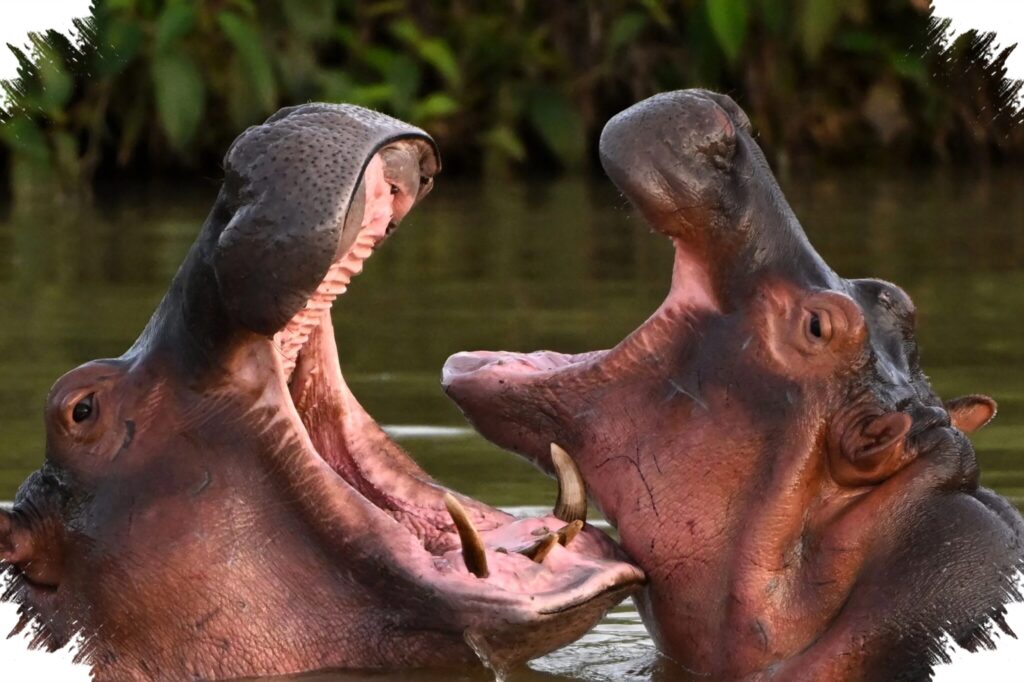
In Doradal, Colombia, the sound of hippos has become part of daily life. The animals that once belonged to Pablo Escobar’s private zoo now draw tourists, frustrate some scientists, and force officials to weigh culling against relocation.
The latest twist comes from India, where billionaire Anant Ambani has offered to move 80 hippos to his wildlife reserve in Gujarat state. That proposal has created fresh debate over whether the invasive animals can be safely transferred or whether Colombia should continue with population control measures at home.
A wildlife problem born from Escobar’s private zoo
The hippos in Doradal are descendants of four animals brought illegally to Colombia in the 1980s. Pablo Escobar kept them on a ranch near the town along with elephants, giraffes, and zebras, but after the government seized his properties, the hippos were left behind.
With no natural predators in Colombia, the population spread quickly. Scientists now estimate that around 200 hippos roam freely near Doradal, a region of forests and large rivers that has given the animals room to expand.
For many residents, the animals are impossible to ignore. Locals and visitors gather in the afternoons by a lake on the edge of town, where the hippos float in the water while people drink beer, take photos, and watch them from a distance.
Tourist draw and ecological risk
The animals have become a major attraction for Doradal, where statues of hippos appear across the town and local businesses sell T-shirts, key rings, and other souvenirs. Some residents even take visitors on hippo safaris, turning an invasive species into a source of income.
Lina Morales, a local hotel worker, described the hippos as one of the town’s main attractions. Business owner Tania Galindo said the animals are now part of the community, while also acknowledging that their numbers should be controlled.
That popularity, however, does not change the environmental concerns. Biologist Nataly Castelblanco said the animals deposit large amounts of waste into lakes and riverbeds, which can change water chemistry and lower oxygen levels. She warned that those shifts can damage aquatic plants and disrupt the food chain.
Castelblanco said the hippos have a broad impact on the ecosystem, making them a serious challenge for conservation managers.
Colombia’s difficult control options
Colombia has tried to limit the hippo population before. Officials used sterilization efforts, first through surgery and later with contraceptive injections, but biologists say those methods are expensive, risky, and difficult to scale up.
Because of that, some experts see culling as the most effective option. In mid-April, Colombia’s government announced a plan to control the animals, including culling up to 80 hippos this year.
That proposal has met resistance in Doradal, where many people prefer a more peaceful solution. Galindo said the animals should be managed in a way that respects their lives and the affection many locals feel toward them.
The India relocation proposal
Ambani’s offer has shifted the discussion from local control to international relocation. His plan would move 80 hippos to a reserve in Gujarat, but biologists say the idea raises major practical questions.
Sergio Estrada, a biology professor at Rosario University in Bogotá, said moving the animals would be a major undertaking. He noted that the hippos would first need to be lured, captured, and transported by truck to Rio Negro airport near Medellín, a journey of about 150 kilometers.
After that, the animals would have to be flown to India on a long trip that includes a stopover. Estrada questioned how the hippos could be kept safe and calm through such a process.
He also raised doubts about the reserve itself, saying the site in India is much smaller than the area the animals now occupy in Colombia. In his view, it is hard to imagine the hippos roaming freely there in the same way they do in Doradal.
Officials warn the population could keep growing
Colombia’s environment ministry says the problem is likely to get worse if stronger measures are not taken. The ministry has warned that the hippo population could double over the next five years.
That forecast leaves Colombian officials with no easy answer. The animals continue to attract attention and visitors in Doradal, while their expansion creates mounting ecological pressure and deep disagreement over whether to cull, sterilize, or relocate them.