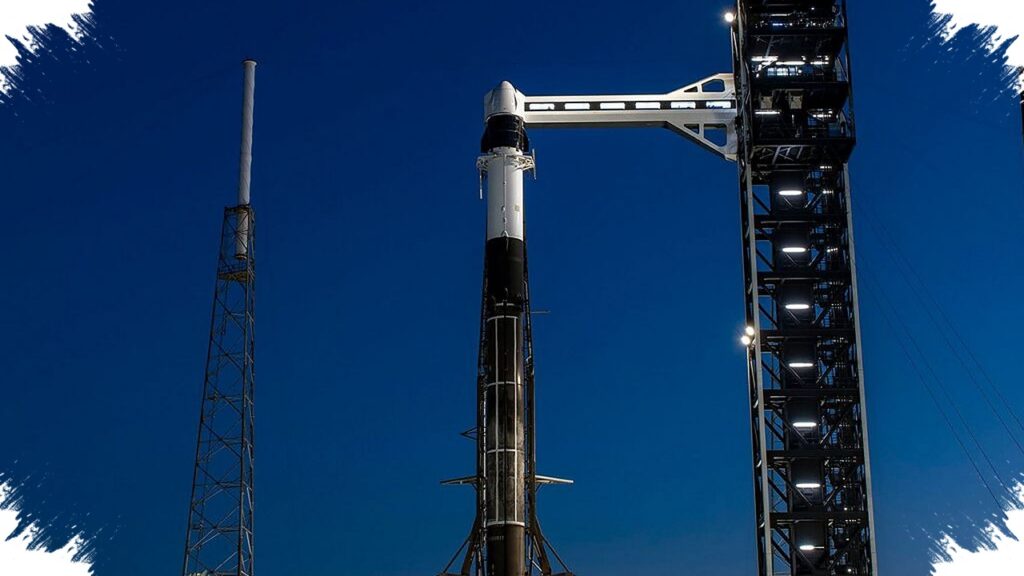
SpaceX is preparing another try at launching a NASA cargo mission to the International Space Station after poor weather forced a scrub at Cape Canaveral Space Force Station. The company still plans to send its Falcon 9 rocket on the CRS-34 mission from Space Launch Complex 40, with the next launch attempt set for Wednesday at 6:50 p.m. ET.
NASA said the first attempt was called off because of forecasted bad weather near the launch site. The 45th Weather Squadron had given Tuesday’s liftoff only a 35% chance of favorable conditions, with cumulus clouds, anvil clouds, and surface electric fields among the main concerns.
A new launch window and better weather outlook
The forecast improves for the next try. The Weather Squadron is now calling for a 60% chance of acceptable conditions on Wednesday, although the main risks remain cumulus clouds, anvil clouds, and flight-through-precipitation rules.
The launch is expected to be instantaneous, meaning SpaceX must liftoff at the exact planned time or wait for another opportunity. NASA public affairs officer Jimi Russell said teams stood down from Tuesday’s launch opportunity because of the weather around Space Launch Complex 40.
What CRS-34 will carry to orbit
The CRS-34 mission will send about 6,500 pounds, or 2,948 kilograms, of cargo and experiments to the station. NASA said the Dragon spacecraft will deliver supplies for the crew along with a set of research projects focused on space medicine, materials science, and space environment studies.
Among the payloads are an experiment to see how well Earth-based simulators match microgravity conditions, a bone scaffold made from wood that could help develop treatments for fragile bone conditions such as osteoporosis, and equipment to study how red blood cells and the spleen change in space. The cargo also includes an instrument to measure charged particles around Earth, which can affect power grids and satellites.
NASA added that the mission will support a study that could improve understanding of how planets form. Another instrument will measure sunlight reflected by Earth and the Moon with high precision, adding to the mission’s scientific value beyond routine station resupply.
Falcon 9 booster set for another reuse
The flight will be the sixth mission for the Falcon 9 first-stage booster known as B1096. After separation, the booster is planned to land at Landing Zone 40, close to the launch pad, so a sonic boom may be heard in the area during recovery.
If the launch succeeds, Dragon is expected to dock autonomously with the station’s Harmony module at around 7:35 a.m. ET on Thursday, according to Russell. The spacecraft will remain attached to the International Space Station until mid-June, when it will undock and return to Earth carrying cargo and research samples back from orbit.