


Consuming vegetables daily is essential for maintaining good health. Spinach is a popular choice due to its rich nutritional profile, comparable to superfoods like broccoli and mango. Its high antioxidant content helps combat free radicals, making it a valuable addition to various dishes such as clear soups, stir-fries, or crispy fritters.
Despite its benefits, spinach is notorious for wilting quickly. Even when stored in the refrigerator, it often lasts only one to two days before turning yellow and spoiling. This short shelf life frequently causes food waste and frustration. However, there is an effective method to preserve spinach’s freshness for up to 10 days without refrigeration, using just one common kitchen ingredient.
Avoid Washing Spinach Before Storage
The first crucial step involves removing spinach from its plastic packaging. Sort and cut the spinach as preferred. It is essential not to wash the spinach before storing it. Any remaining moisture significantly accelerates spoilage by promoting bacterial and fungal growth. Ensuring the spinach is completely dry is key to prolonging its freshness.
Choosing the Right Storage Materials
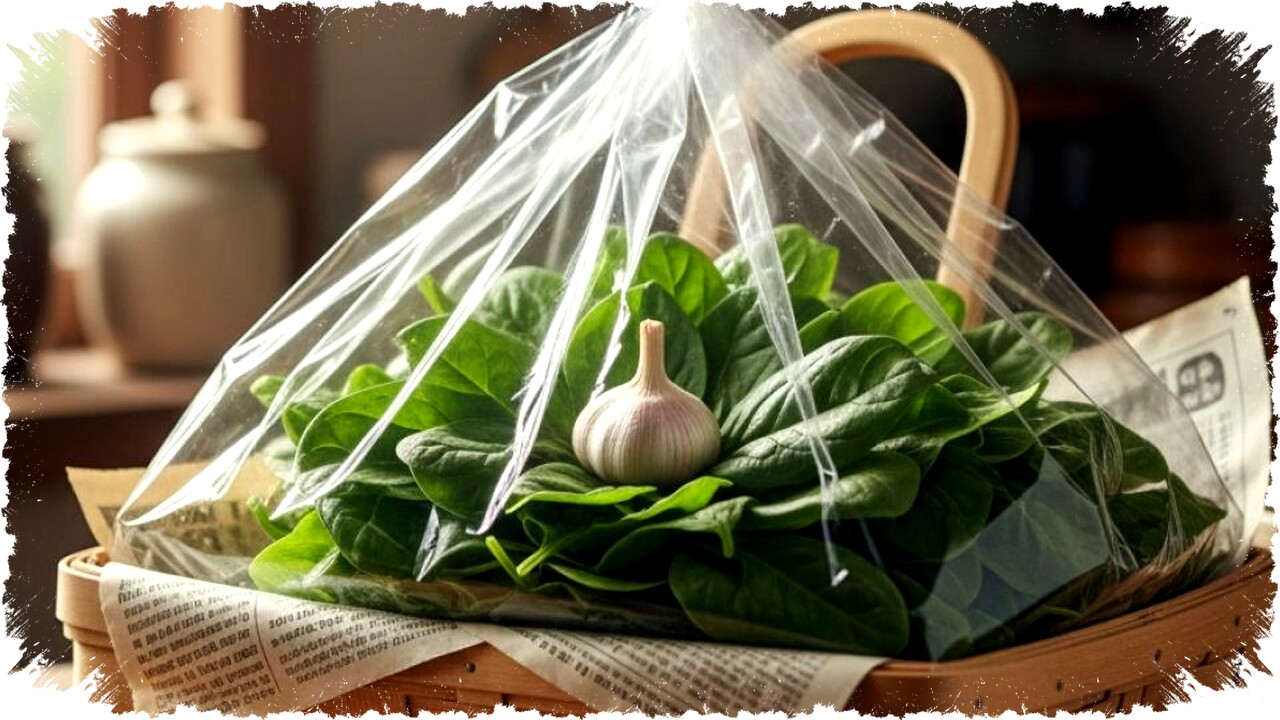
Prepare a clean, dry plastic bag to hold the spinach. Inside the bag, place a sheet of newspaper or kitchen paper towel as a lining. The paper absorbs excess moisture during storage, preventing a damp environment that speeds up wilting. This simple barrier keeps the leaves dry and crisp for longer periods.
Using Garlic as a Natural Preservative
Adding a whole clove of garlic to the plastic bag markedly increases the storage life of spinach. Garlic contains natural antibacterial compounds that inhibit the growth of microbes responsible for decay. It works as an organic preservative by protecting the spinach from early spoilage.
One demonstration of this method showed that fresh spinach remained green and firm even after 10 days of storage at room temperature. The bag should be sealed tightly and kept in a dry, shaded area away from direct sunlight. This setup maintains an optimal micro-environment for the spinach to stay fresh longer.
Step-by-Step Guide to Keep Spinach Fresh for 10 Days Without Refrigeration
- Remove spinach from any original packaging.
- Sort through the leaves and cut if desired, ensuring all pieces are dry.
- Lay down a sheet of newspaper or kitchen paper towel inside a clean, dry plastic bag.
- Place the spinach inside the bag on top of the paper.
- Add one whole garlic clove (with skin intact) into the bag.
- Seal the plastic bag tightly, removing excess air.
- Store the bag in a cool, dry place with good ventilation and no exposure to sunlight.
Additional Considerations for Successful Storage
Avoid washing the spinach before storage because water accelerates rotting through microbial growth. Paper inside the bag acts as a moisture absorber, but if unavailable, kitchen paper towels are an excellent alternative and more hygienic. The garlic added does not need to be peeled or crushed; its natural properties are effective as is.
If the storage area is too warm, place the bag on cool surfaces like ceramic floors or near windows with good airflow. This helps maintain a more stable temperature inside the bag. The method can also apply to other leafy greens such as water spinach or mustard greens, following the same principles of dryness and antibacterial protection.
Why This Method Works
Spinach’s rapid spoilage is usually caused by excess moisture and microbial growth. Removing water from the equation and introducing an antibacterial agent like garlic controls these factors. The paper lining prevents condensation inside the bag, and sealing it locks in freshness while blocking contaminants.
According to users applying this technique, spinach stays visibly fresh and edible well beyond the typical one or two days. This method offers an affordable, low-effort solution to reduce food waste and enhance vegetable shelf life without reliance on refrigeration.
This natural preservation technique aligns with current food storage knowledge emphasizing moisture control and antimicrobial barriers. It provides a practical alternative for households without continuous access to refrigeration or for those looking to store moderate quantities of fresh greens safely.
Applying this simple design could help improve dietary habits by ensuring spinach and other leafy vegetables remain available and nutritious longer. The method’s accessibility and cost-effectiveness make it suitable for diverse living situations, including urban apartments or rural homes.
Overall, maintaining spinach’s freshness without a fridge is achievable by combining dry storage, moisture absorption, and natural antibacterial agents like garlic. This approach meets growing consumer interest in sustainable and minimalist food storage practices, promoting both health and environmental benefits.