Choosing the best mirrorless camera for beginners in 2026 involves balancing features, ease of use, and affordability. Mirrorless cameras have overtaken traditional DSLRs in popularity due to their compact bodies, advanced autofocus systems, and high-quality 4K video capabilities. These factors make them ideal for novices exploring photography or content creation without overspending.
Several models stand out for their strong value propositions, combining modern technology with user-friendly interfaces. These cameras not only deliver excellent image quality but also ensure seamless connectivity and versatility, supporting various shooting scenarios for beginners.
Canon EOS R100: Affordable Autofocus Excellence
The Canon EOS R100 is a remarkable entry-level mirrorless camera. It features a 24MP APS-C sensor that produces sharp, natural-looking images. Video capabilities include 4K recording at 24fps, suitable for casual videography and YouTube content. Canon’s autofocus system on this model is highly reliable and easy for beginners to master. Priced around $450 to $550 with a kit lens, the R100 provides an accessible introduction to the Canon RF ecosystem, making it one of the most budget-friendly options available.
Nikon Z30: Optimized for Vlogging
The Nikon Z30 offers features tailored for vloggers and video creators. This camera uses a 20MP APS-C sensor and supports smooth 4K video at 60fps. Its flip-out touchscreen is designed to facilitate selfie and vlog shooting, a useful feature for solo content production. Battery life is adequate for extended recording sessions. Generally priced between $830 and $890, the Z30 balances video performance and usability, making it a favorite among beginner video creators.
Sony ZV-E10: Versatile Content Creation Tool
Sony’s ZV-E10 is renowned in the content creator community. Sporting a 24MP APS-C sensor, it supports 4K video at 30fps with advanced video features like background defocus, real-time eye autofocus, and a directional microphone. These enhancements help streamline video production quality. The camera’s lightweight design and compatibility with Sony E-mount lenses add flexibility in shooting styles. The ZV-E10 is competitively priced in the $700 to $790 range, providing strong value for aspiring creators focused on both photo and video.
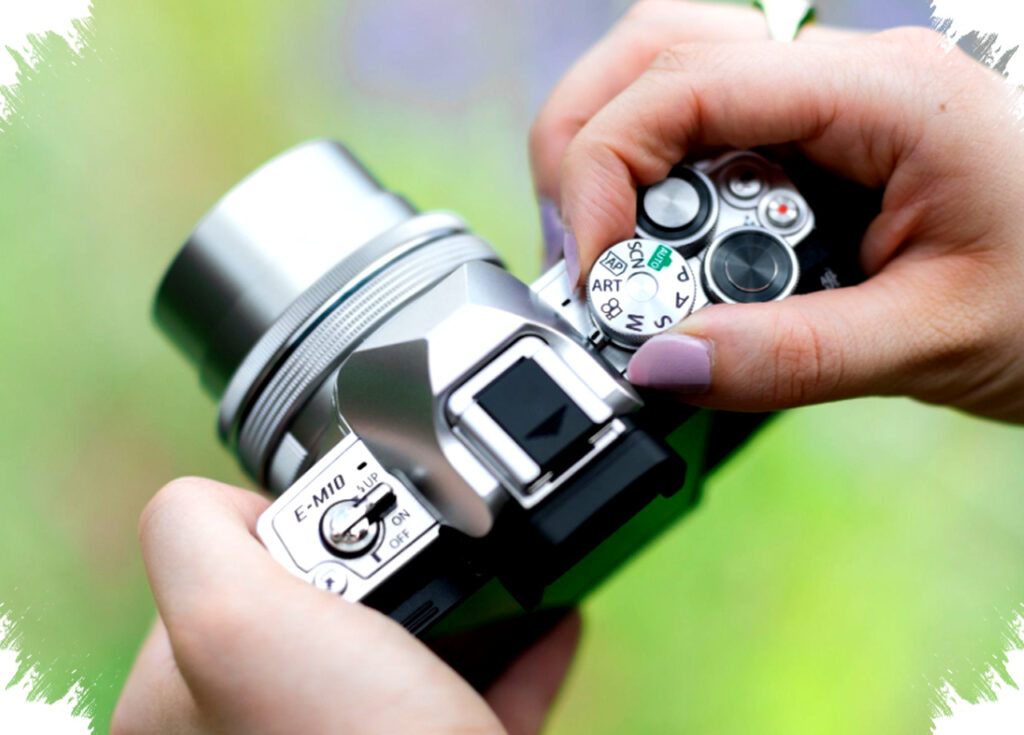
Olympus OM-D E-M10 Mark IV: In-Body Stabilization Advantage
For photographers and videographers who want handheld stability without extra equipment, the Olympus OM-D E-M10 Mark IV is an excellent choice. It employs a 20MP Micro Four Thirds sensor along with 5-axis in-body image stabilization (IBIS). This system reduces blur and shakiness, helping beginners achieve sharp images and smooth videos. Notably, the E-M10 Mark IV can often be found used for prices between $370 and $500, rendering it an economical option that doesn’t compromise on essential features.
Summary of Key Cameras and Their Features
| Camera Model | Sensor Type | Megapixels | Video Resolution | Autofocus Features | Price Range (USD) |
|---|---|---|---|---|---|
| Canon EOS R100 | APS-C | 24 | 4K @ 24fps | Reliable entry-level autofocus | $450 – $550 |
| Nikon Z30 | APS-C | 20 | 4K @ 60fps | Vlogger-optimized screen | $830 – $890 |
| Sony ZV-E10 | APS-C | 24 | 4K @ 30fps | Eye AF, background defocus | $700 – $790 |
| Olympus OM-D E-M10 Mark IV | Micro Four Thirds | 20 | 4K (via IBIS) | 5-axis in-body stabilization | $370 – $500 (used) |
Selecting the right mirrorless camera depends on specific needs such as photography style, video priorities, and budget. Cameras like the Canon R100 are perfect for those seeking simplicity and sharp photo quality at a low cost. Video-centric users may prefer the Nikon Z30 for its superior frame rates and display flexibility or the Sony ZV-E10 for its creative video functions. Beginners who want stable handheld shots without extra tools can benefit from the Olympus OM-D E-M10 Mark IV’s in-body stabilization.
In addition to technical specifications, consider lens availability and system expandability. Canon and Sony offer extensive lens lineups, while Micro Four Thirds systems like Olympus provide compact and lightweight lens options suitable for travel and street photography. Battery life and ease of use also affect the overall shooting experience, especially for new users.
Overall, each of these mirrorless cameras represents a well-balanced option for beginners wanting affordable yet capable equipment in 2026. Their combination of performance, features, and value make them strong contenders in the current photo and video market. Beginners can confidently start their photography journey with these models while benefiting from modern technological advances.