


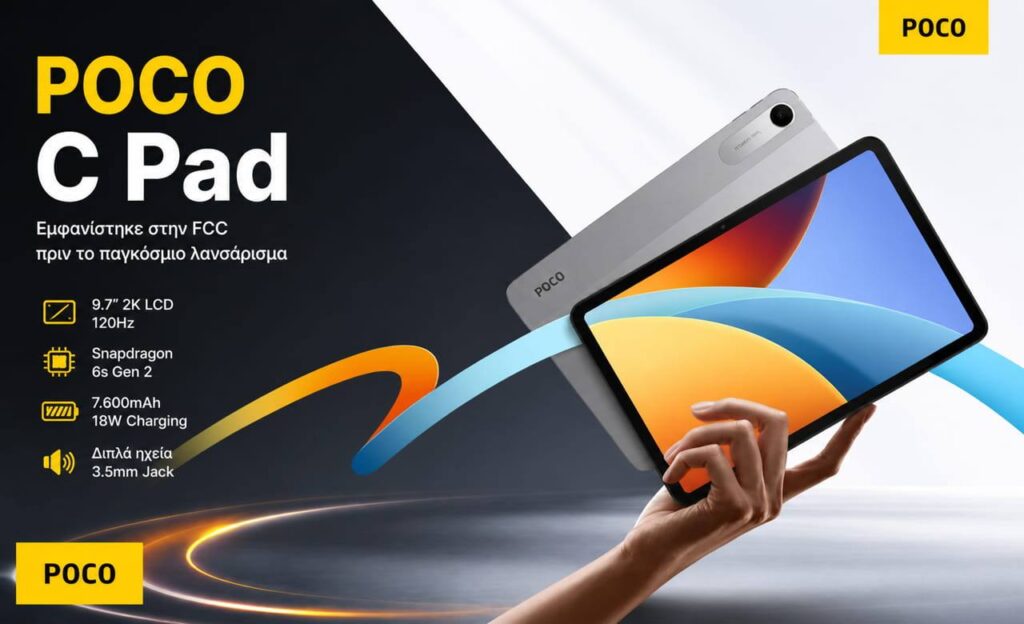
A thin, affordable tablet is edging closer to the Indonesian market, and the clearest sign so far is POCO C Pad’s appearance in the Postel certification database. That development has drawn attention because such listings often surface before a device is officially introduced to the public.
The move matters because POCO has built a reputation for pushing competitively priced products with strong value positioning. If that approach carries over to this tablet, POCO C Pad could arrive as a budget-friendly option designed to stand out quickly in a crowded segment.
Certification is the strongest clue
The Postel approval does more than satisfy a regulatory requirement. In Indonesia’s gadget market, certification records often reveal device names before a launch announcement is made.
That is why the appearance of POCO C Pad in the database has sparked expectations that its debut may not be far away. For now, POCO Indonesia has not shared an official launch timeline or confirmed the device’s full specifications.
Even without those details, the certification trail alone has been enough to raise anticipation. Market watchers see it as one of the clearest signs that preparation for release is already underway.
A tablet aimed at everyday use
The likely audience for POCO C Pad is easy to understand from current demand. Many consumers now want a larger screen for learning, entertainment, and light work without paying a premium.
That need has kept interest in affordable tablets alive, especially among users who want a practical device for video viewing, reading documents, or joining online classes. A bigger display also offers a more comfortable experience than a smartphone for those everyday tasks.
Students and casual users are expected to fit the profile best. For that group, a simple tablet can serve as both a media device and a light productivity tool.
Design and positioning could do the heavy lifting
While official technical details remain undisclosed, POCO is said to be bringing a fresher design concept to this device. The body is expected to follow a minimalist style with sharper, more modern lines.
That direction aligns with current tablet trends, where thin builds are often preferred as long as the device remains easy to use. A slim design can also make a product look more premium even when it sits in an affordable price class.
This matters in Indonesia, where design and pricing often influence buying decisions just as much as specifications do. POCO already has a strong reputation in that space, thanks to products known for an attractive price-to-performance ratio.
Why the market may respond
Tablet demand has been gaining relevance again as digital learning, mobile entertainment, and secondary-device usage continue to grow. Those patterns have opened room for brands that can offer something fresh without moving too far upmarket.
A large screen remains the main appeal of a tablet. It makes content consumption, study sessions, and reading feel easier and more natural than on compact phones.
For that reason, a device like POCO C Pad could land at the right moment. Its value-focused identity may help it reach buyers who want a modern-looking tablet without stretching their budget.
Battery life may become a key selling point
Beyond design and pricing, battery endurance is likely to be one of the first things consumers look for. Tablet users typically expect a device that can last through a full day of use without frequent charging.
A large battery is therefore expected to be one of the main attractions of POCO C Pad. Fast charging support is also mentioned as a possibility, which would add convenience for everyday use.
For now, those points remain unconfirmed until POCO makes an official announcement. What is already clear is that the tablet’s arrival in Indonesia is looking increasingly real, and that has made it a device worth watching closely.