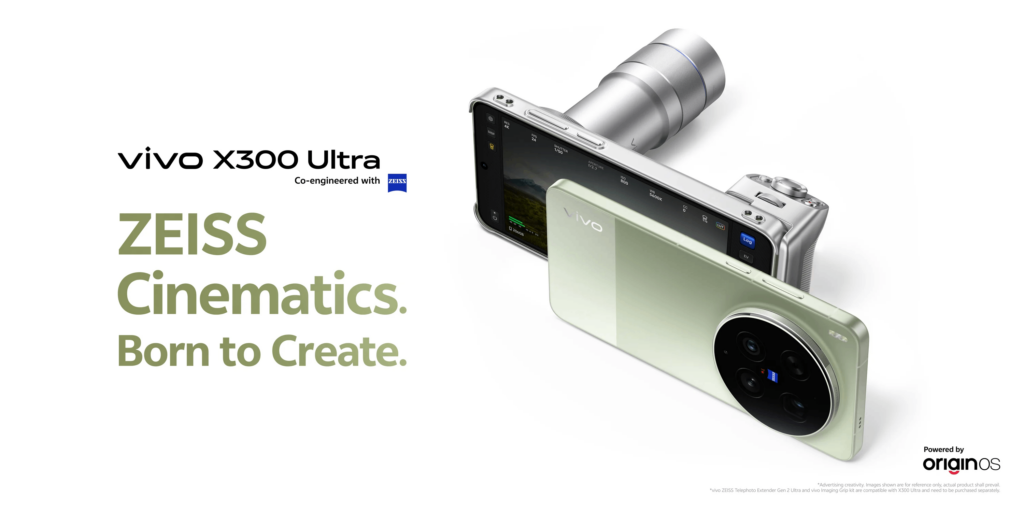
Vivo X300 Ultra is being positioned as more than a flagship with a large camera sensor. It is aimed at creators who need a phone that can handle serious video work, audio capture, and post-production flexibility in one device.
That direction sets it apart from many premium phones that still lean mainly on megapixel numbers. Vivo appears to be framing the X300 Ultra as a content-production tool, with a setup built around consistent image character, manual control, and stronger workflow support.
Video tools built for serious shooting
One of the strongest points of the X300 Ultra is its video feature set. Vivo enables 4K 120fps recording across all focal lengths, giving users more room to shoot high-speed scenes without losing versatility.
The phone also supports Dolby Vision Video, 10-bit Log Video, and LUT support for color grading. Those features are intended for users who want more control after recording and need footage that is easier to shape in post-production.
Vivo adds a new Pro Video Mode as well. It provides more complete manual control over exposure, focus, and color during recording.
A rear camera system designed for consistency
The rear camera setup is built around three high-resolution lenses. Vivo uses a 200MP 35mm main camera, a 50MP 14mm ultrawide camera, and a 200MP 85mm telephoto camera.
The company says the three cameras are tuned to keep a consistent visual character. When focal lengths change while recording video, the transition is described as natural and not noticeably abrupt.
That approach matters for creators who move between wide, medium, and long shots in a single sequence. It gives them more flexibility without breaking the visual flow of the footage.
Audio and stabilization get equal attention
Vivo has also put effort into audio, not just image capture. The X300 Ultra includes Quad-Mic Audio Recording Master, which offers six different audio presets for different production scenarios.
The device also supports Bluetooth microphones. That gives users another option when they need more controlled sound for vlogs, interviews, or field content.
Stability is another important part of the package. The telephoto camera uses a CIPA 7.0 standard, while all cameras come with Multi-Focal OIS for steadier handheld video.
Color styles and zoom accessories expand the creative range
Beyond core recording tools, Vivo includes Cinematic Video Color Style options for a more artistic look. These include Film Look and Film Style.
Film Look is designed to bring a classic film-like color tone, while Film Style adds effects such as vignette, blur, and a film-roll watermark. That gives users another layer of visual expression without leaving the phone.
For users who need more reach, Vivo also offers the 400mm vivo ZEISS Telephoto Extender Gen 2 Ultra. The accessory broadens zoom options for shots that require extra distance.
Performance, display, and battery support the workflow
The imaging system is backed by Snapdragon 8 Elite Gen 5 and the Pro Imaging Chip VS1+. Vivo says the imaging chip can speed up photo processing by up to 20 percent.
That hardware support should help when users are shooting, reviewing, and processing content on the device. It also reinforces the idea that the X300 Ultra is built for faster creative workflows rather than just raw camera specs.
On the front, Vivo uses a 6.82-inch LTPO 2K ZEISS Master Color Display. The screen is meant to help with previewing and editing, with color reproduction tuned for more accurate viewing.
The large display also makes it easier to check footage, compare takes, and make light edits directly on the phone. For creators working on the move, that can reduce the need to switch devices during the process.
To keep the system running under heavy use, Vivo equips the phone with a 6600mAh battery and 100W Flash Charge. It also uses a Liquid Cooling Vapor Chamber to help keep temperatures stable during long video sessions or extended editing.
Vivo rounds out the device with a Classic Split Design in Film Green and Shutter Black. The phone runs OriginOS 6 and includes cross-device connectivity features, including support with Apple, which helps it fit into everyday use beyond its camera-focused identity.