


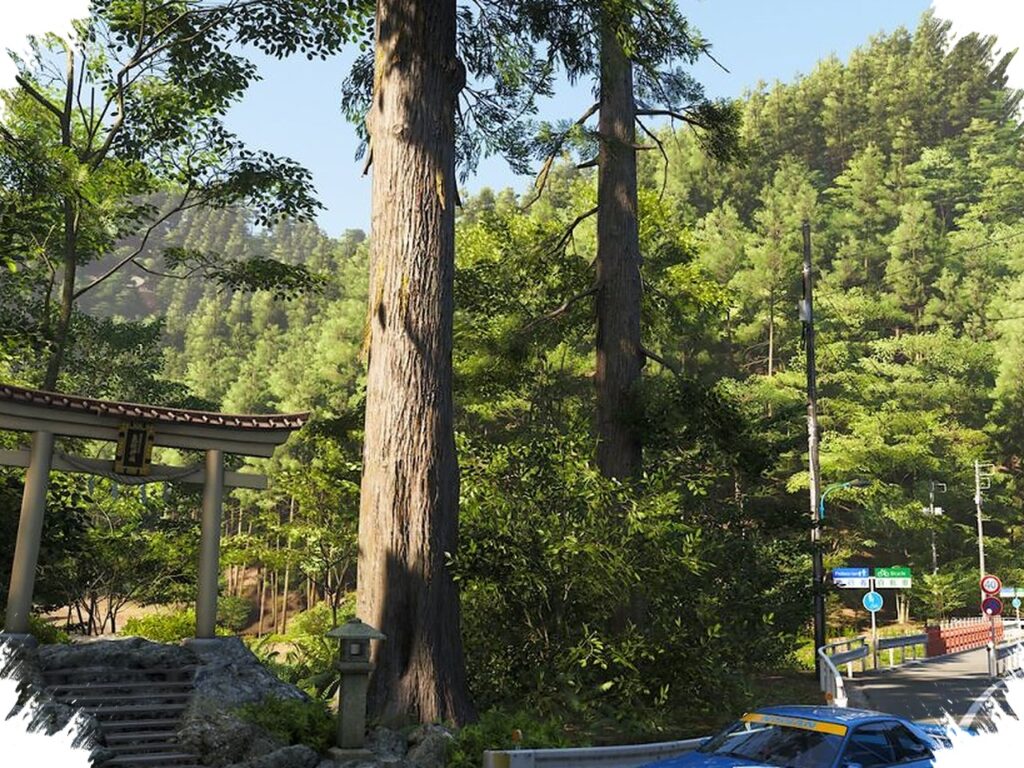
For many Japanese viewers, Forza Horizon 6 does more than recreate a country. It captures a sense of place so precisely that the game can feel less like a stylized racing title and more like a mirror of everyday life in Japan.
That reaction has come not only from local players, but also from people with professional eyes for visual world-building. Keiichiro Toyama, the creator of Silent Hill, Slitter-Head, and Siren, said the presentation left a strong impression after he spent a long time playing it.
A digital Japan that feels unexpectedly familiar
The strongest response in Japan has centered on how closely the open world and its landmarks resemble real locations. Many viewers have pointed to the visual fidelity, geometry, ambient lighting, and shaders as the elements that make the line between the game world and reality feel unusually thin.
Toyama experienced that effect in a very direct way. After exploring Playground Games’ recreation of Japan, he later found himself in central Tokyo and described the moment as feeling like “Forza Horizon 6 in the real world.”
Why local observers say the map works
Japanese architect Yuta Horie offered a similar reading of the game’s world design. He argued that the Japan map is built from fragments of visual language that immediately connect with the subconscious of local players.
Horie linked that approach to Kevin Lynch’s urban design theory in The Image of the City, including the ideas of paths, edges, districts, nodes, landmarks, and landscapes. In his view, the game’s strength comes from assembling details that are deeply recognizable to Japanese audiences.
He highlighted steep, winding mountain roads, rail bridges, flowing rivers, and large parking areas around convenience stores. Those details, he said, are strongly associated with meeting spots for JDM car culture in Japan.
Landmarks and rural details sharpen the impression
Horie also pointed to mixed-use buildings at city intersections, wide pedestrian overpasses, bypass roads in rural areas, and narrow private or farm access roads. He said the combination gives the map a sense of life even when individual locations are not immediately identifiable.
Fuji, Tokyo Tower, and distant mountain ranges further reinforce the feeling that the game world is assembled from highly familiar pieces of Japan. Horie described the result as a deep tribute to Japanese culture from Playground Games.
Even rural players are reacting strongly
The reaction has not been limited to city landmarks or professional commentary. A Japanese resident from a rural area also shared a similar response on X, saying the game’s understanding of Japan felt highly sophisticated.
For that player, the countryside was the most accurate part. They pointed to broad rice fields, roads shifting from asphalt to dirt, and retaining walls along mountain routes as details that closely matched the scenery of their hometown.
Taken together, the reactions from ordinary players, an architect, and a well-known game creator point to the same conclusion. Forza Horizon 6 is being noticed not just for beautiful scenery, but for its careful capture of Japanese geography and cultural texture.
Source: www.notebookcheck.net