


For users who want a phone that can handle long gaming sessions without giving up display quality or battery life, several current models now try to cover both demands at once. The appeal is straightforward: sharp AMOLED 1.5K panels, large batteries, and fast chipsets in one package can make daily use and gaming feel far more practical.
That combination matters because a bright, high-refresh screen is only part of the story. Stable performance, strong cooling, and charging options that keep downtime short are just as important when a device is expected to last through work, entertainment, and extended play.
Performance-first options for heavier gaming
Among the more aggressive choices, Tecno POVA 7 Ultra 5G stands out with a 6.67-inch AMOLED display and MediaTek Dimensity 8350 Ultimate chipset. Tecno says the chip can deliver performance comparable to some flagship gaming phones in higher price segments, which gives the model a clear gaming-oriented identity.
Its battery is rated at 6,000 mAh and supports 70W wired fast charging, 30W wireless charging, and 10W reverse charging. Tecno claims the battery can reach 50 percent from empty in 18 minutes, while the camera setup includes a 108 MP main sensor and an 8 MP ultrawide unit.
Large batteries paired with fast and flexible charging
Infinix Note 60 pushes a different mix, pairing a 6.78-inch AMOLED panel with 1.5K Ultra HDR resolution and a 144 Hz refresh rate. The display is also rated at 4,500 nits peak brightness and protected by Corning Gorilla Glass 7i.
The phone uses the MediaTek Dimensity 7400 Ultimate with 5G support and carries a 6,500 mAh battery. Charging options include 45W wired charging and 30W wireless charging, with Infinix claiming 1 to 50 percent takes 26 minutes and a full charge takes about 54 minutes.
More charging power and heat control
Infinix Note 60 Pro keeps the same 6.78-inch AMOLED display format with 144 Hz refresh rate, 4,500 nits peak brightness, and Gorilla Glass 7i protection. The key change is the chipset, as it moves to Snapdragon 7s Gen 4 and is said to score more than 1.1 million on AnTuTu.
The battery remains 6,500 mAh, but wired charging rises to 90W while 30W wireless charging is still available. Infinix also adds Bypass Charging to help reduce heat during play while charging, and the cooling system uses 3D IceCore with a 4,758 mm² vapor chamber.
Flagship-grade hardware for gaming-focused users
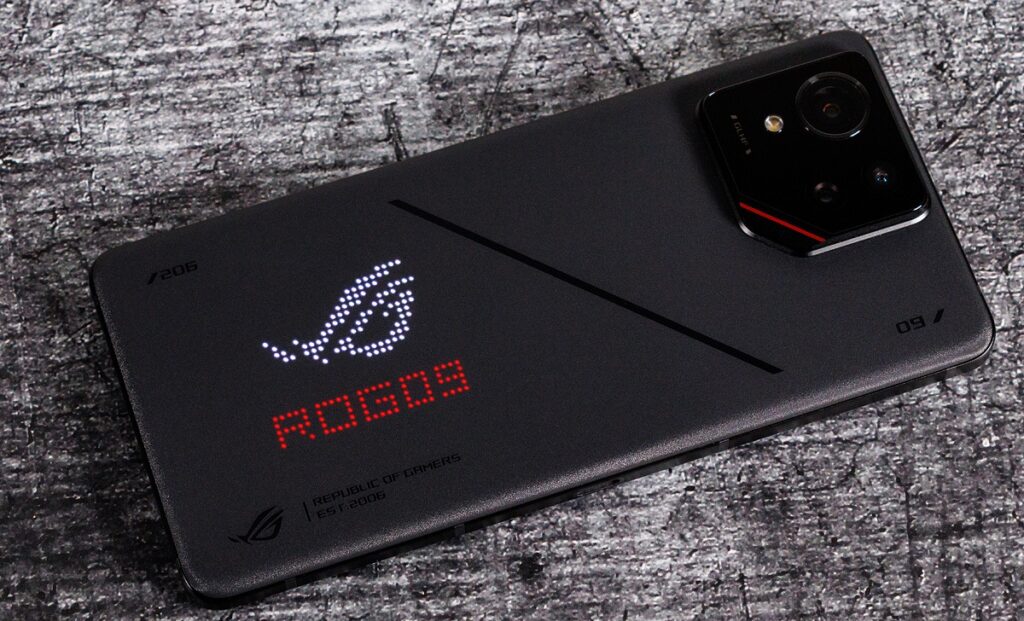
ASUS ROG Phone 9 FE targets users who want a more premium gaming phone experience. It runs on Snapdragon 8 Gen 3 and uses a 6.78-inch LTPO AMOLED panel with up to 185 Hz variable refresh rate and 2,500 nits peak brightness.
The phone includes Gorilla Glass Victus 2, AirTrigger controls, support for ROG accessories such as the AeroActive Cooler and ROG Chill Case, and a 3.5 mm headphone jack with Hi-Res Audio and Dirac Virtuo Spatial Sound. Its 5,500 mAh battery supports 65W wired charging, Qi 1.3 wireless charging, and ASUS claims a full charge in 39 minutes.
Connectivity and battery management also matter
Infinix GT 50 Pro rounds out the group with MediaTek Dimensity 8400 Ultimate and Infinix’s N1 chip, which is claimed to improve signal reception by up to 60 percent for more stable online gaming. Its battery capacity is 6,500 mAh, supported by 45W wired charging, 30W wireless charging, 10W reverse charging, and 5W reverse wireless charging.
The device also includes Bypass Charging and can work with the MagCharge Cooler 2.0 accessory, which enables wireless bypass charging so power goes directly to the motherboard instead of passing through the battery. That approach is aimed at reducing stress during heavy use, especially when gaming and charging at the same time.
Taken together, these five phones show different ways manufacturers are balancing display quality, battery endurance, and gaming performance. Some focus on bright 1.5K AMOLED panels, others lean harder into cooling and charging speed, while the most gaming-centric model adds specialized controls and accessory support for longer sessions.