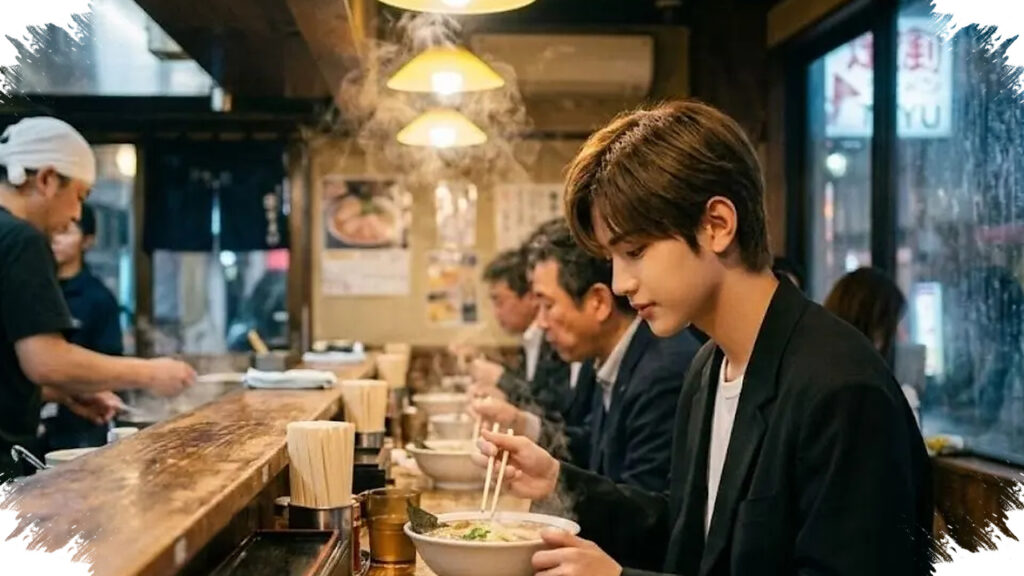
For creators looking to turn an ordinary frame into something that feels lifted from a Japanese film, Gemini AI has become a popular tool for ramen shop scenes. The appeal comes from its ability to make a simple restaurant setting look warm, cinematic, and realistic without losing the natural details that make a face feel real.
The concept works especially well because the ramen shop has a very clear visual identity. Wooden interiors, dim yellow lighting, Japanese menu details, and the glow of a Tokyo night scene create an atmosphere that is easy to recognize and hard to fake without careful prompting.
Why the ramen shop setting stands out
Japanese-themed visuals are a strong fit for modern street photography because they already carry a distinct mood. When neon light, wet streets, and soft illumination are added, the result becomes dramatic without looking excessive.
That is also why the ramen shop remains effective even though the setting is simple. Small details such as a ramen kitchen, steam rising from food, and Japanese wall decor help the image feel natural and grounded.
A major reason this style keeps gaining attention is the way users now prefer less over-processed edits. Prompts need to be detailed enough to preserve facial realism, lively eyes, and visible skin texture.
Natural poses also matter. A relaxed expression and a camera angle that feels candid can make the final image look more professional and less rigid.
The visual elements that shape the result
Warm lighting is one of the most important parts of the look. Harsh brightness can make the photo feel unnatural, while soft yellow light creates a calmer and more emotional tone.
Realistic ramen steam is another detail that strengthens the scene. Combined with a wooden table, Japanese signage, and wall decorations, it adds depth without overwhelming the subject.
The Tokyo night atmosphere pushes the cinematic effect further. Reflections from neon lights on a wet road often make the image feel more modern and dramatic.
Five prompt directions that are often used
One commonly chosen prompt places the user sitting casually inside a small ramen shop at night. In that setup, the person holds chopsticks, looks toward a steaming bowl of ramen, and sits under warm yellow light with soft steam in the frame.
Another prompt puts the user in front of the shop while opening the traditional noren curtain. The scene is usually paired with a wet street after rain, neon reflections, wooden interiors, and a casual pose that resembles a candid photograph.
A third approach shows the user in a modern Japanese restaurant corner while holding a glass of warm tea. The background is filled with dim lighting, food steam, Japanese wall decor, and a camera angle that resembles professional candid photography.
Some prompts move the subject into motion by making it look as if they are walking into the ramen shop at night. This version relies on bright neon light, light rain, a natural-looking face, and a warm interior behind the subject.
Another variation places the user at the ramen counter, smiling slightly at the chef. That composition often includes an open kitchen, realistic cooking activity, warm yellow light, hot ramen steam, and a cinematic Tokyo-night mood.
What keeps the image natural
Across all of these prompt styles, the main goal remains the same: protect the subject’s original facial details. That approach helps the final image avoid the flat look often associated with artificial visuals.
The combination of warm atmosphere, Japanese-specific elements, and cinematic lighting is what keeps this theme popular. With a detailed prompt structure, an ordinary photo can shift into a film-like visual that feels more realistic and more likely to stand out on social platforms.
Source: radartasik.id