


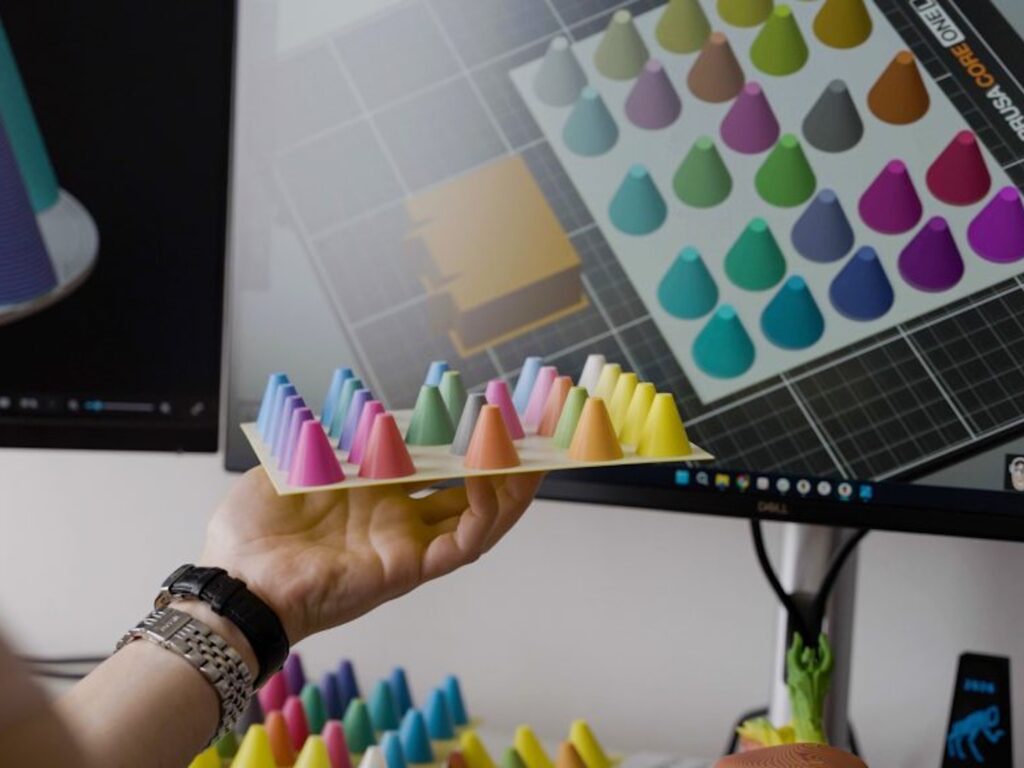
Prusa’s ColorMix takes a different path to multicolor 3D printing by focusing on layered color blending instead of frequent filament swaps. That approach is meant to reduce the clutter of managing many spools for a single project while keeping the process more practical for everyday use.
The system is released under the MIT license, which also signals a more open direction for the project. Rather than building multicolor output around constant material changes, ColorMix shifts attention to how color can be formed inside the print itself.
Layer-based color mixing
ColorMix works on a principle similar to color mixing in 2D printing. Human vision cannot resolve every tiny color point with perfect precision, so mixed dots can appear as one blended shade, and Prusa applies that idea across the depth of printed layers.
That means the final color comes from stacked layers forming the intended mix. The concept aims to make multicolor printing less dependent on the kind of filament-switching systems that often create extra waste through filament cutting.
There are still limits, however. The ratio of the mix cannot be chosen freely, and the number of colors that can be produced remains limited.
A simpler workflow for users
Prusa says the ColorMix workflow has been designed to stay much simpler than many color-printing setups. The required settings are available directly in PrusaSlicer and EasyPrint, which reduces the amount of preparation needed before starting a print.
That matters because multicolor printing is not only about hardware. It is also about how easy the process feels when preparing a job, especially for users who want color without a complicated setup.
Prusa is also developing a CMYKW set to improve reproducibility. The company suggests that matching source colors across batches may matter more than simply having the same base filament color.
Predicting the final color
ColorMix also includes an integrated color-mixing model to predict the color that will actually appear on the print. Instead of relying only on visual guesswork, the system tries to offer a more measurable preview before printing begins.
Monitor accuracy plays a role here as well. A display that comes close to accurate color reproduction can help during preparation, since the screen remains part of the decision-making process before the print is made.
Prusa positions ColorMix as a way to broaden color options without increasing material complexity. Users are not asked to maintain a huge stock of filaments, and the system is not fully closed.
Useful, but not without trade-offs
For 3D printing, ColorMix shows that color innovation does not always need more complicated mechanics. By moving the mixing process to the layer level, Prusa opens a new route for creating multicolor objects with greater material efficiency.
Still, the system is not a universal answer. The limits on mix ratios and color counts mean the result will continue to depend on the balance between design, material, and process control.
Prusa also directs readers to its official blog for more details on the different color-mixing models and the lessons learned during development. That material suggests ColorMix is being shaped as both a practical tool and an open space for experimentation in color 3D printing.
Source: www.notebookcheck.net