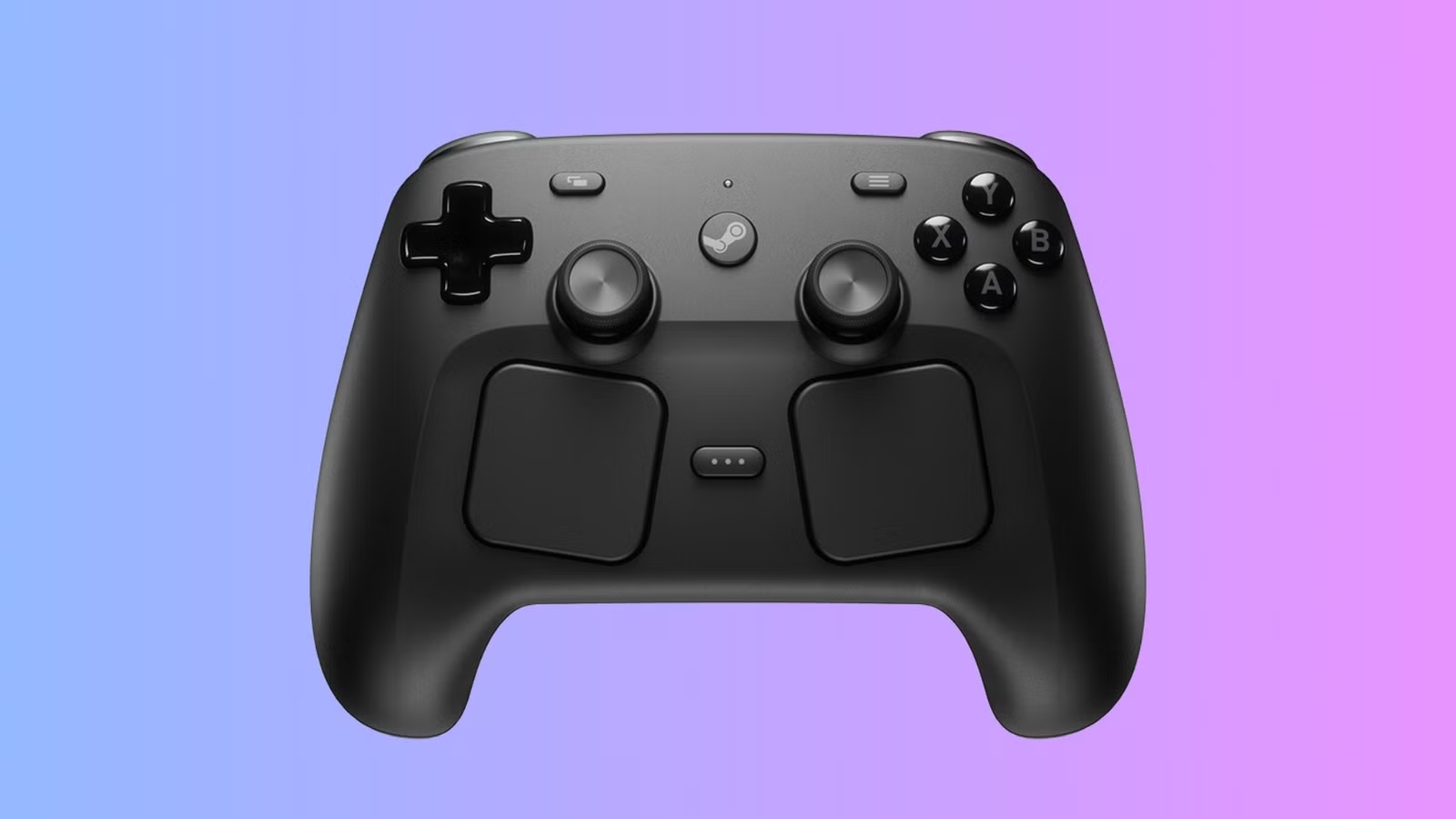
What began as a curiosity inside the Steam Controller has turned into a surprisingly musical trick. By driving its haptic motors at specific frequencies, the device can produce tones that are clear enough for listeners to recognize an actual melody.
That result has made the controller stand out for more than ordinary vibration feedback. One of the better-known demonstrations reportedly produced the Super Mario Bros. 2 theme in a way that was still easy to identify.
From haptics to notes

The effect comes from the haptic system built into the Steam Controller’s trackpad. Under normal use, the motor gives feedback when a thumb moves across the surface or when the trackpad is pressed in a way that feels like a click, even though there is no physical click mechanism.
With the right frequency, that same motor behaves less like a simple vibration unit and more like a very basic sound source. The mechanical motion itself becomes audible, which is why the controller can seem to “sing” rather than merely buzz.
The idea has attracted attention because it is not limited to a single sound effect. Users have shown that the controller can go beyond isolated noises and play recognizable music through vibration alone.
How the music is played
The latest experiments were pushed forward by CrazyCritic89, who demonstrated that different motor frequencies can be used to form musical notes. According to The Verge, the key is to make specific motors inside the Steam Controller vibrate at precise frequencies so the tones line up into a melody.
That approach led to results that many would not expect from a controller designed for input and feedback, not audio playback. Even so, the output is distinct enough that the melody does not disappear into noise.
A separate application makes the process easier for anyone who wants to test it. Steam Haptics Singer can play MIDI files through the Steam Controller’s haptic motors, turning the controller into an unusual music device.
Trying it with a MIDI file
The process is simple based on the available information. A user only needs to download the app, turn on the Steam Controller, and drag a MIDI file into Steam Haptics Singer for playback through the controller.
The app is available on GitHub, and it continues the idea introduced by SteamControllerSinger. That earlier program did the same thing for the original Steam Controller model.
What makes the experiment notable is not just the novelty of hearing a controller make sound. It is the fact that the melody remains recognizable, which is unusual for hardware that was never built to act like a speaker.
Why the discovery drew attention
A controller is generally expected to vibrate, not perform music. That is why the result feels surprising: a part meant for tactile feedback can be repurposed into something that produces a clear tune.
The most frequently highlighted example is the Super Mario Bros. 2 theme. Its recognition shows how far the effect can go when the haptic motor is tuned carefully enough.
The Steam Controller has also earned attention before for another unexpected sound-related trick, including the ability to produce the Wilhelm scream when dropped. Together, these findings show how community experimentation can reveal functions far beyond the original purpose of a device.
Source: www.xda-developers.com