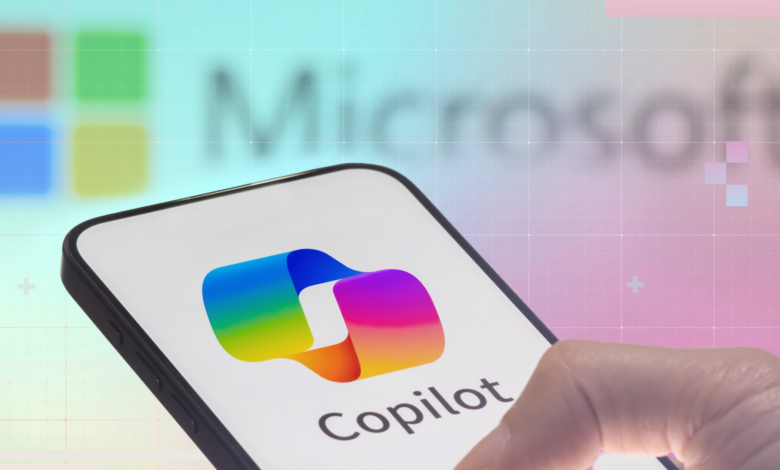
Microsoft is pushing a different kind of AI device strategy with Project Solara, and the most striking part is not a phone at all. The company is developing a wearable badge that treats AI as the primary interface, with a design that borrows some smartphone hardware ideas without following the usual smartphone model.
That shift matters because Microsoft appears to be betting that the next wave of personal computing will not revolve around app grids and launchers. Instead, the company wants devices that are built from the ground up for agent-based AI interactions, with a simpler experience aimed at getting tasks done faster.
A badge built for AI agents
Project Solara’s badge is aimed mainly at frontline workers and information workers. Microsoft describes it as a dedicated interface for AI agents, with a streamlined UI centered on commands rather than the app-heavy layout common on phones.
The concept device uses a small touchscreen for direct interaction with the AI agent. It also places a camera on the top to help with environmental awareness, while another side-mounted camera is visible in the current design.
Hardware that leans toward practical use
Microsoft has packed in several familiar hardware elements to support everyday use. The badge includes a side fingerprint scanner for biometric security, along with a privacy switch, volume button, a far-field microphone array with a high signal-to-noise ratio, and speakers for voice-based interaction.
The device is also designed to stay connected. Microsoft says it supports WiFi, Bluetooth, GNSS, and 5G, which reinforces the idea that this is meant to function as a constantly online wearable computer rather than a simple accessory.
Android-based, but not a typical phone platform
Under the hood, Microsoft says the badge runs on a version of Android through what it calls Microsoft Device Ecosystem Platform. The company argues that the traditional smartphone paradigm, built around app launching, is too complicated for an AI-agent era.
Microsoft has also pointed to Qualcomm wearable silicon as the main processor family behind the device, although the exact chip has not been announced. That combination suggests a product designed to be light, purpose-built, and always ready for AI-driven tasks.
Early testing is already underway
Although the badge is still a concept, Microsoft has already tested it internally with hundreds of employees. The company is also working to move the wearable beyond internal trials as quickly as possible.
The first broader testing plans focus on enterprise environments such as healthcare, retail, hospitality, financial services, legal services, industrial settings, and field services. Those sectors point to a device strategy centered on speed, context awareness, and hands-free utility.
Part of a wider device push
Project Solara is not limited to the badge. Microsoft also showed a smart display concept that looks like a mix between a smart speaker and a screen, placing it in the same family of AI-focused devices.
The broader strategy arrives as the market starts to move toward agent-first hardware. OpenAI is rumored to be accelerating its own AI smartphone for a possible early 2027 launch, while Qualcomm’s CEO has said that resistance to agentic AI devices and operating systems is essentially pointless.
Microsoft’s position is that the real competition is no longer just about adding AI features to existing phones. The company wants devices that are purpose-built for AI from the start, with the operating stack handling much of the interface work that used to fall to native app developers.
If that direction gains traction, the contest with iPhone and premium Android devices may shift from app ecosystems to a much bigger question: which platform will define the personal device for the AI era first.
Source: www.notebookcheck.net