


NotebookLM is no longer limited to summarizing uploaded material. With Gemini 3.5 and Antigravity now integrated, Google is positioning the platform as a more independent research assistant that can help users search, analyze, and build output with far less manual preparation.
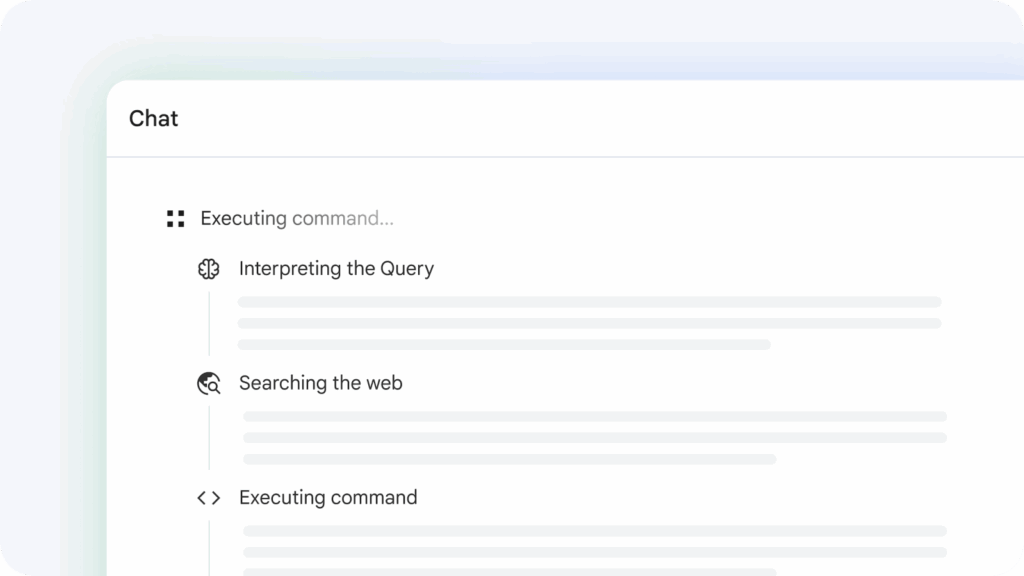
The biggest shift is how work begins. Instead of requiring documents first, users can now start a project with only an idea or a question, while the AI agent helps gather relevant sources directly from the chat window.
A more capable research system
Google says the upgraded NotebookLM is designed to be more accurate, more transparent in its reasoning process, and more reliable for complex research tasks. The platform now runs on Gemini 3.5 paired with Antigravity, a combination intended to improve both answer quality and user visibility into how results are built.
Each workspace also includes a secure cloud computer. That environment allows the AI to do more than read text, because it can also write and run code inside a Linux-based virtual machine.
Google says NotebookLM now includes more than 100 specialized software skills. The company says those tools extend deep research and open the door to advanced tasks that would normally require several separate applications.
Performance gains are also part of the update. Google cites improvements of up to 65 percent in average analysis, up to 69.9 percent in reading large documents, and 78.2 percent in internet search accuracy compared with the previous system.
| Area | Claimed Improvement |
|---|---|
| Average analysis | Up to 65 percent |
| Large document reading | Up to 69.9 percent |
| Internet search accuracy | 78.2 percent |
Research now starts from the chat
NotebookLM can now begin with a simple prompt and then look for reference material automatically. The AI agent guides the search process inside the conversation, and Google Search is connected to help find quality web sources on its own.
The system can also search for foreign-language sources to widen the perspective. It is additionally able to track specific works from particular authors, making it more useful for focused research projects.
Google says the search process is transparent, allowing users to check how an answer was assembled. Every result comes with clear source citations, which makes verification easier.
Even with the agent doing more of the work, users still keep control. The sources suggested by the system can be added or removed depending on the needs of the project.
Output is now more flexible
The upgraded platform is also better at combining information from multiple sources into a single finished document. Users can export work in PDF, Word, Markdown, and plain text formats.
NotebookLM can also produce professional presentation drafts in Microsoft PowerPoint format. For structured data, it supports CSV, JSON, and Excel spreadsheets, while charts and visualizations can be exported as PNG or SVG images.
Google has also added Nano Banana, which lets the AI create images directly inside the platform. Documents can still be edited before download, which makes revision faster and more practical for research and reporting work.
Built for analysis, reporting, and business use
The new capabilities create several practical use cases. Data analysts can organize reports from multiple countries, write code, search for context on the web, and export the final work as a PDF with charts included.
Program managers handling long technical documents can also benefit. NotebookLM can turn complex customer specifications into a short guide and then help draft presentation slides and a work roadmap.
Small business owners are another target group. A gym operator, for example, could use NotebookLM to calculate advertising costs, compare them with sales data, and support expansion decisions.
According to Google, the updated NotebookLM is already available globally for Google AI Ultra users and Workspace customers. The company also plans to expand these advanced features to other subscription tiers.