An artificial intelligence system developed in Australia is showing new promise in the fight against illegal wildlife trafficking at airports. Built to identify hidden marine products such as shark fins, dried seahorses, and sea cucumbers, the system reached 92% overall detection accuracy in testing.
The advance matters because trafficking in marine wildlife is often harder to spot than more familiar forms of animal smuggling. The products are frequently concealed inside ordinary suitcases or parcels, making them easy to miss during routine visual inspections.
How the system works
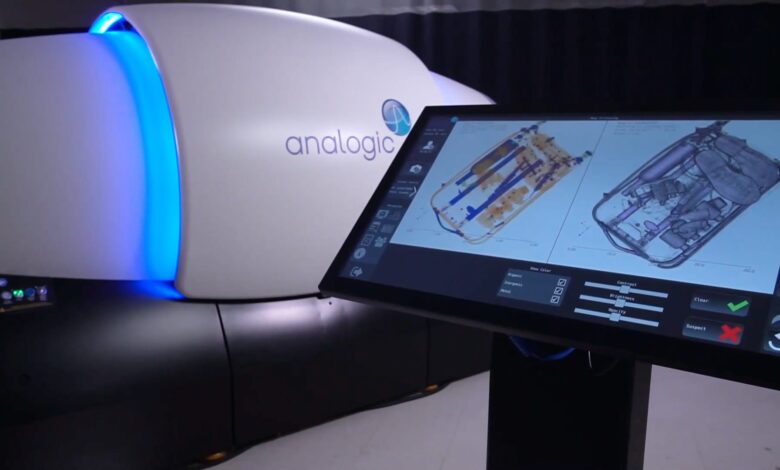
According to a press release cited by Frontiers in Ocean Sustainability, the approach combines existing 3D X-ray CT scanners used at airports with a neural network model. The scanner provides detailed images of luggage, while the AI searches for shapes and patterns that may indicate smuggled wildlife products.
Researchers carried out nearly 300 scans using seized samples from cases involving illegal marine wildlife trade. The system was trained to recognize the form, density, and visual patterns of objects hidden inside baggage.
The training also included simulated smuggling scenarios designed to better reflect real airport conditions. That allowed the model to be tested against concealment methods commonly used by traffickers, rather than only against items placed in open view.
Concealed in clothing, toys, and foil
The research team tested several hiding methods seen in previous cases. Seized items were wrapped in aluminum foil, placed among clothing, and hidden inside toys.
That range of disguises reflects how smugglers try to make illegal products blend in with a passenger’s personal belongings. The goal is to avoid drawing attention during baggage screening.
Performance varied by product type. The system detected shark fins at a rate of 95%, dried seahorses at 96%, and sea cucumbers at 86%.
Those results show that some items are easier for the model to identify than others. Even so, the combined 92% accuracy suggests the technology could speed up early screening in busy airport environments.
A tool to assist, not replace, officers
The researchers stressed that the system is not meant to replace current detection methods. Instead, it is designed to support border enforcement as an additional layer of inspection.
Vanessa Pirotta of Macquarie University, the study’s lead author, said the team could only simulate real-world smuggling scenarios based on cases that had already been detected. She also noted that AI is not a magic solution and cannot replace human inspection or sniffer dogs.
The study also acknowledges the risk of false positives, meaning ordinary items may be flagged as suspicious. In addition, access to advanced 3D scanners is still limited at many checkpoints, which could slow wider deployment.
Even with those constraints, the research points to a new direction for airport screening. By pairing existing scanner infrastructure with AI analysis, officers may have a better chance of finding hidden shark fins, dried seahorses, and sea cucumbers before they move further through the supply chain.