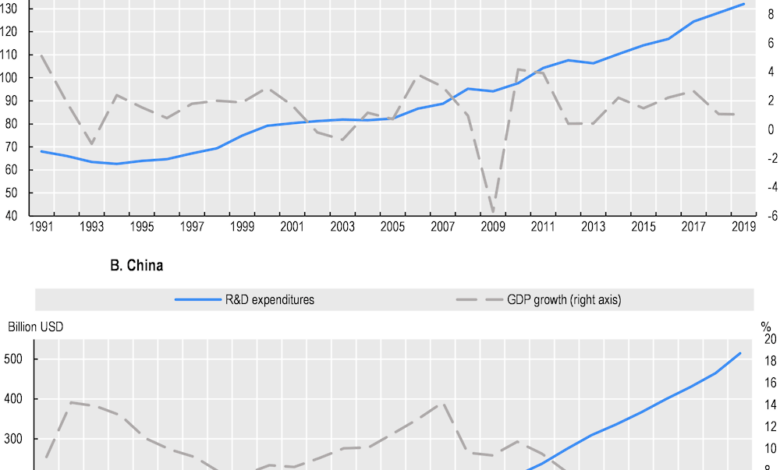
China has widened its lead in high-quality scientific research, with Nature Index 2026 Research Leaders showing a 22.4 percent rise in output between 2024 and 2025. That made China the only country in the global top 10 to post double-digit growth.
The result stands out because it came while other leading research nations did not match the same pace of expansion. In a field where small shifts can reshape global influence, the latest ranking suggests China is extending its advantage rather than merely holding position.
Broader reach across major disciplines
Nature Index placed the United States second and Germany third, but China led in most of the core fields measured. It ranked first in physics, chemistry, biological sciences, applied sciences, and Earth and environmental sciences.
The United States still held the top spot in health sciences and social sciences. Even so, China’s performance showed that its research strength is not confined to one specialty, but spread across several major scientific areas.
That breadth matters because it reflects a research base that supports both fundamental science and practical innovation. Fields such as physics, chemistry, and applied sciences often feed long-term technological development, while environmental and biological research can influence broader policy and industry priorities.
Chinese Academy of Sciences remains the key anchor
At the institutional level, the Chinese Academy of Sciences continued to rank as the world’s top research institution. It held first place in every field except health sciences and social sciences, underscoring its central role in China’s international research profile.
China’s strength also extends beyond a single flagship body. Nine Chinese institutions appeared in the global top 10, up from eight in the previous edition, showing that the country’s research ecosystem is becoming deeper and more distributed.
That wider spread suggests the country’s momentum is not concentrated in one institution alone. Instead, multiple universities and research bodies are contributing to a stronger and more layered presence in elite global science rankings.
Nature Index expands its measurement scope
The latest ranking also reflects a broader methodology. Nature Index expanded its coverage this year to include 17 applied science journals, one conference, and 15 social science journals.
According to Simon Baker, editor-in-chief of Nature Index, the updated methodology makes the picture more accurate. He said the expanded disciplines and recalibrated methodology now provide a more comprehensive view of high-quality research output.
That expansion is important because it changes how global research strength is measured. A wider scope gives a fuller view of scientific output, including areas that were previously less evenly represented in the index.
Even with the broader yardstick, China’s position remained strong. Baker said China’s performance was still very powerful in the latest results, reinforcing the view that its lead is holding up under a more expansive and demanding assessment.
What the shift means for global science
The latest figures point to an increasingly concentrated contest between China and the United States at the top of global research. Yet China’s stronger showing across multiple disciplines and its growing institutional depth suggest the balance of influence is continuing to move.
For the academic world, industry, and technology policy, that shift is significant. Countries that lead in high-quality research often shape the direction of future discovery, technology development, and scientific priorities far beyond their own borders.