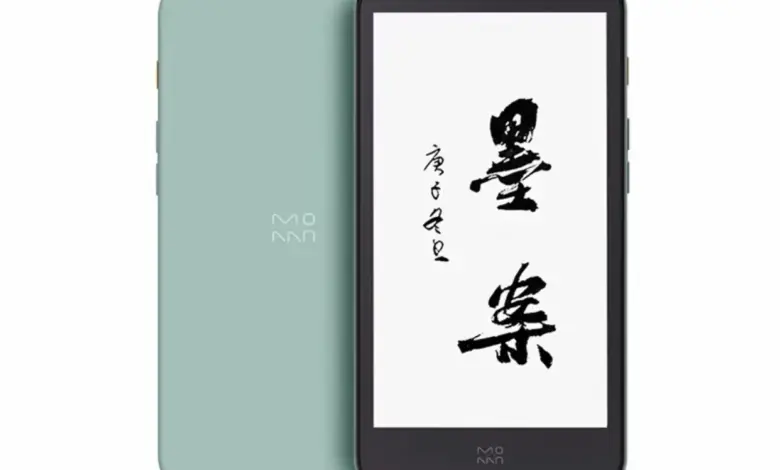
Modos is trying to reshape what people expect from E-Ink with the Modos Flow, a portable 60Hz display that is also positioned as responsive enough for gaming. The device takes the eye-friendly character of e-paper and moves it into the external monitor category.
That shift matters for people who spend long hours looking at screens. By combining a high refresh rate with a paper-like image, Modos Flow targets uses that traditional E-Ink panels have struggled to support.
A faster path for e-paper
For years, e-paper has been associated with small devices and slow visual updates. Its main limitation has remained the same: refresh rates that are too sluggish for dynamic tasks.
Modos says it spent six years developing fast E-Ink technology before turning it into its first commercial product. The result is a 13.3-inch monitor based on an E-Ink Carta 1300 panel, designed to connect with a wide range of powered devices.
The key spec is the 60Hz refresh rate. In practice, that means the screen updates 60 times per second, or once every 16.67 milliseconds.
That is a meaningful threshold for e-paper, and it is part of why Modos Flow is being pitched not only for reading and writing, but also for video and gaming with less disruptive lag.
How Modos reduced ghosting
Modos also aimed to reduce the ghosting that often appears on E-Ink displays. Ghosting shows up as a shadow of older content when the panel has not fully refreshed.
To address that, the company did not rely only on off-the-shelf panel components. Its team built the display pipeline from scratch, including custom microcontrollers so the panel could operate fast enough for its target.
One technical change was separating the FPGA driver into a dedicated chip. That component acts as the interface between the computer and the display protocol, allowing communication to be handled more efficiently.
Traditional e-paper panels usually use a global refresh method. Under that approach, new pixels do not fully appear until the entire screen finishes updating.
When that method is pushed faster, the image can look washed out and contrast can fall. Modos instead switched to per-pixel updates, so each pixel can change individually without waiting for the full panel to complete.
This approach is meant to keep the visual quality intact while improving responsiveness. The goal is not only speed, but also to preserve the paper-like look that defines e-paper.
Built for work, notes, and entertainment
Modos Flow offers a resolution of 3200 x 2400 pixels with 300 ppi density. Those specifications are aimed at crisp text, work interfaces, and static content, which remain the strongest use cases for e-paper.
The device also uses USB-C with DisplayPort over USB-C support. Because it is portable, users do not have to remain tied to a wall outlet to use it.
Since the code was written from the ground up, Modos gives users more control over the display. There are dedicated screen modes for web browsing, writing, and watching video.
Users can also adjust saturation, front light intensity, and light warmth. Those controls matter because reading long articles and viewing motion video do not require the same screen settings.
Beyond being a monitor, Modos Flow supports touch input and stylus use. That opens the door to sketching or taking notes directly from a PC.
The product comes in two versions, monochrome and color. The color model is not meant to rival LCD in color range, since e-paper is still focused on a different set of strengths.
Its main appeal remains visual comfort. The screen is better suited to people who want to reduce eye strain from conventional panels or prefer a calmer digital experience.
Pricing and market position
Modos is not the only company pushing 60Hz e-paper. Daylight DC1 also offers an e-paper tablet for reading and writing with a smooth 60Hz display.
The difference is that Daylight DC1 is not designed like Flow, which can work with almost any computer or smart device. That is where Modos is trying to stand out as a versatile external screen.
Modos Flow is currently in crowdfunding through Crowd Supply. Supporter pricing starts at $619 for the monochrome version and $719 for the color model.
Those prices apply during the crowdfunding phase and may rise when the product reaches full commercial availability. Shipping has not started yet, and units are scheduled to begin going out in December this year.
For a project that spent six years breaking through E-Ink performance limits, the arrival of a portable 60Hz monitor that can handle work, notes, video, and even games marks an unusual step for the paper-like display category.