


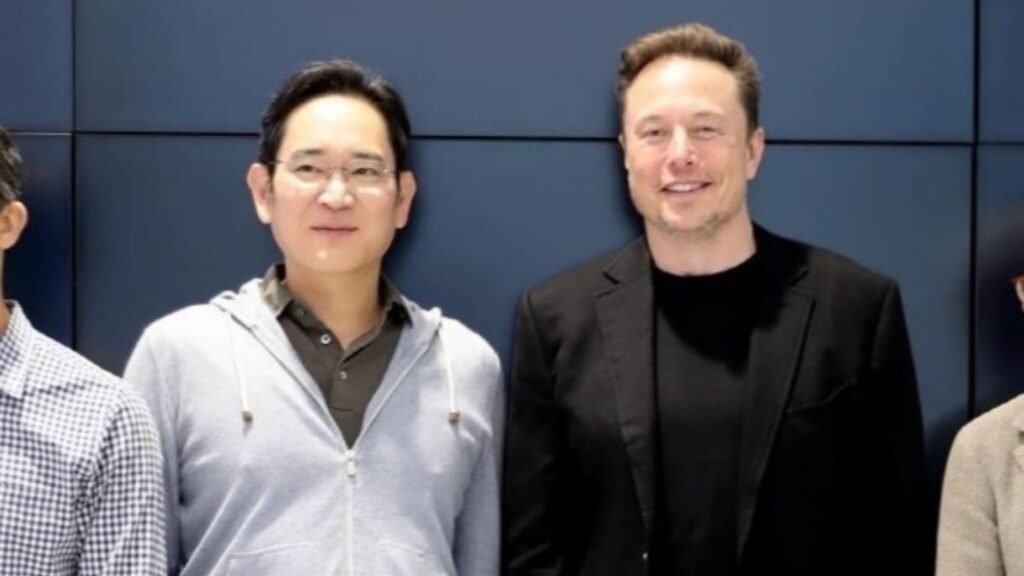
Samsung is widening its role in advanced semiconductors by moving into one of the most unusual chip projects in the industry: Neuralink’s brain-computer interface hardware. The partnership adds a new line of business that goes far beyond smartphones, memory, storage, and automotive chips.
The development signals how far Samsung Foundry has pushed its manufacturing reach. Instead of serving only consumer electronics and mobility markets, the company is now tied to a project aimed at building next-generation chipsets for brain-computer interface, or BCI, systems.
A deeper role in Neuralink’s next generation
Reports cited by Hankyung indicate that Samsung has been developing Neuralink’s fourth-generation chip since late last year. Production is said to have started on a 4nm process, which points to a highly advanced manufacturing assignment for the Korean chipmaker.
According to the same report, Samsung Foundry is expected to begin shipping the chip in the first half of 2027. If that schedule holds, mass production would follow by the end of 2027.
Elon Musk’s business ties with Samsung keep expanding
The move is not Samsung’s first collaboration with Elon Musk’s companies. Over the past few years, Samsung has also been involved in chip development for Tesla’s Full Self-Driving, or FSD, system.
That existing relationship appears to have evolved into a broader technology partnership. With Neuralink now added to the mix, Samsung is extending its reach into a more specialized and sensitive area of chip design.
TSMC still figures in the supply chain
Before the fourth generation, TSMC was reported to have supplied Neuralink chips through the third generation. It remains unclear whether Neuralink will continue sourcing chips from TSMC for future versions.
This leaves Neuralink’s supply chain potentially more diversified, while Samsung gains a more strategic position in the development and production of highly advanced chips.
Why this matters for Samsung’s foundry business
The Neuralink project shows how Samsung’s foundry business is becoming broader and more specialized at the same time. The company is now active across consumer devices, data storage, autonomous driving, and BCI-related technology.
For Samsung, the deal highlights the value of its chip manufacturing capabilities in fields where precision and scale both matter. For Musk’s side, it strengthens access to a major foundry partner for one of the most ambitious neurotechnology programs in development.