


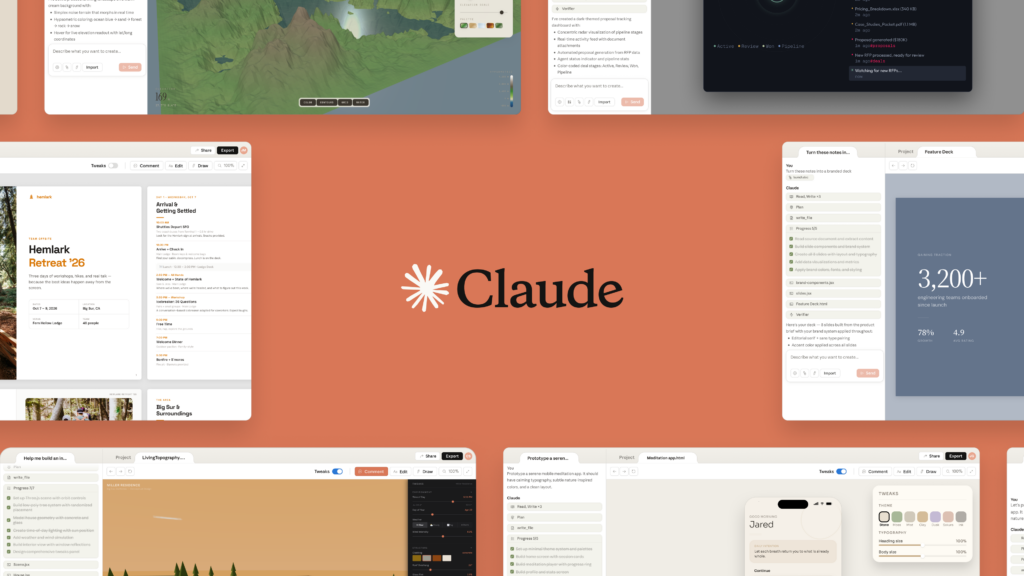
Claude Design is gaining attention because it shortens the gap between an idea and a polished visual. The platform is aimed at landing pages, pitch decks, and app prototypes, with a workflow that does not demand advanced design skills.
For small teams, freelancers, marketers, and solo founders, that matters for a simple reason. It makes branded visual production faster while reducing repetitive mistakes that often slow projects down.
A more practical prototype workflow
One of the most notable parts of Claude Design is its Prototype Mode, which AI Master highlights as a key feature. It offers two main paths: Wireframe for early concept exploration and High-Fidelity for a more finished result.
That split helps structure the process more clearly. Users can start with a rough framework, then move to a cleaner presentation once the direction is set.
Claude Design is not limited to prototypes alone. It also includes Slide Deck Mode for presentations, From Template Mode for faster customization, and additional modes that support broader needs such as animated video creation.
A central design system keeps branding consistent
Another advantage is the centralized design system, which brings together colors, fonts, tone, and visual references. When these elements are added at the start, the system applies them automatically to new projects.
This approach helps keep visual language consistent across different tasks. In practice, it can reduce revision cycles and limit inconsistencies when users manage several projects at once.
To build that foundation, users need to describe the brand identity in detail. AI Master recommends an input of at least 200 words so the AI can understand core values, visual style, and brand tone more clearly.
The platform also supports external asset integration through services such as getdesign.md. That makes it easier to sync an existing brand system without rebuilding everything from scratch.
From concept to final output
Claude Design is organized to keep the workflow efficient from the start to the finish. The process begins with the design system, then moves to design generation based on a short prompt and the selected mode.
After that, users can refine the result through Tweaks, Markup, and Edit tools. These functions make it possible to correct specific parts so the final output matches the intended vision and brand identity more closely.
If one section still feels off, the user does not need to regenerate the entire page. Specific areas can be regenerated instead, which saves time and resources.
Completed projects can also be saved as templates for reuse. Claude Design supports export to HTML, PDF, and PPTX, making it easier to share the work or move it into presentation and implementation stages.
Closer to deployment, not just design
The platform does not stop at visual creation. It also supports a transition to deployment through integration with Claude Code, along with support for platforms such as Vercel for live website projects.
That capability matters because it shortens the path from concept to execution. Teams do not have to separate design and launch into disconnected stages, especially when speed is critical for web projects.
Cost control is part of the appeal
AI Master also emphasizes token efficiency and cost management. Users are advised to write short but precise prompts, relying on a detailed design system so iterations do not expand unnecessarily.
Another recommended practice is targeted regeneration. By fixing only the part that needs attention, users can avoid wasting resources on full regeneration cycles.
Batch processing is also mentioned as a useful method. Related tasks can be grouped together so resource usage stays more controlled and the workflow remains organized.
Who benefits most
Claude Design appears most relevant for solo founders who need professional assets without hiring an extra designer. It also fits marketers and content creators who must produce branded materials quickly and consistently.
Freelancers and small agencies are included in the same group of likely beneficiaries. They can build brand kits, prepare prototypes, and create presentation materials through a simpler workflow.
In the broader field of AI prototyping, Claude Design stands out not just for generating visuals. Its value comes from a combination of clear modes, a centralized brand system, precise editing tools, and export and deployment paths that make the journey from idea to output feel shorter and more manageable.