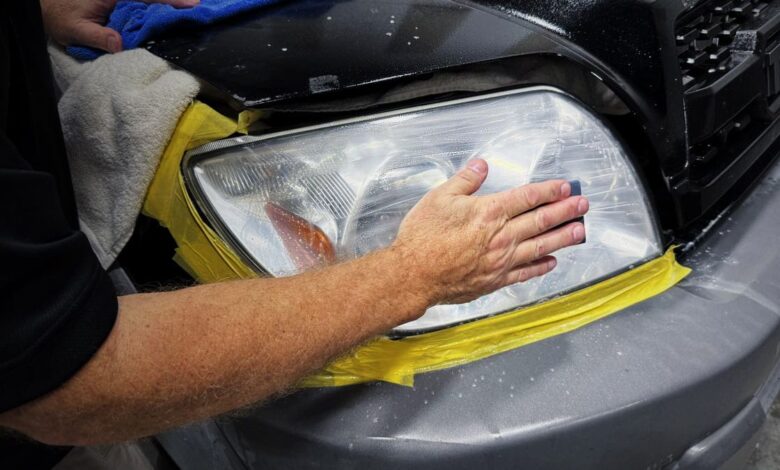
Cloudy headlamp lenses are often treated as a minor cosmetic issue, but the effect is more serious than many drivers expect. When the plastic surface turns yellow or hazy, light output drops and nighttime visibility can suffer, especially on dark roads or in poorly lit areas.
The problem also changes the way a car looks. A vehicle with dull headlights can appear older and less cared for, even when the rest of the body remains in good condition.
Why Headlights Turn Dull
Long-term exposure to sunlight, rain, dust, pollution, and age is a common cause of oxidation on the lens surface. Over time, that oxidation makes the lamp cover look cloudy or yellowed.
If the condition is ignored, the issue is no longer limited to appearance. Reduced clarity can affect safety because the headlights can no longer project light as effectively as before.
Low-Cost Options That Can Help
Several inexpensive household or automotive products can be used at home before turning to a repair shop or detailing service. One of the easiest to find is toothpaste, which contains mild abrasive particles that can lift surface grime and light haze.
The method is simple. Apply the toothpaste evenly to the lens, let it sit for a few minutes, then rub it gently with a microfiber cloth before rinsing with clean water and drying the surface.
Another commonly used option is anti-mosquito lotion. It is applied by pouring a small amount onto a microfiber cloth, then wiping it across the headlamp surface until it looks cleaner.
For lenses that are already quite cloudy, fine sandpaper can be an alternative. This method needs extra caution because too much pressure or uncontrolled sanding may affect surrounding parts near the lamp.
Before sanding, the headlamp surface should be wetted with clean water. The sandpaper is then used slowly with water, and the area is finished with a soft cloth until it looks neat again.
Vinegar solution is another natural cleaning option. A few spoonfuls of vinegar are mixed with water, poured into a spray bottle, and sprayed onto the lamp before being wiped gently with a microfiber cloth.
Compound is also widely used for this kind of work. The product is known for helping reduce oxidation on plastic and lens surfaces so the dull layer gradually fades.
It is applied in a small amount and rubbed carefully with a soft cloth using steady motions until the headlight surface looks better.
There are also special cleaning liquids made specifically for car lamp lenses. These products are often chosen by owners who want a more practical way to help maintain lens clarity.
What Matters During Cleaning
Even with simple materials, the process should still be done slowly and carefully. The goal is to avoid damaging the lens surface or scratching nearby body paint, especially when using fine sandpaper.
A microfiber cloth or another soft cloth is important because it is safer for the lens. The wiping motion should stay even and should not be pressed too hard if the result is expected to look uniform.
Regular care should not wait until the headlamp becomes severely yellowed. Once the light begins to look dimmer or the lens starts to lose clarity, a light cleaning can help prevent oxidation from building up further.
Clear lenses allow light to pass through more effectively, which is why headlamp maintenance is more than just an appearance issue. It is part of basic vehicle care that supports both comfort and safety on the road.