


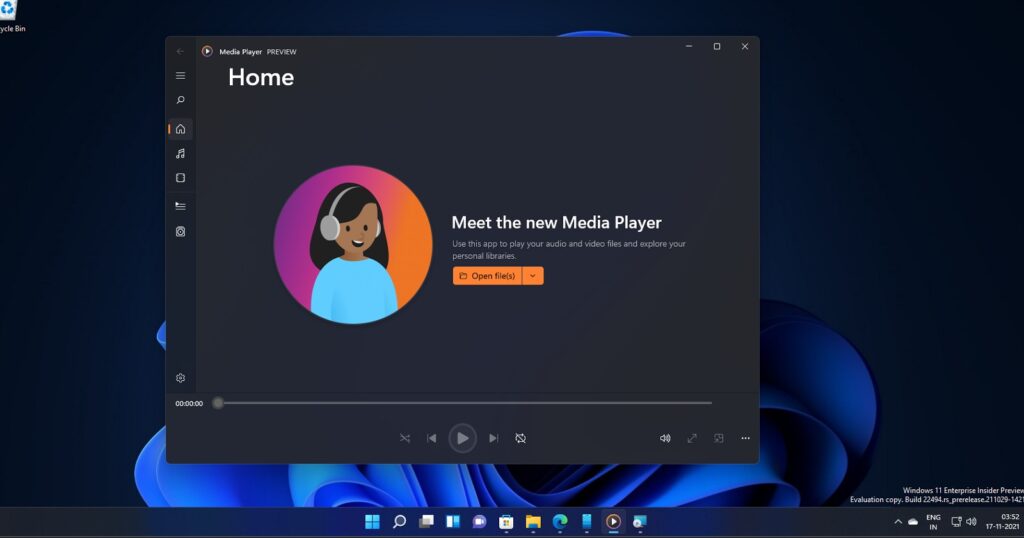
Microsoft’s push to make Media Player the default multimedia app in Windows 11 is drawing fresh criticism. The modern app consumes far more memory than the classic Windows Media Player, while some widely used video codecs have also moved behind a paywall.
That combination leaves users with a player that is not only heavier on system resources, but also less open for common playback needs. For people who rely on local video files every day, the difference is becoming hard to ignore.
Memory use shows a wide gap
Tests cited by Windows Latest found that the modern Media Player uses about 377MB of RAM when idle. The older Windows Media Player uses around 103MB under the same condition, making the new app roughly 3.5 times more memory-hungry.
The difference is not limited to background resource use. The newer app also takes longer to open local video files, with startup measured at about three seconds compared with roughly two seconds for the legacy player.
That means the modern app is about 50% slower to launch a video. For a player that many users expect to open instantly, even a one-second gap can change the daily experience.
Codec access is becoming more limited
The codec changes are adding another layer of frustration. Microsoft now places HEVC, also known as H.265, behind the paid HEVC Video Extensions app in the Microsoft Store.
For users who frequently play HEVC files, that means native playback is no longer guaranteed without an extra purchase. Microsoft has also confirmed that Windows 11 version 24H2 removes the built-in AC-3, or Dolby Digital, codec.
As a result, the new Media Player in that version can no longer play AC-3 audio tracks natively. The shift is especially noticeable because these formats are common in many video libraries and media collections.
Default choice, but not the lightest one
Microsoft still includes the classic Windows Media Player as an optional component, yet the newer Media Player is being pushed as the main option. That makes its higher memory use and slower startup more relevant for the majority of Windows 11 users.
In practical terms, the default app now asks more from the system while offering less flexibility out of the box. For users who want a simple local media player, that trade-off may feel backwards.
Third-party players remain the easiest escape
Some users are likely to sidestep the issue by switching to third-party apps. VLC stands out as a common alternative because it carries its own codecs and does not depend on Microsoft’s add-ons.
That makes playback simpler across many formats, especially for users who do not want to pay for extra extensions. With the new Windows 11 Media Player facing criticism on both performance and codec access, independent players are looking more appealing again.