


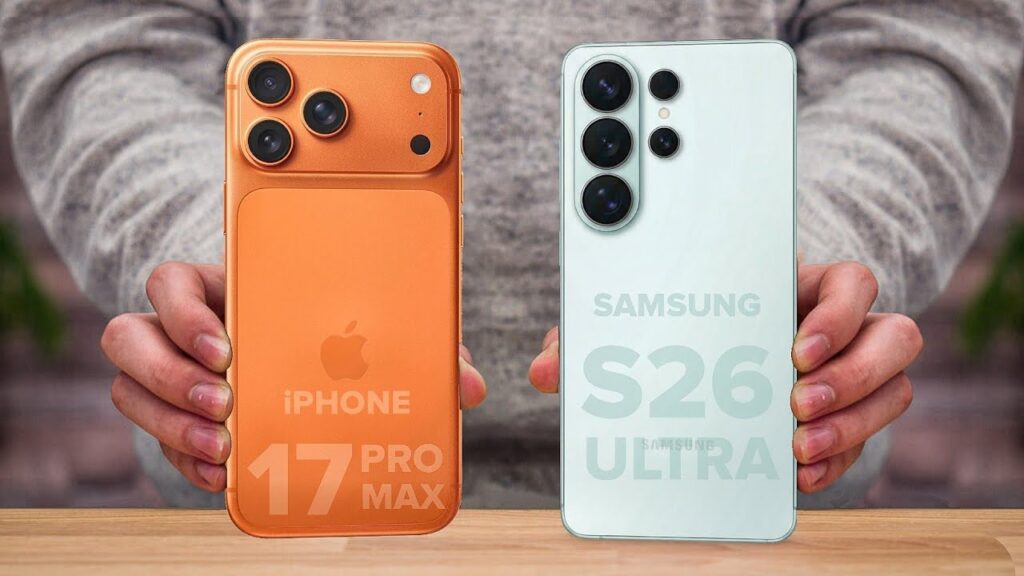
Samsung’s Galaxy S26 Ultra and Apple’s iPhone 17 Pro Max are separated by only a small price gap, yet the differences between them are likely to matter most to buyers weighing comfort, privacy, and long-term daily use. The Galaxy S26 Ultra starts at Rp24,49 juta, while the iPhone 17 Pro Max is priced at Rp25,74 juta.
That narrow gap leaves the decision less about raw flagship status and more about which device better fits everyday habits. Samsung leans into practical extras such as a privacy-focused display, lighter body, and faster charging, while Apple keeps its focus on stability, endurance, and storage flexibility.
Display choices reveal two very different priorities
Both phones use a 6.9-inch panel with adaptive 120Hz refresh rates, but Samsung gives the Galaxy S26 Ultra a higher 3,120 x 1,440 resolution AMOLED display. Apple uses an OLED panel with a 2,868 x 1,320 resolution on the iPhone 17 Pro Max.
The more unusual addition belongs to Samsung, which equips the Galaxy S26 Ultra with Privacy Display. The feature narrows viewing angles so content is harder for people nearby to see in public places.
Samsung also adds Gorilla Armor 2 to reduce glare, making the screen easier to read under strong sunlight. Apple answers with Ceramic Shield 2, but it does not offer a comparable privacy layer.
Comfort in hand may matter more than headline specs
The Galaxy S26 Ultra measures 7.9 mm thick and weighs 214 grams, making it slimmer and lighter than its rival. The iPhone 17 Pro Max is 8.5 mm thick and weighs 233 grams.
That difference may sound small on paper, yet it can shape how the phones feel after long hours of use. For many users, the more compact Samsung design could be easier to carry, while Apple presents a heavier but solid-feeling alternative.
Performance is not only about speed
Inside the Galaxy S26 Ultra is the Snapdragon 8 Elite Gen 5 with up to 16 GB of RAM. Samsung also improves cooling so the phone can hold performance better during heavy multitasking and demanding gaming sessions.
The software side is centered on more contextual AI integration through Bixby, with Gemini support prepared for tasks such as automatic settings and transport booking. Apple uses the A19 Pro chip with a new neural accelerator and emphasizes efficiency in AI workloads.
Storage is another clear divider. Apple goes as high as 2 TB, giving the iPhone 17 Pro Max a strong option for users who keep large collections of videos, photos, and work files on the device.
Camera strategy splits into numbers versus consistency
Samsung keeps a four-camera setup led by a 200 MP main sensor. A wider aperture is said to improve low-light results compared with the previous generation, while the 5x and 3x telephoto combination adds flexibility for zoom use.
Apple takes a different route with three 48 MP cameras. Rather than chasing the highest main resolution, it focuses on consistent photo and video output, especially when the phone is used in motion.
That approach shows up in video stabilization, which remains strong even at 8x zoom on the iPhone 17 Pro Max. For creators who prioritize smooth footage, that may matter more than the Samsung’s stronger headline numbers.
On the front camera, Apple adds automatic orientation, while Samsung relies on AI ISP processing to improve selfie quality through smarter image handling.
Battery life and charging close the gap in different ways
The Galaxy S26 Ultra uses a 5,000 mAh battery with 60W fast charging, giving Samsung one of the quicker charging setups in the flagship class. The iPhone 17 Pro Max carries a slightly larger 5,088 mAh battery.
Apple’s phone posts the best battery endurance in battery-life testing, but its charging speed stays around 40W. That means buyers are still choosing between faster top-ups on Samsung and longer-lasting usage on Apple.
In the end, the more important decision may not be which phone has the bigger numbers, but which trade-off feels less disruptive in daily life. The Galaxy S26 Ultra pushes privacy, lighter handling, faster charging, and versatile zoom, while the iPhone 17 Pro Max leans on efficiency, storage headroom, and more consistent video performance.