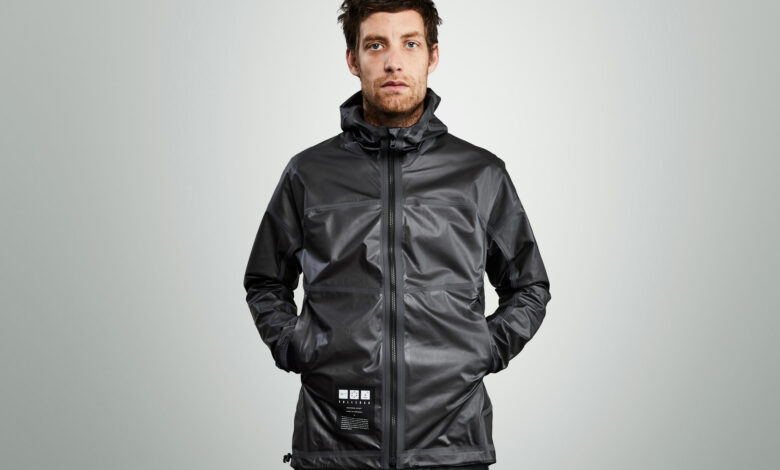
A wearable jacket that can pull drinking water from the air is moving a familiar outdoor problem into a new category of gear. Engineers at The University of Texas at Austin have developed a garment that can absorb atmospheric moisture and produce as much as 900 milliliters of clean water a day.
The idea is aimed at people who spend time far from reliable infrastructure. Hikers, campers, agricultural workers, and emergency responders are among the groups that could benefit most from a portable source of water built into what they wear.
How the jacket works
Inside the jacket is moisture-absorbing textile that captures water vapor from the atmosphere. The collected water is then directed into a removable unit before being placed into a foldable collector and heated so the trapped water can be released.
The output is not fixed, because performance depends on humidity. Under different conditions, the jacket can generate roughly 400 to 900 milliliters of water per day, which means its usefulness will vary with the environment.
Why this matters in the field
For people working or traveling in places where water access is uncertain, even a modest daily supply can make a difference. A device that stays on the body also removes the need to carry a separate purification system or depend entirely on fixed water points.
The concept draws strength from the scale of water already present in the atmosphere. Earth’s atmosphere is estimated to contain around 12,900 cubic kilometers of water vapor at any given time, a volume large enough to fill millions of large reservoirs if it could be captured efficiently.
From jackets to other outdoor gear
The same material is now being explored for other outdoor products as well. Researchers are looking at possible integration into backpacks, tents, emergency shelters, and other equipment used in the field.
The team has also recently developed a separate device that extracted a record 1.3 liters of clean water from air. That test was carried out in two sharply different climates, the dry Chihuahuan Desert in New Mexico and the more humid environment in Austin.
Together, the projects point to a practical use for atmospheric moisture in places where traditional water access is limited. A jacket that can gather drinkable water directly from the air adds a new option for keeping people supplied when infrastructure is out of reach.