


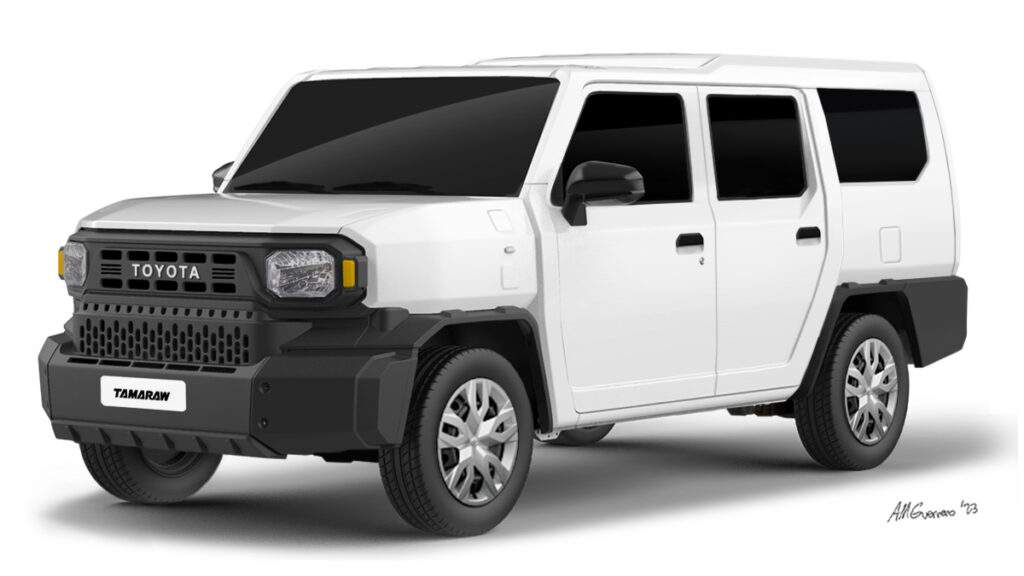
Toyota Tamaraw is drawing attention as a commercial vehicle built for more than heavy hauling. It is positioned as a practical option for business users and families who need a strong vehicle for varied road conditions.
Its appeal is not limited to city use, because the model is described as capable of handling demanding routes such as plantations, mining areas, and rural roads. That makes it relevant for users who need dependable transport in harsh working environments.
Built on a tough foundation
The Tamaraw carries the toughness DNA of the Toyota Hilux, a model long associated with operational reliability in the field. It is also built on Toyota’s IMV ladder-frame construction, which gives it a solid base for demanding work.
That structure is important because it supports durability and helps the vehicle stay stable when carrying loads. On rough roads, the strong chassis is meant to keep the driving character dependable rather than easily unsettled.
For business owners, that kind of strength matters because fleet vehicles are often judged by how long they can keep working with limited downtime. A durable platform can reduce concern over frequent maintenance in daily operations.
Diesel power for commercial use
Toyota equips the Tamaraw with a turbo diesel engine, available in 2.0L and 2.4L versions. The setup is aimed at supporting cargo transport and mobility across different types of terrain.
High torque is one of the main advantages of a diesel powertrain in a vehicle like this. It helps the Tamaraw handle steep climbs and full loads more confidently during work trips.
Efficiency is also part of its value proposition, especially for buyers who will use the vehicle for the long term in logistics or other commercial roles. In that context, fuel economy becomes closely tied to operational cost and overall reliability.
Flexible body choices for different jobs
One of the Tamaraw’s strongest points is its flexible body lineup. The model is offered as a pickup with an open bed, a chassis cab, and a utility van.
That variety allows buyers to match the vehicle to the job instead of forcing one format to cover everything. It also creates room for more specific business conversions, from cargo hauling to specialized operational use.
For growing businesses, this flexibility can make a single platform more useful across different tasks. The Tamaraw can be adapted more easily to changing operational needs without changing the core vehicle base.
Load stability and safety equipment
The Tamaraw uses rear-wheel drive, a layout that supports more stable load distribution when the vehicle is carrying heavier cargo. In commercial use, that setup can help preserve control as payload increases.
Toyota also includes ABS to help the driver maintain braking control, especially on roads that are not in ideal condition. An airbag is fitted as an additional layer of protection for the driver and passengers.
Those safety features matter because commercial vehicles are often used at high intensity and across challenging routes. A strong body structure that can withstand impact adds another layer of reassurance for daily work.
Part of Toyota’s tougher lineup
The Tamaraw joins a broader Toyota family that already includes several models with distinct roles. The Hilux remains popular in plantations and mining, while Land Cruiser serves as Toyota’s premium off-road SUV.
Rush and Avanza occupy the family-use side of the lineup, offering higher ground clearance and comfort for everyday travel. Within that range, Tamaraw stands out as a practical work-focused model built around real operational needs.
With its sturdy chassis, turbo diesel engine, flexible body options, and safety equipment, the Tamaraw is shaped as a vehicle that prioritizes function first. It is aimed at users who need a strong, versatile, and dependable commercial vehicle for different kinds of terrain.