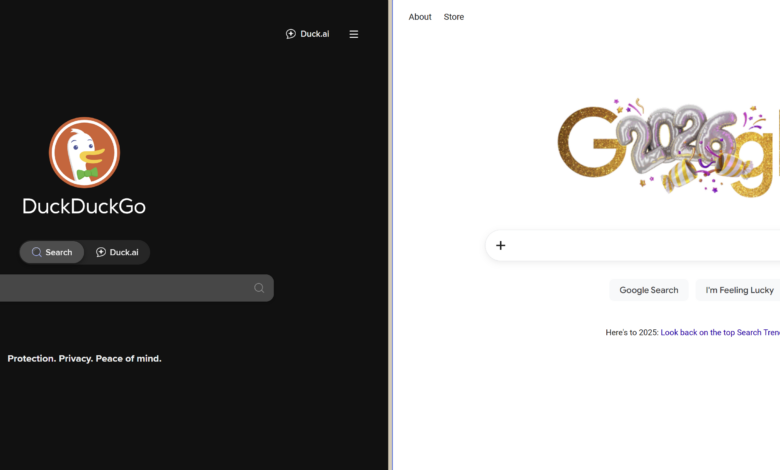
Google’s push to make AI the center of Search has produced an unexpected result: some users looking for a way out of AI-generated answers are being pointed toward DuckDuckGo.
The irony appears inside Google’s AI Overview, where searches such as “no AI” have reportedly surfaced DuckDuckGo’s No AI Search page. The recommendation suggests a growing tension between Google’s AI-first strategy and users who still want the familiar list of links.
A clear sign of user frustration
For many people, AI summaries are useful because they condense information quickly. For others, they feel like another layer between the query and the web, especially when the goal is to browse sources directly.
That divide has become more visible as Google expands AI Mode and AI Overviews. The company has framed the change as part of a more conversational search experience, but some users appear to be actively looking for simpler alternatives.
DuckDuckGo is ready for that audience
DuckDuckGo has built an obvious landing spot for users who want a traditional search experience without AI features. Its No AI Search page is designed for people who prefer fewer automated layers between them and search results.
The company also offers its own AI tools, including Search Assist and Duck.ai. The difference is that DuckDuckGo gives users a clearer path to turn those features off or avoid them entirely by using the No AI Search page.
Google’s answer can still point outside Google
According to a screenshot shared by DuckDuckGo on X and first highlighted by PiunikaWeb, Google’s AI Overview did not just suggest a competitor in passing. It reportedly steered users toward DuckDuckGo when they searched for ways to reduce AI in search.
The recommendation also appeared to reference browser settings that may reduce how heavily AI features shape the search experience. That puts Google in the unusual position of directing people toward a rival while it continues to push AI deeper into Search.
Why the episode matters
The incident does not threaten Google’s dominance on its own, but it does reveal a real preference split among users. Some want added context from AI, while others want the older model of fast, direct link-based browsing.
DuckDuckGo told TechCrunch that U.S. app installs rose by an average of 18.1% week over week after Google’s announcement, with a peak increase above 30%. The company also said iPhone installs rose even more sharply.
That momentum suggests the market is not just reacting to the novelty of AI search. It is also reacting to control, and to whether users feel they can still choose the kind of search experience they want.
Google continues to move Search toward AI-first interactions, but the DuckDuckGo recommendation shows the limits of that strategy. When people ask how to avoid AI, the system may still respond in the most contextually relevant way, even if the answer leads them away from Google’s own ecosystem.
For users who want a more traditional experience, that may make alternatives look more appealing than before. And for Google, it is a reminder that not every AI-driven answer will reinforce the product direction it is trying to build.